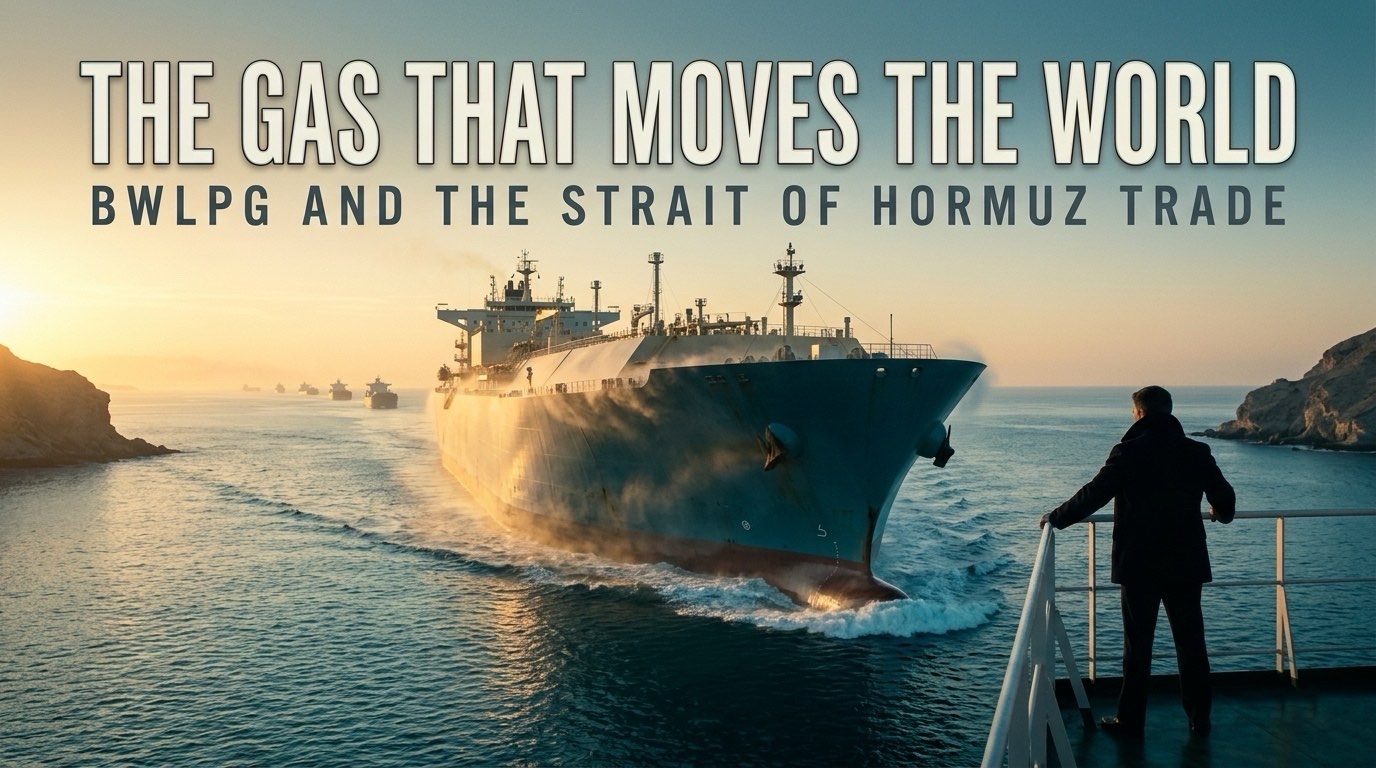
This week we do a full deep dive on BWLPG (ticker: BWLP), one of the world’s biggest LPG shippers, and why the Strait of Hormuz closure is sending their spot charter rates into the stratosphere. We also cover the bond market’s grim verdict on Trump’s economic record, oil heading toward $140 a barrel, and the fascinating story of Y.K. Pao, the banking clerk who built the largest privately held shipping fleet in history.
This week’s full episode is for QAV Club members only. The free episode is available below. Also check out our podcast archives link and our pages on Apple Podcasts or Spotify or watch clips on TikTok. Or visit our homepage to learn more about QAV and how it works as a value investing system that you can learn and apply to beat the market.
Transcription
[00:00:00]
Cameron: Ba-dum-bum. Welcome to QAV America, Tony, episode 53. It’s the 19th of May, 2026. Trump went to China, Tony.
Tony Kynaston: He did.
Cameron: with a nice T-shirt and some knockoff Nikes, and that’s about it.
Tony Kynaston: He was, he was flogging, uh, copies of Art of the Deal in, uh, Tiananmen Square.
Cameron: Yeah. Um, it sounds like it was a bit of a nothing meeting. They had nothing really to announce. A few sort of minor things, but nothing about opening the Strait of Hormuz, nothing really about, uh, trade deals. Trump’s g- I think China’s gonna, excuse me, China’s gonna buy some more beef, US beef. Uh, I think that was it, really.
Tony Kynaston: my read on it was between the lines was that Xi Jinping said, “Hey, [00:01:00] gonna take over Taiwan at some stage. Don’t get involved.” And Trump said, “Hey, sounds good if you can help us get the Straits of Hormuz open.”
And they wouldn’t
that formally either of those two things, I wouldn’t think.
Cameron: No. But, you know, technically speaking, Taiwan is already part of China. Everyone agrees to that.
Tony Kynaston: road
Cameron: Everyone agrees to that, including the US, including Australia. It’s the One China policy. Everyone’s always agreed to that since the ’70s.
Tony Kynaston: Mm-hmm
Cameron: agrees with that. They just think they run China. They think they’re the– They just believe they’re the real Chinese government.
Tony Kynaston: Uh-huh
Cameron: Anyway, um, it, it– You know, it was sort of a bizarre trip, like the leaders of the two major economies meet in secret and really have nothing to announce afterwards.
Tony Kynaston: Yeah So that leads me to think [00:02:00] something was going on behind the scenes that they can’t announce So I
Cameron: Or nothing, or they reach no agreements on anything.
Tony Kynaston: yes that of course that’s possible But it’s still it’s good to see the two leaders get together They’re not sniping at each other from across the Pacific Ocean
Cameron: Yes.
Tony Kynaston: thing What did Trump say He said uh I like it here I could I could live here for a long time here It’s great
Cameron: He might have to, depending on how things play out.
Tony Kynaston: That’s what I thought I thought
I’m glad
Chinese food
Cameron: Mm. Like Latin American dictators, after they got kicked out of their countries, had to go to Florida, the guy from Florida might have to go to Beijing to live. Uh, you know, it was– I, like, I don’t know what went on, but reading between the lines for me, he went there to try and get support to get Iran to bow down, and they went, “No.”
And, you know- reach a deal and cut it out because this is annoying [00:03:00] and,
Tony Kynaston: I
I thought
like You want that Have a look over here at Taiwan You know Don’t get involved
Cameron: Yeah, maybe. I, again, I, I don’t think they need to worry about Taiwan. I think Taiwan’s just gonna, you know, knock on their door and ask to be part of it the way things are going, but we’ll see.
Uh
Tony Kynaston: a bit like Cuba knocking on the door and wanting to be part of the US
Cameron: no, not like that at all, no. No, but, uh, you know, the– Taiwan, like every country, they’re gonna need to pick a side at some point. They’re gonna need to decide where their future is best placed. Is it by an alliance with the United States or an alliance with China?
Tony Kynaston: I I’m not sure alliances with the US are worth much at the moment so Hmm
Cameron: Yeah. So anyway, um, we talked briefly about this on the last show, the, the Australian show, but, uh, the, it’s more appropriate to talk about it here. So the bond [00:04:00] market in the US is going through some friction at the moment. The US 30-year yield went above 5% for the first time since 2007.
You know, Trump, in his campaign for his, uh, second term, promised to fix the economy, eliminate the debt, crush inflation, no wars, peace everywhere. He’s 16 months in,
Tony Kynaston: He
Cameron: growth has slowed, debt has grown by $4 trillion, inflation is rising, manufacturing has shrunk. The Supreme Court has thrown out his tariffs that were going to bring in so much money that America wouldn’t know what to do with.
His economic approval rating is the worst of his career, down to 30%, so going about as well as you would expect when you put a reality TV star in charge of the world’s leading economy. But
Tony Kynaston: A and I think [00:05:00] Amazon are looking at rebooting The Apprentice starring one of the Trump boys so the succession the succession plan’s in place
Cameron: yeah.
Tony Kynaston: But anyway like
the bond market’s having nothing of it isn’t it That’s the that’s the real important thing for investors
Cameron: well, you know, on one hand, the S&P is booming. On the other– although it’s back a bit over the last few days. But, uh, on the other hand, the bond market is pricing in the reality of the long-term picture, which isn’t pretty.
Tony Kynaston: No Uh uh including the fact that uh US debt’s up um no sign of it being reined in But also the oil price is gonna be higher for longer I think than people are are factoring at the moment too Except for the bond market they can see it or at least they’re guarding against it happening But um yeah the the bond market rules the roost really If if interest rates on or or if yields on bonds keep going up [00:06:00] that raises the cost of borrowing for corporate America and and so the growth slows Uh yeah if the problems aren’t fixed by the government then it just leads to a collapse somewhere down the track
And
Cameron: And Warsh has now been confirmed as the new Federal Reserve chairman. Jay Powell is on his way out or is out. Not exactly sure what the timeline is on that. But y- you know, there is, there was this expectation that Warsh was gonna come in and cut interest rates. But with inflation going up
Tony Kynaston: Yeah
Cameron: to 4% now, and people think it’ll go over 4%.
Apparently, historically, when US inflation crosses 4%, the S&P falls 4% over the next three months, and then 7% over six months. But maybe this time it’s different, Tony.
‘Cause AI.
Tony Kynaston: three of the three of the most [00:07:00] unreliable words in the English language time it’s different
Cameron: It’s four words, but yeah. Um, there’s, uh, uh, Helima. Look, e- every economist I’ve read in the last month or six weeks has said even if the Strait opened tomorrow, we’re gonna see at least six months of higher oil prices. Uh, there’s a lady called Helima Croft, who runs commodities for RBC Capital Markets.
It’s the Royal Bank of Canada. Used to work at the CIA on Middle East stuff. She reckons oil is heading to $140
Tony Kynaston: Hmm
Cameron: the way it’s going. There’s no sign that the Strait’s gonna be open anytime soon. It’s still nacho. Uh, Trump did say today that he was going to authorize more bombing of Iran this week, but then didn’t again because he claims Middle Eastern countries asked him not to, and negotiations with Iran are going tremendously well, better than, better than any [00:08:00] negotiations have ever gone in the history of negotiations.
You wouldn’t believe how great these negotiations are going. US Treasury Secretary Bessent called this. Yeah. Instead of Taco Tuesday. Yeah, Nacho Monday. S- Bessent called this inflation transient, which apparently is the same word Powell used in 2021 coming out of COVID, but it turned out not to be transient, so apparently it’s the T word.
Markets reacted badly to the T word being used, which I thought was Trump, but it’s the other T word. It’s transient.
Tony Kynaston: wasn’t Taco It’s
Cameron: So many T words
Tony Kynaston: Yeah
Cameron: Well, I was looking for a stock to– I don’t really have any company news this week. I was looking for a stock to do a deep dive on and to add to our portfolio this week, and it was tough.
I went through 20 stocks at the top of the buy list, and everything was having a down day when I was looking at [00:09:00] them on s- uh, Sunday, Monday. Until I finally found the company that I am gonna talk about today, which is, uh, BWLP is the ticker, BWLPG Limited. And, uh, you know, it’s kind of a interesting story.
Again, it’s sort of a pretty boring, classic value investing stock, I think, in many ways. The numbers are a little bit, uh, interesting, but we’ll, we’ll get into the whys and wherefores. Nothing as complicated as some of the ones I’ve looked at in the last couple of weeks. By the way, there were some more of those when I was trying to find a company.
A lot of financial services companies on the buy list in the US this week, but a lot of them just had massive dumps of new capital, which is affecting their operating cash flow, and we [00:10:00] decided to put the kibosh on those. But BWLPG, as you might be able to tell from the name, is an LPG company. They ship gas.
Uh, we always say we’re looking for mass, not gas, in terms of investing, but well, they have mass and gas.
Tony Kynaston: Yeah
Cameron: Their gas brings the mass. Uh, they’re on the New York Stock Exchange, also listed in Oslo as BWLPG.
Tony Kynaston: And
Cameron: they specific.
Tony Kynaston: It’s a
Cameron: Yeah.
Tony Kynaston: a very transglobal company
Cameron: Yes, very interesting. We’ll get into the history of why that is shortly. But, uh, they specifically ship LPG, propane and butane, as opposed to LNG, methane.
I had to remind myself, uh, what the difference is between the two. So for people out there who don’t know their gases, LPG, easier to liquefy, [00:11:00] 42 degrees, minus 42 degrees Celsius, or moderate pressure at room temperature. Used for cooking, heating, auto gas, petrochemical feedstock. LNG, much harder to liquefy, 160, minus 162 degrees Celsius, cryogenic.
It’s used for power generation, city gas grids, industrial applications, industrial level heat, that sort of thing. So BWLP ships the LPG stuff, similar to a company that we already hold in the dummy portfolio, GASS, G-A-S-S, that we have held for quite a while. Let me just remind myself. GASS, um, transaction.
When did I buy GASS? Added GASS back in October 2023, one of the first stocks I added [00:12:00] to our US portfolio. It is up. Hmm?
Tony Kynaston: does that make it classical gas if you’ve had it for that long
Cameron: Wow. It’s a, it’s a ’70s joke. Is that a ’70s classical GASS? How does it go? You wanna sing it?
Tony Kynaston: Well you can’t sing it It’s uh instrumental
Cameron: Instrumental. You can sing an instrumental. For. Okay. I’ve been l- You should have prepared for this. You should have pulled your guitar out and been able to play. Uh, GASS is up about 100%, uh, since I added it October ’23, so it’s had a good run.
Tony Kynaston: good yeah
Cameron: Yeah. Um, but these guys are much, much, much bigger. Same industry, different pond.
Um, they both transport LPG by sea, but in different parts of the country and different philosophies. So to give you an example, GASS [00:13:00] has 29 ships across three smaller classes. BWLP has 50 VLGCs. A VLGC is a very large gas carrier. Uh, GASS mostly deals around Europe, Mediterranean, intra-Asia, that kind of thing.
Uh, BWLP does US Gulf to Asia and Middle East to Asia long haul. Market cap wise, GASS is about 375 million US. BWLP is about $3 billion US. So these guys are really, really big, as are the ships that they have. A VLGC, very large gas carrier, is about 230 meters long,
Tony Kynaston: Wow
Cameron: and they carry about 44 to [00:14:00] 47,000 tons of LPG, which is chilled down to minus 42 degrees Celsius down in the hull so it stays liquid Anyway, that’s what they do.
Um, been listed on the New York Stock Exchange only since April 2024, so only two years on the NYSE, but listed in Oslo since 2013, which is the primary listing. Not an ADR in the US, I checked that. They have common share trades on both exchanges. And as you said, they’re Singapore incorporated. They moved their domicile from Bermuda to Singapore in July of 2024, and they report in US dollars.
Tony Kynaston: So they liked head offices in low tax environments
Cameron: That’s got nothing to do with it, Tony, at all. Purely, purely, purely coincidental that those things would be happening, I’m sure. So what do they do? Well, imagine you’re a Korean utility or a Japanese petrochemical company. [00:15:00] You burn propane as fuel, or you use it as feedstocks to make plastics and chemicals.
You buy it from a trader. That trader has bought it from a producer in the US Gulf or from Qatar or from Iran. You have to get it from the place that manufactures it to your facility, and you do that on a really big ship. I was gonna say boat, but I know they’re not boats, they’re ships. And so you can hire a ship from BWLP.
How do you say, how would you. BWLP? Bullop, bullop. That’s what I’m gonna call them, bullop. You can hire a ship from Bullop to do that.
Tony Kynaston: White LP
Cameron: Oh, yeah. Good. Yeah, yeah. The Bullop. It takes about 40 days from the US Gulf to Japan via the Panama Canal or the US Canal. The American Canal as it sh- the Trump Canal as it will be by the time he’s finished.
Tony Kynaston: Well
Cameron: About
Tony Kynaston: it the [00:16:00] Hormuz, Hormuz Canal so then Trump can say Hey I’ve opened the strait
Cameron: yeah. That’s clever. Good thinking. Yeah. Or about 18 days from the Middle East to India. And there’s basically two ways that Bullop, uh, rent out these vehicles. The first is spot charters, where you hire a ship for a single voyage at the going market rate quoted in dollars per ton or dollars per day, and that price bounces around enormously.
Particularly high at the moment for some strange reason. And
purely coincidental. Or, uh, the second is time charters, where you have a fixed period, six months, two years, five years, at a fixed daily rate. And these guys are roughly 50/50. You know, they, they kind of have a balance of the two strategic, for strategic reasons. Right now, getting [00:17:00] back to the spot charters, the Houston to Chiba, uh, named after Sonny Chiba in Japan, voyage is in the region of about 300 US dollars per metric ton, which converts to about 170,000 US dollars per day.
And that’s a record. Um, the lows are more like 15 to $20,000 per day.
Tony Kynaston: Right
Cameron: that’s a it’s a big, that’s a big hike in the cost of getting gas moved around because you can’t move it through the strait, and so you’re having to get it from other parts of the world, takes longer to get to there from the US and there is less ships available, et cetera, et cetera.
Supply and demand kicks in.
Tony Kynaston: mean it’s um more oil has to is being exported by the US now cause it can’t come from the Middle East So
Cameron: Gas.
Tony Kynaston: on oil gas it’s it’s all [00:18:00] interrelated
Cameron: It’s all all. It’s all oil. All oil. Petrochemical and byproducts, yeah.
Tony Kynaston: backed up Needs to
Cameron: really?
Tony Kynaston: of prunes yeah
Cameron: Needs an enema? Yeah.
Tony Kynaston: yeah so much uh
Cameron: Did I tell you about my back, my constipation story?
Tony Kynaston: Luckily no
Cameron: Well, you know, I’ve been. You know, I’m hardcore with my diet and my smoothies. I got a little bit overzealous with the, uh, the fiber, the chia seeds and the psyllium husk that I was having. I was like, “Well, if, you know, 10 grams a day is good, 50 grams is gonna be excellent.” So I, uh, and I had a very uncomfortable two hours,
Tony Kynaston: Oh dear
Cameron: c- couple of months ago
Tony Kynaston: Ugh
Cameron: Thought I was gonna die.
Anywho, uh, the relevant performance measure for these guys is something called TCE, time charter equivalent income. [00:19:00] It’s the revenue from chartering the ship minus the voyage costs, fuel, port charges, brokerage expressed per day, and that normalizes across spot and time charter mixes. So at the end of the day, what you’re looking at is TCE.
BW’s full year 2025 TCE income per available day was just over $45,000 across the fleet. Q4 2025 specifically was $50,270 per available day. So running hotter than the full year average because the spot market accelerated in the back half of the year. And the numbers that we’re using are their full financial year numbers, uh, and I’ve got their quarterly numbers as well, but none of.
The, the strait didn’t close until March, so it hasn’t really flowed through to their reported numbers yet.
Tony Kynaston: [00:20:00] Right
Cameron: with Iran when the US and Israel were bombing Iran in the middle of last year, so that flowed into the 2025 numbers. But there was also tariff wars and all of that kind of stuff going on.
I, I read the CEO’s, um, opening to the annual report and, you know, for guys like this, obviously it’s been a very tricky year. A lot of, lot of geopolitical conflicts and, uh, things to have to navigate. Uh, for comparison, the prior FY 2024 figure was 48,300. So the full year 2025 was 45,000. It was down about 7% year over year.
But the fleet grew. They bought a bunch of ships, so their total earnings grew. Q4 2025 alone was up 33% over Q4 2024, even though rates [00:21:00] were down, so that shows you how much they grew the fleet. Um, for full year 2025, only about 28% of the fleet days were on fixed time charters, not really 50/50. The rest were on the spot curve.
But that changed by Q4 to 44% as they locked in more at higher rates. Um, so the, it’s roughly, what’s that? 56/44 now, as of Q4 anyway. Uh, so they also have another division which I found interesting. They have a separate trading division called Product Services, which is actually in competition with the people who supply the LPG.
It’s a physical LPG trading business that they run in-house. They buy LPG cargoes themselves at one port, then move the cargo across the ocean, usually on their own ships, sometimes on other people’s ships, but usually on their own ships, sell the cargo at the other port and [00:22:00] hedge the price exposure with derivatives.
So yeah, we, we’ve talked about this before in a lot of these shows, people looking at share of wallet. Well, you know, we’re already in the LPG business. Why not have a. I think they bought these, they bought this trading arm from another company a couple of years ago. But, uh, so that’s, that’s basically the business.
Renting out ships either at spot rates or long-term rates and they also have a trading arm. Trading arm’s not huge. Made about, in 2024 it made about $145 million in gross profit. In 2025 it made $16 million gross profit, which is a lot less than 145 million if I’ve done my maths correctly. Uh, most of that was mark to market on the unrealized derivatives book.
Basically, value of their hedges moved against them year on year. But it’ll wash out over time, I think. So the company itself, um, hasn’t been listed that long and is [00:23:00] only about 12 years old as a separately listed entity, but goes back to one of the great shipping fortunes of the 20th century.
Two businesses came together to make the BW Group, Pao’s Worldwide Shipping and Bergesen d.y., which is a Norwegian shipping business founded in 1935 by a chap named Sigvald Bergesen the Younger. I think that’s what the d.y., de younger, actually means. Um, I’m being serious. Uh, he had a falling out with his father, Bergesen the Elder, and set up his own shipping company.
Uh, so but that, you know, the, that had been around since 1935. Worldwide Shipping was founded in Hong Kong in 1955 by Sir Y.K. Pao, Y.K. Pao, who ended up one of the richest guys in Hong [00:24:00] Kong. He had come to Hong Kong from China in 1949 during the Chinese Civil War, much like my grand master’s master, Ip Man.
You ever seen any of the Ip Man films, Tony? Donnie Yen as Ip Man? Ah. Should watch it.
Tony Kynaston: All right
Cameron: went to Hong Kong and started teaching Wing Chun Kung Fu. Y.K. Pao went there and set up a shipping empire. He’d been a banking clerk in Shanghai, went to Hong Kong with nothing more than the shirt on his back, and then ended up building one of the.
Well, not one, the largest privately held shipping fleet in the world by 1979. 202 ships, 20.5 million deadweight tons. Yeah, sorry.
Tony Kynaston: story So as as I read today when I was preparing for the the um podcast Uh I think he When he went to [00:25:00] Hong Kong he was struggling to find career He was working in the bank but he was also to import things after World War II into Hong Kong sort of led him to to buy his first ship because he was an importer And then he expanded a little bit But um he he locked in long-term low rate contracts with the Japanese and that was the making of him because the shipping companies by and large were run by the Greek tycoons at that stage the Onassises and people like that And they were the reverse They were a bit like what you were describing before They were trying to maximize their margins and charge spot prices and you know uh control the market all that kind of thing um Pao said No if I just if I slow and steady wins the race If I can get long-term contracts which benefit the customers I make a little bit of money and then they’ll give me more work and I can expand my fleet and I’ll make a lot of money out of a little [00:26:00] bit of money on each ship eventually after a couple of decades he just dominated the shipping lanes
Cameron: Wow.
Tony Kynaston: Hmm
Cameron: Slow and steady wins the race. Bit like the, um, Ray Kroc story. Just look after your customers, look after your suppliers. Good for him. He got knighted by Queen Elizabeth in 1978, was personal friends with Ronald Reagan and Margaret Thatcher. Newsweek magazine put him on its front cover in 1976 with the headline, “King of the Sea.”
I think that makes him Aquaman or The Deep, if you’re watching Yeah. Had less sex with octopuses, but apart from that, he was just like The Deep.
Tony Kynaston: I’m just trying to find He had a If I can find it quickly He had a quote Here it is here When he passed away in 1991 he lived his entire life by an unyielding personal motto Exercise persistently use [00:27:00] sparingly work diligently That was his motto
Cameron: Yeah. Say that again. Exercised persistently.
Tony Kynaston: Use sparingly and work diligently
Cameron: Oh Pretty good. Yeah. Um, so Bergesen, I mentioned, um, comes out of Norway, another sort of, uh, large shipping enterprise. They combined in 2004. Owned at the time 93% by the Schullman family and 7% by HSBC. Schullman is from Helmut Schullman. He’s an Austrian lawyer and businessman, or was in Hong Kong. Was chairman of the BW Group and a Hong Kong lawyer, uh, or legislator and lawyer.
And he comes into the picture because he married Pao’s eldest daughter, Anna Pao Hing [00:28:00] Pao, and, uh, ended up sort of taking over the, the family business. He stayed at the helm until 2014 when he handed over to his son, Andreas Schullman Pao. He’s got a double-barreled last name for both of his grandparents, I think.
And, um, one of the reasons they did the NYSE listing in 2024, I think, is that the buyer base for LPG shipping equities is largely American institutional money. Most LPG demand growth is in Asia, but the production growth is in the United States, particularly the Permian Basin in Texas and the Bakken in North Dakota that we talked about back on the Cord episode, which we did a while back.
And Cord is in our light portfolio and doing okay. Doing okay. It’s up [00:29:00] 56.6% since we added it in January. That’s not bad for a few months.
Tony Kynaston: just before the war
Cameron: Just before the war, that’s right.
Tony Kynaston: I’m shocked that an oil company went up in value after the Straits of Hormuz closed or
Cameron: Gas.
Tony Kynaston: US Is Cord gas or is it
Cameron: No, I think they’re oil. I think you’re right, yeah. So when natural gas comes out of the ground, propane and butane come with it, which is why the US has become the dominant LPG exporter over the last decade.
Tony Kynaston: Mm-hmm
Cameron: Uh, so there’s a couple of things to talk about with these guys that is interesting. Um, August 2024, they announced they were buying 12 VLGCs from a Norwegian competitor called Avance Gas for about a billion dollars. Um, and they, it [00:30:00] wasn’t an all cash deal.
It was sort of cash and stock deal. So Avance ended up with a big chunk of BW stock. And then they also got a CEO in the process. Um, so the guy who was the CEO of Avance Gas, Christian Sorensen, um, just before this deal went down, had moved from Avance to become the deputy CEO and then the CEO later on at BW.
So yeah, you get our CEO, we, we, we get your CEO, we get your ships, you get some stock. I don’t really know, um, how that works, but, uh, it’s not really a, not really a merger, but sort of a, kind of a combining of forces. Anyway, they increased the size of their fleet from 51 [00:31:00] VLGCs to 53 as a result. You know, 53 doesn’t sound like a lot of ships, but apparently it is, uh, a big, a big deal.
Interesting too, 22 of their ships are LPG dual fuel, which means they can burn LPG cargo as the ship fuel instead of heavy fuel oil or HFO. So load it and burn it. Apparently it’s a much cleaner ship. Apparently HFO is like one of the worst things,
Tony Kynaston: Yeah it’s like below diesel in the in the and um it’s sludge
really
Yeah
Cameron: So these ships, uh, can burn LPG instead, which is interesting. Anyway, uh, there was another guy that came over as part of this deal. Uh, John Fredriksen’s Hemne Holding ended up owning 9.4% of BW. He was the controlling shareholder of Avance Gas, so he got some of the [00:32:00] shares in the deal. I don’t know, it’s all very convoluted, but, um, he’s, I think, the second largest shareholder now.
The Schullman-Pao family own 32%. Fredriksen family owns 9.4%. So these are two of the great Norwegian Asian shipping dynasties of the 20th century who now together own about 41% of BW LPG. This is, um, another interesting component of the business. They have a 100% of shipping NPAT dividend policy.
Tony Kynaston: Hmm
Cameron: The annual report says shipping NPAT is calculated as profit attributable to equity holders of BWLPG minus BWLPG’s share of BWPS’s net profit loss after tax.
So the yield numbers look good. They pay out a pretty big dividend. Um, depends on the, you know, the yield depends on the share price [00:33:00] obviously, but at the time of the Q4 release in early March, the annualized yield was about 12.5%.
Tony Kynaston: Wow
Cameron: pretty strong.
Tony Kynaston: Yeah And if the um if the latest oil prices haven’t rolled through in terms of shipping income anyway the next quarter will be even higher
Cameron: Depending on the share price, yeah,
Tony Kynaston: Hmm
Cameron: happens with them. But yeah, the dividend will be higher. Um, so yeah, that’s, it’s directly tied to the spot market and, um, at the moment that’s going bonkers through the roof. The other interesting point about this is about 18% of the group income comes from a division called BWLPG India.
So these are Indian flagged, Indian operated, qualifying under India’s self-reliant India [00:34:00] preferential cargo scheme. It’s eight ships, but it means those eight ships can transit Hormuz
Tony Kynaston: Ah
Cameron: because India, uh, has a friendly deal with Iran. whereas the rest of BW ships are Singapore flagged and don’t get that privilege.
So they still have some ships that are able to. I don’t know how they navigate the mines, but, uh. Oh. how do you get around the the mines? Like apparently the strait’s full of mines, so I don’t even know if you’ve. Like do the Iranians know where the mines are? I guess they might have some idea.
but yeah, I don’t know. Do, do they– I guess they know where they are. They have them on a map somewhere. They have Apple Maps telling them where they are.
Tony Kynaston: They put air tags on them
Cameron: Yeah.
Tony Kynaston: And they call up Find My Sea Mine It’s an app on their iPhones
Cameron: [00:35:00] uh, the flip side of this is they don’t own all of BWLPG India. Um, there’s another company called Mass Capital Shipping that holds about 42% and a residual third party. But they own about 48% of them that it flows through. So what’s going on in the market right now? Uh, as we said, spot rates are crazy, about $300 US per ton for the Houston to Chiba route. Um, hard to know exactly what impact the Hormuz closure is having on BWLPG.
As I said, most of their fleet is Singapore flagged. Um, but, you know, some of the things that I could figure out is that the closure forces Asian buyers to source LPG from the US Gulf instead of from the Middle East. So that long haul from the Pacific via the Panama Canal. Canal? Why did I say it like that?
Canal. Connect. Now I’m in my head. [00:36:00] Panama Canal is, uh, takes longer, right? So from the Middle East, going from Saudi Arabia to Japan is about, uh, 18 days, I think. To get it from Houston is about 40 days. So you’ve got less ships. It takes more than twice as long to transport it, which is more than double the day rates.
Plus you’re paying more expensive day rates. Shipping industry calls this ton miles, total cargo volume times distance. So you’re doubling the length of the voyage and the day rates because there are less ships going through the roof. Yeah, it’s a, it’s a economic nightmare for everybody involved.
Tony Kynaston: And
Cameron: good though, if you’re the guy selling the ships.
Tony Kynaston: the
Cameron: Hmm.
Tony Kynaston: the export ports for the Gulf are obviously on on the Gulf of America side the Gulf of Mexico side which is the Atlantic
Cameron: [00:37:00] Okay.
Tony Kynaston: the moment trying to get oil ships and gas ships through you’re forced to go around the um the bottom of South America if you can’t um If you if you’re the hundredth ship in line for the Panama Canal and it’s quicker to go around the you do that But I don’t know if that’s figured into your 40 days but it’s got to add extra days to the trip too
Cameron: Just pick him up and carry him. That was your plan for getting across, uh, Saudi Arabia, wasn’t it? Just sort or,
Tony Kynaston: Correct
Cameron: Just pick him up and carry him.
Tony Kynaston: Yeah
Cameron: yeah. Easy. Uh, so.
Tony Kynaston: Well if if they’re two hundred meters long you just line them up end to end fifty-five of them through you know through the Panama Canal and then you just roll the barrels down from one end to the other
Cameron: Like a slippery slide. Why, why, why doesn’t Elon put them on rockets? That’s what I wanna know. He could just put them on BFR rockets and fly them over. Actually, that would be [00:38:00] cool. His rockets are reusable. They can land. Just have a fleet of rockets flying fuel around.
Tony Kynaston: That’s that’s entirely feasible yeah
Cameron: get Elon on the phone. He’s probably not having a good day since he lost his lawsuit.
Tony Kynaston: What do you mean statutes of
Cameron: Ah.
Tony Kynaston: you
Cameron: Yeah. Yeah, Grok told me that was fine. Um, so I went down a little bit of a rabbit hole on LPG because I read their annual report and they s- they, they say, “Cleaner fuels for a better world.”
Tony Kynaston: It’s all
Cameron: So I. It is all relative. That’s pretty much it. Yes, yes, yes. Um, and it is. You know, LPG is cleaner than a wood stove or HFO ship fuel or the coal-fired industry.
Tony Kynaston: Mm-hmm
Cameron: clean compared to LNG or renewables or electrification, [00:39:00] but, you know, it’s clean-ish, I guess. Uh, depends on what you’re comparing it to. But a lot of the developing world, Asia, is using much dirtier sources of fuel, so I guess they can get away with it. It’s not really greenwashing.
That’s basically it, Tony. That’s, uh, the, the backstory of the business. Nothing more to tell you. I can tell you about how I scored them. Uh, they got a QAV score of 0.16. As I said, it was fairly low down on the list. I had to go down 20, 30 stocks to find it. Luckily, there’s a lot of companies on the list.
But, uh, everything else that I looked at, uh, was having a, a bad day. Quality rank is 89, scored for that. Stock rank is 99, scored for that. F score is seven, scored for that. Uh, our IV1 came out at $6.36, and the price was about $21 when I looked at it, so well and truly above our IV1. However, our IV2, our forecast IV, was $26.78, [00:40:00] so scored it for that.
Uh, price was not less than book or book plus 30. Did obviously have a three-point uptrend. Also had a new three-point uptrend, so that’s good. We’re catching it as it’s, uh, turning up. Growth over PE was about 0.1, so couldn’t score it for that. But book value growth was positive. It’s about 7.4% year over year for three years.
Yield, uh, is definitely, uh, greater than bank deposit rates. The average yield over the last year is about 7%. So not the 12% for the last quarter, but still comfortably above the bank rates, so could score it for that. And, uh, forecast intrinsic value is not greater than twice the price. As I said, it’s, like, 26 bucks, so couldn’t score it for that.
Um, and the Pr/OpCaf was 5.41, so not the lowest we’ve seen, but lower than the [00:41:00] seven that we look for. So we ended up with nine out of 13, uh, for our quality score and, uh, yeah, as I said, quality score was 84.6% from our end and came in with a QAV score of 0.16. So their next AGM is on the 28th of May.
They’re gonna be voting on a share buyback mandate of up to 10% of the issued shares, which we like to see. That’d be about 334 million at the current price. Good to know that that’s on the table. But that’s basically it, Tony. It’s a relatively, uh, cheap company that has been doing it for a long time in one way, shape, or form.
They’re shipping gas around. I don’t think that’s going anywhere.
Tony Kynaston: No
Cameron: one of the biggest in the biz and, uh, they’re making money.
Tony Kynaston: Yeah that they’ve got a high yield I mean that was the thing that came out of my analysis Even when you know you go back over the [00:42:00] years when there wasn’t um problems with the Straits of Hormuz there was still a high yielding stock It’s sort of seven type yield
Cameron: Hmm.
Tony Kynaston: and they have that payout ratio of a hundred percent of shipping profits So that says to me they think they’ve maximized their fleet They’re not gonna capital to you double the flipping the the shipping fleet which is kind of interesting too I
thought Um I guess if they need to raise capital
they’ll just go into the market and raise it if they have a, you know, acquisition opportunity or something.
But, um, yeah, just interesting that most companies would keep something aside for growth, but this is kind of suggesting that they’re maxed out.
Cameron: Or like the Advanced Gas deal, they did it with stock.
Tony Kynaston: Yeah.
Cameron: cash and stock, but they were able to do a lot of it with stock, so maybe they figure that they can buy stuff with stock if need be. But yeah, if you look at their revenue, 2020, 800 [00:43:00] mil, uh, up to 3.6 billion in, uh, 2025. For some reason, Stockopedia says their 2026 estimate is only 958 million.
I didn’t really drill into why that is, but their operating profit, hmm?
Tony Kynaston: Sorry. I, I mean, like with all of these stocks at the moment, they, all– it depends what your forecast is for the price of oil really, or, or gas, which
Cameron: Yeah, but how’s it gonna go from 3.6 billion to 958 million in the current climate?
Tony Kynaston: Es-especially since if they open the straits tomorrow, it’s gonna take months and months and months for the re- the world to return to normal.
Cameron: Yeah.
Tony Kynaston: Mm.
Cameron: I didn’t really drill into why that is. But, um, their operating profit has gone from 282 million in 2020 up to 348 in 2025. Their net profit is about the same actually. It did go up quite a bit in 2023, but it was [00:44:00] 244 million in 2020 and 242 in 2025. Interestingly, that’s forecast as being 400 million next year, but with the revenue dropping by 70%.
So that makes no sense. Hmm. Hmm. Uh, but anyway, the numbers look good. There’s nothing really strange or bizarre or worrisome about it. They just are a company that have a lot of big ships and move gas around. So kind of boring, kind of cheap, and, uh, they’re not AI. Uh, that’s probably why they’re cheap. No AI in there whatsoever, but, uh, I added them to our live portfolio yesterday and we’ll see how they go.
Tony Kynaston: Very good. Interesting story too if anyone wants to go and read about Mr. Pao. Great, uh, great founder story.
Cameron: Yeah. One of the, one of the behemoths of the Hong Kong story in the late 20th century.
Tony Kynaston: One of the things I saw was that, uh, [00:45:00] when oil glut happened in the 1970s, I guess it was, um, 1980s, late ’70s, early ’80s, he, um, he sort of sensed it coming and, uh, sold off a lot of his tankers and paid down debt and was really well positioned to, to go through that downturn in the industry. And he started buying up, uh, physical companies on land in Hong Kong and became a big player in Hong Kong and the first Chinese director and eventually vice chairman of the Hong Kong and Shanghai Banking Corporation, HSBC.
Cameron: Right.
Tony Kynaston: Yeah.
Cameron: Who ended up having a big stake in BW.
Tony Kynaston: Oh,
Cameron: Interesting. Yeah. Okay. I didn’t make that connection. Yeah, I’ve, I’ve read a bit in the past about both Hong Kong and Singapore’s rise in, you know, the last 50 years of the 20th century. Both amazing stories. Like [00:46:00] China’s rise since 2000. You know, the last 25 years of China’s growth is amazing and different scale and all that kind of stuff, obviously.
But Hong Kong and Singapore went from these tiny little fishing port backwaters of nothing to incredibly rich and successful islands.
Tony Kynaston: Yeah, and largely on the back of one or two people or a family, um, and on the back of setting themselves up as financial hubs, uh, with
low tax rates
Cameron: Hmm.
Tony Kynaston: Because as you say, it could have been Malaysia, it could have been, um, India, it could have been any number of probably a hundred areas in that Asian that, uh, could have gone ahead as mu– like Hong Kong and India did, uh, and sorry, um, Singapore did, they did it.
Cameron: And Singapore did it basically as a, under a dictatorship
Tony Kynaston: Hmm.
Cameron: run by a single guy [00:47:00] who the West loved. He was adored around the West, even though he ran a pretty fierce, you know, not taking any prisoners dictatorship in Singapore. But as, uh, Hyman Roth says in The Godfather Part II, “Hyman Roth always made money for his partners.”
Tony Kynaston: Yeah, well, I had a– I’ve had a number of people who went across to Singapore for work, um, with Shell and with other companies. Uh, yeah, that’s pretty true. They made money in Singapore, largely for tax reasons, but was a, a Western trading hub in that Asian region, region.
Cameron: Mm.
Tony Kynaston: they had good lifestyles. I’d, I’d ask them, “What do you think of the, of the family running things?”
And they’d say, “Don’t have much to do with them. They stay out of our way. We stay out of their way. But hey, the place is clean and tidy and there’s no, no lawlessness, so it’s great.”
Cameron: [00:48:00] Mm. I read a good book by Graham Allison a few years ago. He, um, did a lot of interviews with Lee Kuan Yew and, um, you know, wrote a couple of books about him and his style actually. And he, Graham Allison, funnily enough, is getting a lot of attention this week because he’s the guy that coined the term, uh, that’s been getting a lot of media since Trump met with, um,
Tony Kynaston: Is
Cameron: Jinping this week.
The, um, what’s it, the Athenian general, um, term?
Tony Kynaston: Peloponnesian, uh,
Cameron: Yeah.
Tony Kynaston: uh, not Thermopolis. Thru-
Cameron: Thucydides trap. Yeah, the Thucydides trap. It was Graham Allison that coined that term, and I think he coined it, um, based on [00:49:00] something that Lee Kuan Yew said about China’s rise and how America would eventually react to China’s rise as a challenging power.
Um, but anyway, yeah, really. But just the, the, reading about Lee Kuan Yew and his admiration for China, and particularly, you know, the way that China ran things for thousands of years by getting the smartest people in the country and ge- and putting them in the government. So you w- you had a government run by the smartest, not the most charismatic, um- And then after Deng Xiaoping took over China, he went and met with Lee Kuan Yew and figured out how China should relearn those lessons
Tony Kynaston: Yep.
Cameron: back from Singapore.
So it went backwards and forwards, the intellectual trading, I guess, of how to quickly build a [00:50:00] very, very successful country.
Tony Kynaston: right. Pity we couldn’t do that here.
Cameron: Isn’t it? Yeah. Yeah. What are you saying? All right. That’s it for QAV America this week, Tony. Have a good week.
Tony Kynaston: Thank you. You too.
Previous Pulled Porks
Here’s the performance of the “pulled porks” (eg deep dives) we’ve done on the show in the past.
| Ticker | Company | Covered | Price then | Price now | Return | Ep. |
|---|---|---|---|---|---|---|
| OMF | OneMain Financial | 14 Sep 2026 | $62.75 | $54.64 | -12.9% | 70 |
| ARDT | Ardent Health | 7 Sep 2026 | $10.91 | $11.95 | +9.5% | 69 |
| SND | Smart Sand | 1 Sep 2026 | $5.27 | $5.26 | -0.2% | 68 |
| CRGY | Crescent Energy | 25 Aug 2026 | $13.85 | $12.85 | -7.2% | 67 |
| SLDE | Slide Insurance | 18 Aug 2026 | $21.60 | $25.67 | +18.8% | 66 |
| RJET | Republic Airways | 10 Aug 2026 | $21.39 | $15.76 | -26.3% | 65 |
| BBDO | Banco Bradesco SA | 3 Aug 2026 | $3.44 | $3.68 | +7.0% | 64 |
| RM | Regional Management | 27 Jul 2026 | $41.65 | $33.38 | -19.9% | — |
| PBR | Petrobras | 20 Jul 2026 | $17.97 | $25.94 | +44.4% | 62 |
| TEO | Telecom Argentina | 14 Jul 2026 | $13.47 | $12.42 | -7.8% | 61 |
| FG | F&G | 7 Jul 2026 | $28.55 | $19.43 | -31.9% | 60 |
| KSS | Kohl's | 1 Jul 2026 | $17.34 | $21.15 | +22.0% | 59 |
| CARE | Carter Bankshare | 23 Jun 2026 | $31.00 | $30.03 | -3.1% | 58 |
| AERO | Aeromexico | 18 Jun 2026 | $17.34 | $16.04 | -7.5% | 57 |
| NRIM | Northrim Bancorp | 1 Jun 2026 | $24.71 | $24.11 | -2.4% | 55 |
| MGA | Magna International | 27 May 2026 | $65.20 | $64.45 | -1.2% | 54 |
| BWLP | BW LPG Limited | 18 May 2026 | $21.06 | $24.89 | +18.2% | 53 |
| KNOP | Knot Offshore Partners Com Unt | 14 May 2026 | $10.78 | $9.83 | -8.8% | — |
| GSL | Global Ship Lease | 13 May 2026 | $41.79 | $43.15 | +3.3% | — |
| DB | Deutsche Bank | 4 May 2026 | $31.11 | $32.80 | +5.4% | 51 |
| UEIC | Universal Electronics | 29 Apr 2026 | $4.25 | $4.98 | +17.2% | — |
| OPRT | Oportun Financial Corp. | 20 Apr 2026 | $5.88 | $8.78 | +49.3% | 49 |
| PAGS | PagSeguro Digital | 13 Apr 2026 | $10.67 | $10.83 | +1.5% | 48 |
| CVGI | Commerical Vehicle Group | 6 Apr 2026 | $3.56 | $2.78 | -21.9% | 47 |
| PBI | Pitney Bowes | 30 Mar 2026 | $10.86 | $16.75 | +54.2% | 46 |
| KODK | Eastman Kodak | 23 Mar 2026 | $7.83 | $8.78 | +12.1% | 45 |
| GPRK | GeoPark | 17 Mar 2026 | $8.77 | $11.59 | +32.2% | 44 |
| MUR | Murphy Oil | 9 Mar 2026 | $34.55 | $39.31 | +13.8% | 43 |
| NBR | Nabor Industries | 3 Mar 2026 | $77.80 | $78.20 | +0.5% | 42 |
| BFH | Bread Financial | 28 Feb 2026 | $70.86 | $98.96 | +39.7% | 41 |
| SHG | Shinhan FInancial Group | 17 Feb 2026 | $69.83 | $70.71 | +1.3% | 40 |
| EC | Ecopetrol | 3 Feb 2026 | $12.57 | $17.90 | +42.4% | 38 |
| CHRD | Chord Energy Corporation | 24 Jan 2026 | $95.53 | $146.18 | +53.0% | 37 |
| AMTD | AMTD IDEA Group | 20 Jan 2026 | $1.02 | $1.02 | -0.4% | 36 |
| VLRS | Controladora Vuela Compania de Aviacion SAB de CV | 13 Jan 2026 | $9.45 | $5.94 | -37.1% | 35 |
| TUSK | Mammoth Energy Services, Inc. | 10 Jan 2026 | $2.45 | $2.71 | +10.6% | 39 |
| XIFR | Xplr Infrastructure | 6 Jan 2026 | $10.17 | $9.89 | -2.8% | 34 |
| AMCX | Amc Networks | 1 Jan 2026 | $9.52 | $10.76 | +13.0% | 33 |
| ZD | Ziff Davis, Inc. | 16 Dec 2025 | $36.48 | $57.42 | +57.4% | 32 |
| VALE | Vale SA | 11 Dec 2025 | $12.90 | $13.21 | +2.4% | 31 |
| AER | AerCap Holdings NV | 29 Nov 2025 | $131.82 | $144.29 | +9.5% | 30 |
| KEP | Korea Electric Power Corporation | 29 Nov 2025 | $16.74 | $10.66 | -36.3% | 29 |
| PCG | PG&E Corporation | 24 Nov 2025 | $15.67 | $13.15 | -16.1% | 28 |
| CALY | Topgolf Callaway Brands Corp. | 12 Nov 2025 | $10.60 | $13.54 | +27.7% | 27 |
| CALM | Cal-maine Foods, Inc. | 23 Oct 2025 | $94.56 | $63.19 | -33.2% | 25 |
| AAL | American Airlines Group Inc. | 20 Oct 2025 | $13.78 | $11.79 | -14.4% | 26 |
| DCH | Dauch | 9 Oct 2025 | $6.16 | $5.19 | -15.7% | 24 |
| CYH | Community Health Systems, Inc. | 3 Oct 2025 | $3.01 | $2.98 | -1.0% | 23 |
| MEOH | Methanex Corporation | 15 Sep 2025 | $39.81 | $63.43 | +59.3% | 21 |
| SUZ | Suzano Inc. | 1 Sep 2025 | $9.73 | $8.56 | -12.0% | 20 |
| KE | Kimball Electronics, Inc. | 26 Aug 2025 | $28.65 | $27.23 | -5.0% | 19 |
| TITN | Titan Machinery Inc. | 14 Aug 2025 | $18.98 | $22.76 | +19.9% | 18 |
| GTN | Gray Media, Inc | 7 Aug 2025 | $4.42 | $4.33 | -2.0% | 17 |
| SENEA | Seneca Foods Corporation | 30 Jul 2025 | $102.12 | $181.78 | +78.0% | 16 |
| BHC | Bausch Health Companies Inc. | 22 Jul 2025 | $6.32 | $5.89 | -6.8% | 15 |
| SSL | Sasol Limited | 17 Jul 2025 | $4.99 | $15.63 | +213.2% | 14 |
| ZEPP | Zepp Health Corporation | 11 Jul 2025 | $2.98 | $3.45 | +15.8% | 13 |
| PKX | POSCO Holdings Inc. | 1 Jul 2025 | $48.49 | $56.72 | +17.0% | 12 |
| PDS | Precision Drilling Corporation | 27 Jun 2025 | $47.78 | $85.03 | +78.0% | 11 |
| IX | Orix Corporation | 19 Jun 2025 | $21.00 | $36.43 | +73.5% | 10 |
| JXN | Jackson Financial Inc. | 11 Jun 2025 | $83.00 | $130.03 | +56.7% | 9 |
| IHS | IHS Holding Limited | 30 May 2025 | $5.38 | $8.42 | +56.5% | 7 |
| F | Ford Motor Company | 21 May 2025 | $10.80 | $12.05 | +11.6% | 6 |
| ENIC | Enel Chile SA | 14 May 2025 | $3.97 | $4.42 | +11.3% | 5 |
| CM | Canadian Imperial Bank Of Commerce | 8 May 2025 | $63.76 | $110.45 | +73.2% | 4 |
| DAC | Danaos Corporation | 2 May 2025 | $82.47 | $161.96 | +96.4% | 3 |
| CX | Cemex Publicly Traded Stock Corporation With Variable Capital | 28 Mar 2025 | $5.66 | $9.52 | +68.2% | 2 |
| ZIM | Zim Integrated Shipping Services Ltd | 13 Mar 2025 | $17.97 | $29.84 | +66.1% | 1 |
4 more recent picks from the last 30 days are available to QAV America members — members hear every deep dive a month before it appears here. Become a member
Returns exclude dividends and are measured from the price on the day each stock was covered on the show. Prices as of Wed 14 Oct 2026, 9:22 pm ET. Updated automatically. Not financial advice.