
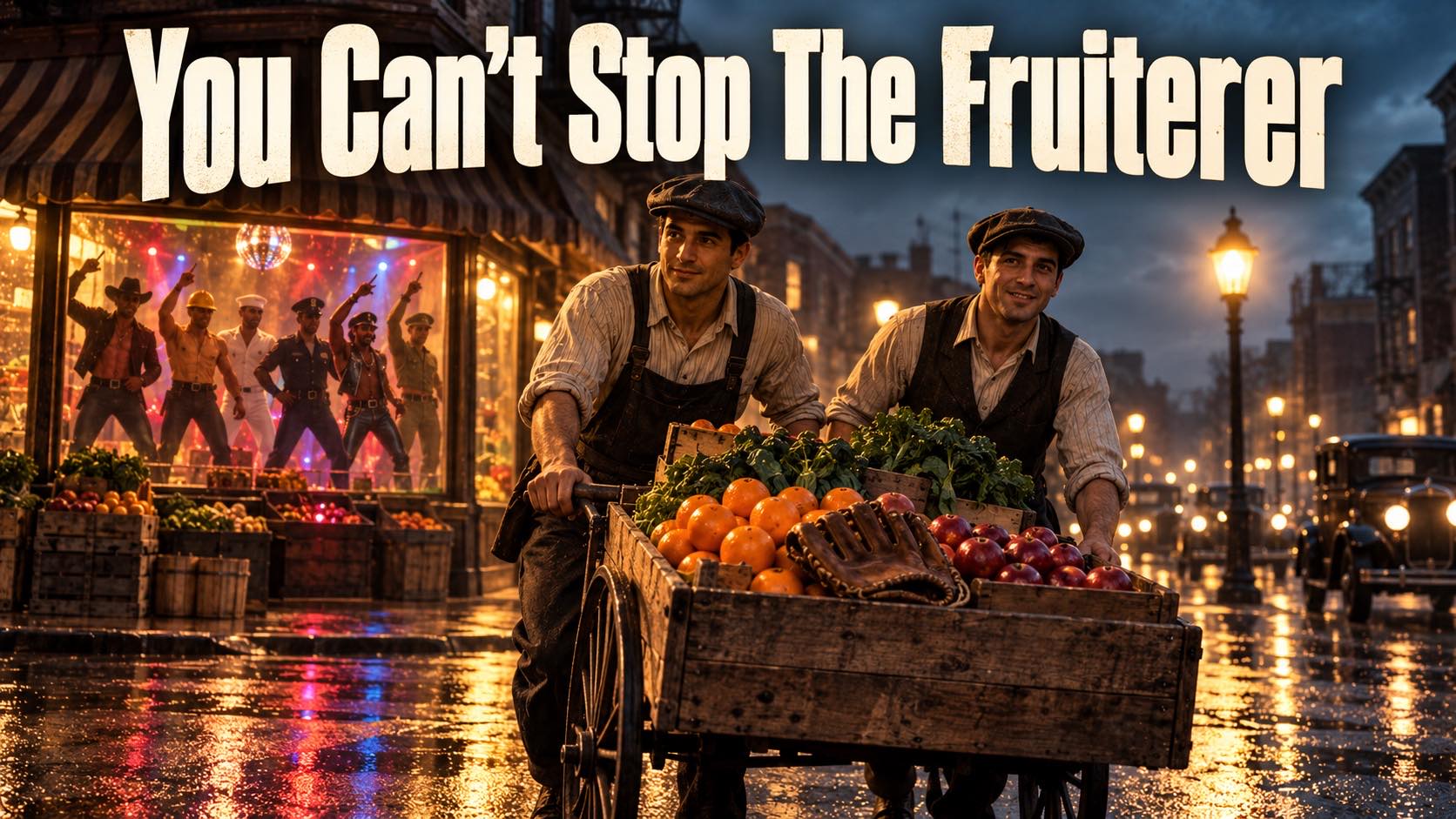
This week we dig into Village Supermarket (VLGEA), a family-run grocery chain born from a Greek immigrant’s baseball sacrifice in 1930s New Jersey and still quietly ticking away on the Nasdaq nearly 90 years later. The Pulled Pork covers the ShopRite co-op relationship with Wakefern, a messy legal battle that has the supplier and its second-biggest member suing each other, and why the numbers still look interesting despite all the argy-bargy. We also run through both US portfolios, where Willis Lease Finance, Tsakos Energy, and Enova are doing some heavy lifting.
This week’s full episode is for QAV Club members only. The free episode is available below. Also check out our podcast archives link and our pages on Apple Podcasts or Spotify or watch clips on TikTok. Or visit our homepage to learn more about QAV and how it works as a value investing system that you can learn and apply to beat the market.
Transcription
QAV AMERICA 71
[00:00:00]
Cameron: Welcome back to QAV America, Tony. This is episode 71. It is the 22nd of September 2026. In my, uh, news briefing, Tony, I see that Washington and Beijing are creating an AI incident line, the first real crisis mechanism between two AI powers. US Treasury Secretary Scott Bessent and Chinese Vice Premier He Lifeng agreed to establish a formal dialogue on AI safety, including an incident line for communications during serious AI events.
Officials plan to meet again in approximately two months in Shenzhen
Tony Kynaston: Do you think if you call that number it goes, “Hi, I’m an AI. I’m taking your call. Please hold. Press one for
Cameron: yeah
Tony Kynaston: Press two for nuclear, nuclear issue”?
Cameron: Just tell me everything you know, and, uh, [00:01:00] we’ll, uh, we’ll get back to you. Yeah, yeah, we’ll let you know how it’s going. Our AI’s trying to kill us all. Oh, really? Oh, okay. We’ll get right on that
Tony Kynaston: Yes, we know we caused it. Thank you.
Cameron: Hmm. Hmm. Um, also in the news, Chinese regulators are informally slowing and in some cases effectively pausing humanoid robot IPO applications. The intervention followed Unitree Robotics’ volatile listing. Its shares rose more than fivefold and then fell 55% from their peak. At least six other companies, including Deep Robotics, Xsquare, and AIG Bot have been preparing offerings.
Oh, I got a cough
Reguli- regulators are scrutinizing revenue from government-backed robot data centers, joint ventures, and demonstration products, projects. In some companies, local government-supported programs may provide 80 to 90% of [00:02:00] initial investment. One market estimate suggests valuations could fall 60 to 70% if, if this revenue was stripped out.
Recent private market valuations have already been cut by 30 to 50%. Um, I wonder what happens if you float an AI company in the US and then you find out NVIDIA’s responsible for 90% of their, uh, investment which they’re using to spend on NVIDIA products
Tony Kynaston: I think we know what happens. The float gets away, everyone makes a lot of money and the founders sell out and the sh- shop, the stock price drops
Cameron: How is SpaceX’s, uh, share price going? Have you looked?
Tony Kynaston: No, I don’t follow it. I’m not gonna follow robotics companies when they list in China either.
Cameron: I’m trying to look up SpaceX. Can’t, uh. Oh, there we go. Oof. Yeah. Eh, it got up a little bit. [00:03:00] Let’s see. It, uh, peaked at, uh, what? It peaked at two dol- uh, 211. It’s currently 160. Uh, 150, 152. Did get down as far as 108, so it’s come back up a little bit, but still nowhere it was on the first day
Tony Kynaston: There’s a new documentary coming out about Elon too. Have you heard about that?
Cameron: Uh, no, I don’t think so
Tony Kynaston: He’s not cooperating. He’s u-unhappy about it.
Cameron: Really?
Tony Kynaston: it’s a documentary maker who did the one on. Is it Theran– Theranos, the drug company?
Cameron: Uh, Elizabeth Holmes.
Tony Kynaston: Yep. So it’s not, not kind to Elon
Cameron: It’s unlike Elon not to like publicity. Well, um, I don’t have any other news, Tony. Obviously, uh, I did, um, mention to you off-air that, uh, I did see in the news this morning that Saudi Arabia has managed [00:04:00] to load 14 mill- million barrels onto seven supertankers at Ras Tanura on Sunday. And, uh, they’re managing to get that out through Oman somehow.
Where’s Ras Tanura? Ah, okay. Well, that’s right in Hormuz.
Tony Kynaston: Yeah
Cameron: So they’re not getting it down through the lower section as I thought. But, um, they managed to hug the coastline, I guess. Hugging lines. We used to talk about hugging lines on QAV. They’re doing a h- hugging line strategy
Tony Kynaston: Must have some kind of military support though. I can’t see that that would be a safe way to get oil out at the moment
Cameron: Hmm. Anyway, the oil prices have come down a little bit. I think, uh, Brent’s around about $100 US. WTI is about $95 US. The– It’s come down below 100, but with the [00:05:00] Houthi attacks on the Saudi pipelines and whatever, it’s been very, very dramatic
Tony Kynaston: Yeah. It has. The oil price is still up, still over 100 bucks a barrel
Cameron: Well, today on the show, Tony, I’m going to talk about a very simple and boring and heartwarming business, uh, in some ways. Probably the most heartwarming founding story ever. I think we have to have a QAV award for the most heartwarming founding story ever. Tell a lot of, tell a lot of stories in this show about lots of horrible things going on.
Um, but this is one of the nice ones. So this is a company called Village Supermarket. Is my Pulled Pork of the day.
Tony Kynaston: People.
Cameron: It’s owned by the Village People. Yeah.
Tony Kynaston: by the Village People, yep.
Cameron: Yeah. Yeah. Uh, all of the employees are dressed up as either the [00:06:00] fireman, the, uh,
Tony Kynaston: Cop.
Cameron: astronaut, the cop,
Tony Kynaston: A cowboy. The, um,
Cameron: American.
Tony Kynaston: yep
Cameron: So, um, trading on the Nasdaq.
Well, their Class A shares are trading on the Nasdaq. Ticker code is VLGEA. Started by two brothers, Nick and Perry Sumas, who arrived in the USA from Greece back in the, uh, early ’50s, I think it was.
Tony Kynaston: The movie.
Cameron: Another movie? Yeah.
Tony Kynaston: yeah
Cameron: Actually, it was, it was in the ’30s.
Tony Kynaston: Oh,
Cameron: Good one. Good one. In the ’30s. And, um, hmm, they started working at a produce stand in South Orange, New Jersey. Named, uh, apparently, uh, one theory is after William of Orange, the Dutch prince who became King William III of England.
Not to be confused with the, uh, current orange president of the United States
Tony Kynaston: King Donald [00:07:00] I of the US.
Cameron: Yeah, you’re our resident quiz master. Which came first, Tony, the name of the fruit or the name of the color?
Tony Kynaston: Ooh, I’ve got no idea
Cameron: You want to take a guess?
Tony Kynaston: fruit?
Cameron: The fruit. You’re right. The color gets its name from the fruit
Tony Kynaston: So how come we don’t call yellow bananas?
Cameron: This is one of the great mysteries.
Tony Kynaston: Yeah
Cameron: What happened to Michael Jackson’s nose? Uh, is Elvis alive and well in Argentina? And why don’t we call yellow the color banana? Uh, South Orange, New Jersey was the birthplace of Zach Braff, Kevin Spacey, and Hollywood producer Joel Silver. One of the great Hollywood producers
Tony Kynaston: Silver wasn’t involved in the YMCA or Grease, was he?
Cameron: Kevin Spacey could have been. [00:08:00] Yeah, but, uh, yeah. Um, speaking of which, Joel Silver, uh, producer of Lethal Weapon, I started watching the original Lethal Weapon on the weekend
Tony Kynaston: It’s supposed to watch at the Christmas time.
Cameron: That’s Die Hard. You’re getting it confused with Die Hard, I think
Tony Kynaston: also starts at Christmas time
Cameron: No, it’s Roger’s birthday. Lethal Weapon 2, maybe.
Tony Kynaston: Lethal Weapon
Cameron: Yeah, I think Lethal Weapon 2.
Tony Kynaston: Okay
Cameron: In the beginning of Lethal, the first Lethal Weapon movie, um, uh, Mel Gibson has his kit off. He’s living in his caravan down at the beach, and yeah, he’s completely stark naked, buck naked is my porn name. But, um, he– I was noticing that he’s, he’s in good shape, but he looks like a normal guy who’s in good shape, you know?
He, he wasn’t. You know, there was that period in the ’80s, Die Hard, Lethal Weapon, m-m-mid-’80s, where H-Hollywood male movie stars just looked like they were in good shape.
Tony Kynaston: Yeah
Cameron: [00:09:00] they go for a jog and, uh, yeah, they may lift a few weights, but yeah, push-ups, sit-ups, yeah. It was pre-Schwarzenegger and Stallone, um, and Dolph Lundgren completely corrupting the view of.
Yes.
Tony Kynaston: Yeah.
Cameron: being a teen, like I was born in ’70, so ’85, ’86, I’m 15, 16, going to the movies and going, “Oh, that’s what I need to look like in order to get laid. I need to.” So that’s why I have abs today. You wanna see my abs?
Tony Kynaston: Even took you 40 years
Cameron: It did. It took me 40 years to get there. You know, I, I don’t work quickly on these things.
I set a 50-year goal, a 40-year game plan to, uh, get abs. Anyway, back to the Sumas brothers. So Perry goes to an open New York Yankees trial, gets an offer to play Minor League Baseball in Connecticut. But the boss says that if Perry leaves, Nick will be fired. It’s a two for deal. One brother leaves, the other brother’s gonna get fired.
Two [00:10:00] men enter, one man leaves, the other man also leaves, apparently
Tony Kynaston: I would have thought that, uh, a produce store in South Orange paid better than M-Major League Baseball. Like, do you
Cameron: Well, I don’t think it did. Nick had a– No, Nick had a young son to support, so Perry stayed so Nick didn’t lose his job.
Tony Kynaston: Right.
Cameron: 1937,
Tony Kynaston: and pitched for the Yankees,
Cameron: yeah
Tony Kynaston: could have looked after Nick and his kids
Cameron: Oh, you, uh, say he would’ve earned enough money to look after. Yeah, I don’t think Minor League Baseball pays that well now, let alone in 1933, you know? In the middle of the Great Depression, Tony, I don’t think anyone’s got any money
Tony Kynaston: Well, I don’t think a produce store was paying all that well during the
Cameron: No, that’s true. Yeah, yeah. Surprised they were employing anyone.
Tony Kynaston: Hmm.
Cameron: So anyway, the brothers ma- So, uh, Perry stayed.
The brothers made a pact to save enough money to open their own shop, and four years later in 1937, Village [00:11:00] Supermarket opens, and it’s been around ever since in one way, shape, or form.
Well, there we have a title for this week’s episode, You Can’t
Tony Kynaston: Stop.
Cameron: Start
Tony Kynaston: can’t stop the fruitries.
Cameron: The Fruit Boys. Fruiterers.
Tony Kynaston: Mm.
Cameron: the
Tony Kynaston: Mm. Doesn’t matter
Cameron: Fruiterer. Then they joined a cooperative called Wakefern in the mid-1940s. Wakefern is a buying cooperative owned by independent grocers. Their members pool their purchasing power, say that 10 times quickly, so they can buy food, run warehouses, and advertise like one big chain.
And in 1951, the members all gathered under one name, ShopRite, R-I-T-E, because it’s America, and they can’t spell
Tony Kynaston: Well, they pay for signage by the letter. So
Cameron: That’s right.
Tony Kynaston: Yeah
Cameron: So Wakefern, all these years later, is still the center of the business. [00:12:00] It supplies the food, it owns the shop names, it runs the warehouses, creates the advertising, and supports the online apps that all of the independent grocers that are part of the cooperative, uh, uh, participate in. And their connection with, um, Village is kind of murky and convoluted.
Wakefern holds $111 million of Village’s cash and invests it for them. They also owe Village another 117 million through three loans, and that’s all gonna become relevant later when we find out that Village is suing Wakefern. So Wakefern is privately owned by the member grocers. It’s not publicly listed.
It has annual revenue of about 21 billion, and they pay all of their profits back to their [00:13:00] cooperative members, and that also makes things a little bit complicated when we get into the, the financials and the argy-bargy between the businesses. The Village currently runs 30 ShopRites, four Fairways, and three Gourmet Garage shops, and a partridge in a pear tree.
I gotta blow my nose. Hold on
Tony Kynaston: It’s not a, not an overly big network of shops though really, is it?
Cameron: No
Tony Kynaston: Mainly in the sort of New York, New Jersey area
Cameron: New York, New Jersey, one each in Maryland and Pennsylvania. And ShopRite for, you know, obviously people who live in those areas probably know these businesses, but we don’t. So ShopRite are conventional full service supermarkets. They sell groceries, fresh food, household goods, and in some locations, pharmacy services.
They’ve got 26 in New Jersey, two in New York, one in Maryland, and one in Pennsylvania. Fairway Market are large urban supermarkets. They’re all in Manhattan, [00:14:00] the four that they own. They, they specialize in like fresh, organic, specialty gourmet products. They’re sort of upscale. But then they have Gourmet Garage, which are smaller upmarket specialty food stores also in Manhattan.
One on 66th Street, one in Tribeca, and one in West Village. They focus on organic produce, premium meat and seafood, cheese, bakery products, and prepared meals. I think I need to do a trip to New York to, as a QAV, uh, research
Tony Kynaston: Yep
Cameron: company, Tony. Go and shop at these businesses now that we own some shares in them.
Um, so fresh food produces about 37 cents of every sales dollar. Ordinary packaged groceries and household items produce about 59 cents. What’s that? 8096. Pharmacy and everything else makes up the rest.
Tony Kynaston: Mm-hmm.
Cameron: But Village is only a regional operator. Wakefern [00:15:00] lets it buy and advertise like a much larger chain.
But there’s, the contract that the independent grocers like Village have with Wakefern is they are required to buy at least 85% of the merchandise that they need from Wakefern if Wakefern offers that product
Tony Kynaston: Mm-hmm.
Cameron: And then as I said, they return their profit to the member grocers based on how much the member grocers bought from them that year. It sort of determines the ratio of how much of the profit they get. Financial year ending July 2025, Village recorded $49.5 million from its share of the cooperative profit.
And they subtract those payments from the accounting cost of the groceries they sold, so if they get a larger payment from Wakefern, it increases Village’s reported profits. [00:16:00] But when it goes the other way, as it has done recently, it bites them on the ass.
Tony Kynaston: Mm-hmm.
Cameron: More on that when I get into the numbers. So if you look at their pricing chart, you’ll see that on the 2nd of June, the shares fell 19.4% in one day, from $46.62 to $37.59.
This was when their quarterly results came out. Sales actually rose 1.6% to 572.6 million, but a couple of the metrics didn’t look so good. Sales at established stores declined 0.2% from the same quarter a year earlier
Tony Kynaston: Mm-hmm.
Cameron: Now, of course, I have no idea what that means, but you’re an old retailer
Tony Kynaston: So like for like sales is, is a key measure of how well a, a supermarket business is doing. You wanna see it growing. Um, basically it’s [00:17:00] saying. W-what happens in Australia, and probably happens in the US too, is that supermarkets get growth in two ways or three ways, I guess. You can put their price up, which will make them less competitive, and so sales might go down, but that in the short term that’ll give them a, a boost. Uh, they can boost their sales by running promotions, or they can boost their sales by opening new stores. Um, so you can hide a, a decline in the existing stores by opening new stores. So analysts will generally f-focus on like for like sales growth. So it’s all the stores that were open last year and are still open this year and how have they done. It sounds like for the Village, they went back by a little bit, which is never a good thing. It means the underlying business proposition is flawed in some way.
Cameron: Well, they actually had an explanation for that. Um, something happened in January [00:18:00] this year, January 23rd to January 27th in North America, which was Winter Storm Fern.
Tony Kynaston: Mm-hmm
Cameron: A massive winter storm brought severe ice, heavy snow, and record cold temperatures across more than 30 US states and Canada. Village said that if you excluded the disruption caused by Winter Storm Fern, their established store sales actually grew 1.3%.
Tony Kynaston: Right
Cameron: But apparently they closed stores and some of their customers pulled their shopping into the previous quarter. Apparently people knew the storm was coming and stocked up, um, in the final week of Village’s second quarter.
Tony Kynaston: right
Cameron: the third quarter began as the storm forced stores to close, and so it made the second quarter look unusually strong.
The third quarter looked unusually weak. They said if they factored that out, sales would have [00:19:00] actually gone up 1.3% instead of falling 0.2%. Another thing that happened is egg prices fell because, because Donald Trump waved his magic wand and, uh, fixed all of the, uh, eggs. Also, I think it had something to do with bird flu.
But, um, uh, good for shoppers, but bad for sales comparison when the prices went down. Um, which led me to look at the, uh, a chart. I found a commodity chart for egg prices on Trading Economics. Insane. So this is, um, wholesale prices, I think. Bulk wholesale. In November 2025, it. price of a dozen eggs, US dollars, was $2.29, and currently it’s at, uh, 33 cents.
Tony Kynaston: Wow, that’s a big drop
Cameron: Yeah. But it dropped from November at $2.30 down to 33 cents in [00:20:00] January 14, 2026. Then it went up to $1.26 by February 5th. So I guess that was the storm happening in that second half of January. Dropped down to 38 cents by the end of February. Back up to $1.50 by late March. Back down to 30 cents by April. Back up to $1.15 in July 30, 2026, and now back down to 33 cents.
So it’s just eggs, man. It’s all over the place
Tony Kynaston: sounds a bit fishy, doesn’t it? Goes up and goes down month on month in the same cycle.
Cameron: Well, you don’t want your eggs to be fishy. If your eggs are fishy, yeah, don’t eat your eggs, people
Tony Kynaston: Well, you know, there’s probably a buying cycle going on there of some sort that forces the price down every second month. I don’t know what the reason is, but it doesn’t seem, it seems strange to me
Cameron: Well, let me look at a bit longer chart. Yeah, if I look at a five-year chart, I mean, they were, they. Oh my God, [00:21:00] February 2025, $8. I think that was bird flu. They do seem to be very choppy though. They do go up and down a lot, but they haven’t been this low. Well, in five years they’re very, very. ‘Cause I did look this up actually, so I spoke to the AI about it.
So apparently there’s a surplus now of eggs.
Tony Kynaston: Right
Cameron: They had, uh, no eggs, now they’ve got all the eggs. I said, “I demand an eggs-planation.” Hey, you like that? That was gonna be my title for the episode, but then you, you, uh, got ahead of me. Um, apparently US shoppers at retail are paying roughly $2.27 for a dozen eggs, about $3.20 Australian.
We pay double that for cage eggs, $6.50
Tony Kynaston: Yeah, I’m paying more like eight or nine dollars a dozen, I think,
Cameron: You pay the fan- yeah, the fancy ones
Tony Kynaston: Free range. Look after the chook, okay?
Cameron: Yeah, you, you, you get the gold, uh, the gold-tipped eggs. [00:22:00] Um, I looked at, yeah, so I had a long conversation with AI about Australian eggs and, you know, small, small supply, limited market, et cetera, et cetera. Anyway, so that’s, uh. So egg prices fell, which also affected their numbers. Profit from running the stores before interest and tax fell 38.8% to 8.4 million.
The storm was a cause, but not the only cause. So I mentioned before that Wakefern reduced their cooperative payments. I couldn’t really find out the reason why. Couldn’t see it in the Village filings, but, um, there was like a 69 cent fall in the amount of, um, profit that Village were getting, um, for every $100 in sales fell from $28.77 to [00:23:00] $28.68.
Big chunk of that was Wakefern paying them less cooperative profit. Um, some of it was also related to some higher warehousing charges, et cetera. So it seems like a reasonably small drop in margin, but it had a big effect on their business. Final profit fell by 19.7%. They got an unusually large tax benefit from some employee share program thing that softened the charge, but it’s a big drop in your profit, 20%.
Tony Kynaston: Yep
Cameron: But that was just for the quarter, so their year-to-date results don’t look so bad. Over the first nine months, total sales are up 4.4%. Sales at established stores are up 2.4%. Profit left after interest and tax is down 4.9%, so not, not the best, but, uh, not a complete wreck either. And the share [00:24:00] price has climbed back up, so after that 19% drop, it’s back up. Uh, almost to where it was.
A little bit below the price it was before that drop in Jul. What did I say it was? June or July?
Tony Kynaston: Mm-hmm
Cameron: June. Yeah. So it’s almost back up to that. It’s still a couple of points below, but, uh, it’s recovered a lot. But here’s where the story gets really messy. So Village is Wakefern’s second largest member. And as I explained, Wakefern’s not a normal supplier.
It buys most of Village’s merchandise, runs its warehouses, supplies all of its technology, creates its advertising, owns the names above, above the doors. And then recently, Wakefern said they were going to buy a chain of supermarkets called Morton Williams.
Tony Kynaston: Mm-hmm.
Cameron: Morton Williams has 17 upscale supermarkets in the New York City area, including [00:25:00] 15 in Manhattan, where Village operates its Fairway supermarkets and its Gourmet Garage specialty food stores.
And to be clear on this, these aren’t supermarkets that are joining the cooperative. Wakefern is buying them outright and running them, setting up a company that’s gonna run them directly. So they’re basically buying the competition and then running them in the same market as Village.
Tony Kynaston: Yeah
Cameron: Village sued Wakefern in May 2025 to try and stop them from buying Morton Williams.
Wakefern bought them anyway. Village said the cooperative’s own rules prevented Wakefern from buying and running a chain that competes directly with its members, as you would expect. Wakefern completed the deal anyway, so now Village has changed its case from trying to stop the purchase to seeking [00:26:00] compensation for losses plus extra damages to punish serious wrongdoing, as they call it.
Wakefern then has counter-sued, claiming that Village should be forced to sell its ownership in the cooperative and leave.
Uh, the court rejected that version for failing procedural filing requirements and, uh, not that the, the claim itself was bad, just that there was some sort of filing defect. Wakefern has resubmitted it saying they’re now not including the demand to throw Village out, but they are suing them and they’ve got a separate case in the United States federal courts over the Fairway and Gourmet Garage brand names.
It alleges Village used those names beyond the permission granted in their contracts. They’re also alleging Village sold products carrying those names even though the goods did not come through Wakefern [00:27:00] and they hadn’t, uh, received written approval and they hadn’t gone through Wakefern safety and quality checks.
So these cases are still going on. But there’s one concrete effect of this already. Every proposed store that uses a Wakefern name has to be approved by Wakefern’s store location committee and this whole dispute has delayed approval of some other planned Village stores and may delay more. So it’s kind of this messy battle between them and their supplier/controller I guess.
Tony Kynaston: Yeah, it’s an interesting situation, isn’t it? I mean, like it’s, there is lots of, uh, argy-bargy. I, I, I wondered why, given that, um, Village was such a big member that got itself into this kind of trouble, ’cause it seemed to have like a controlling stake, but it doesn’t. It, it owns about thirteen, or has a, has a, for about thirteen percent of the business, the co-op. [00:28:00]
So, um, it doesn’t control it, even though some Village executives are executives with Wake, uh, um, so it’s an interesting situation. But I, I wondered why during all of this, and I’m certainly not an expert in the area, but there’s almost like a restraint of trade that could be brought, um, isn’t there?
Like Wakefern’s gone from being a buying cartel actively trying to stop Village from growing, which is almost like a restraint of trade. So it’s an interesting dynamic
Cameron: Yeah, I don’t know. Um, it’s a long time since I’ve been a lawyer, so I couldn’t comment. Dean & DeLuca. You know Dean & DeLuca? You ever been to a Dean & DeLuca?
Tony Kynaston: No, the name rings a bell, but I can’t say I have
Cameron: Upscale coffee and pastry, um, stores in New York from memory. I think I.
Tony Kynaston: from a Pyrex jug? [00:29:00]
Cameron: Well, it’s America, Tony. Yeah, it’s not coffee if,
Tony Kynaston: You
Cameron: it’s not coffee if it doesn’t come from a Pyrex jug. No, I think they serve good coffee.
Tony Kynaston: market?
Cameron: a,
Tony Kynaston: Okay
Cameron: it’s a long time since I’ve been to a Dean & DeLuca, but yeah. Um, they have also sued Village, and they’re alleging they sold food carrying that name without permission.
So there’s some, uh, some allegations going, but obviously the thing that’s going on with Wakefern is, is pretty concerning.
Tony Kynaston: Hmm.
Cameron: uh, how it plays out if they lose the cases against Wakefern, I, I don’t know what that means for them as a business. But anyway, that’s not, uh, my problem. But it gets even messier
Tony Kynaston: Generally a suit, like a, when there’s a counter claim made, it’s, it’s the first stage of a negotiation process, isn’t it?
Cameron: You would think so, yeah. There’s some sort of a settlement happen at some point. Village reports that they hold $128.7 million of cash, but as I [00:30:00] said earlier, 111 million of that cash is with Wakefern in an account available on demand and earning an interest rate paid on the money overnight. Plus, Wakefern also owes Village that 117.3 million through three loans that pay interest and mature between 2027 and 2029.
Village owns another $32.2 million of Wakefern shares, which are required by their membership, but Wakefern’s not publicly listed, so your ability to sell those shares is dependent on being able to find a, a buyer, I guess. So a big chunk of what the stock market says the company is worth is tied up with the company they’re going to war with in the courts.
So it’s, it’s kind of messy. And this is also the company that they get 85% of their merchandise from and owns the brands and can stop them from rolling out new stores, et cetera, et [00:31:00] cetera.
Tony Kynaston: And I would have thought if they exited, they wouldn’t be able to get the buying, um, deals they could get if they stayed in and that would then free up Wakefern to find another competitor in the area to give those deals to. So it’s a. It’s not a. Yeah, the Village is not in a great situation there, I don’t think
Cameron: Hmm. Anyway, um, couple of other notes. Public investors buy Class A shares. These are one of these companies over there where you have your Class A and your Class B. The family, the Sumas family owns most of the Class B shares, which get 10 votes each. Four members of the Sumas family group control 61.8% of all shareholder votes.
Four members sit on the nine-person board. A fifth director and employee is the nephew of another family director. So, uh, a lot of family ownership, um, Class B shares. [00:32:00] We like family ownership, um, of businesses like this. Uh, so we trust that or hope that they’re gonna do a good job. I know a lot of investors don’t like it because your ability to influence the direction of the company is somewhat limited when the family owns a big chunk of it.
But we have no intention of telling them how to sell fresh fruit, so, good luck to them. Numbers, that’s the business. The numbers, uh, share price when I did my analysis was about $44.74. Market cap was about $662 million. Average daily trade is about 2.6 million. Pretty big. Uh, Stockopedia
stock rank was 93. Stockopedia quality rank is 91. The Piotroski F-score is a seven. All pretty good. [00:33:00] Um, price was not less than IV1. Could not score them for that. Um, IV1 was $19.36,
so the share price is more than double that. Couldn’t give them an IV, uh, price less than IV2 score because, um, we don’t really have an analyst’s estimate to use in that. Um, do not have a price less than book value for some reason on this one. Don’t know why my script didn’t calculate that, so it didn’t get a score for that.
Did get a price less than book plus 30, though, so that’s good. Got a score for that. Um, operating, uh, the price to operating cash flow is, uh, 6.42. Uh, no, hold on, 6.61. So, um, just getting under our seven cutoff, but still good.
Tony Kynaston: Yep
Cameron: Um, [00:34:00] could not score it for yield being higher than the benchmark rate because the yield is 2.24%.
Does have positive book value growth, though. Average of 9.75% a year over three years. Didn’t have a new three-point upturn, but does obviously have a three-point uptrend, uh, so we could score it for all of that. Forecast IV is not greater than double the price, but, uh, I, I was able to score it for all of those Stockopedia things that I mentioned before.
The, uh, forecast IV, uh, for the share price to profit number is not greater than 1.5, so I couldn’t score it for that. But all up, it got a QAV score. Well, it had a QAV quality score of 100%
Tony Kynaston: Mm-hmm. Very good
Cameron: a QAV score of 0.15. Wasn’t up high on the list this week and [00:35:00] had, uh, actually a much lower, uh, smaller number of stocks on the list.
You know, last week I was saying there was a whole bunch of stocks.
Tony Kynaston: Yep
Cameron: Uh, we had about half the number of stocks this week on the buy list, but mostly because they were having a lot of down days when I did my analysis. Stock market was not having a good day. So I think there was about 30, 32 stocks. This one is in the, you know, second half of that.
It’s probably number 20 on my list. A lot of stocks with a score above it, but, uh, they’re all the usual things that we’ve looked at before. There’s financial, a lot of financials, couple of shipping, um, couple of oil companies. But, uh, I thought Village Supermarket, that sounds interesting
Tony Kynaston: Interesting story. It should be a really boring business, shouldn’t it? I mean, are typically what they call defensive assets, so they along, [00:36:00] know, sort of growing at GDP or CPI plus a little bit. Um, so not high growth, but they’re reliable. When, the economy turns down, people still need to buy groceries and eat, so they tend to do the same year in, year out, whether the economy is strong or not. Um, so yeah, it’s interesting
Cameron: Well, I mean, it is pretty boring. I mean, it’s got a bit of a situation going on obviously with, uh, Wakefern, but outside of that, you know, they just do what they’ve done. They run grocery stores, low-end and high-end grocery stores
Tony Kynaston: And the other thing which we should also mention with supermarkets, and, and it goes to operating cash flow, is often run on positive cash terms. So it’s. from experience here in the Australian market, but it generally in, if you look at an Australian supermarket, and there’s no reason to think that the Village one will be different, you’re turning over your stock in maybe, in Australia it was like eight or nine [00:37:00] days.
So, you know, es-especially, um, the average is brought down by fresh food, which you have to turn over quickly. you can’t keep milk on the shelf for very long or, um, fruit and veg, that kind of stuff. Dry goods you can keep on longer, so you, you know, tubes of Alfoil or whatever can stay on the shelf for a while. But overall, um, it’s, it’s a very short turn cycle for the stock. But you’re negotiating thirty-day payment terms to your suppliers, so you can actually get the sales from stock quicker than you have to pay for it. So it actually creates a positive cash flow benefit for, supermarkets. They, um, often don’t need to fund working capital from anything other than their turnover and their stock, which is a, a real benefit for this business.
Cameron: Yeah. Well, I like it. It’s boring. I like boring. Um, hopefully they solve all of their issues with Wakefern, but, um,
Tony Kynaston: It
Cameron: yeah
Tony Kynaston: does sound like. The other thing which struck me with this is it’s a, [00:38:00] a network of supermarkets, but it’s not a big chain, and you don’t get a lot of big chains in America. Like Aus-Australia being a smaller market, we tend to have duopolies a lot or three or four large players, um, couple of big supermarkets and a couple of smaller ones. You got your Kohls and your Krogers in the US, but, or Krogers in particular, but you don’t have big nationwide chains like you do in some countries, like the UK or here in Australia. So, uh, you know, and given this one is regionally located, I think you said something like thirty or forty stores all up, and part of a co-op, which is, um, a good thing from the buying side.
It might be, not be a good thing in terms of being able to expand and open new stores because you have lots of other competitors, um, in the area that might, may not like it, but they’re part of the co-op. it’s an interesting situation and you, you sort of would normally expect to see a supermarket growing, not rapidly, but, but, um, [00:39:00] relentlessly is a better way to say it.
So they, um, they tend to be able to fund expansion from their cash flow, I’m not seeing it. Like, given it’s been around since the ’30s, to get to forty stores has taken a long time, which is a bit unusual for this ty-type of business.
Cameron: Well, I mean, they only operate as I said, in mostly New Jersey and New York, so th- sort of just sticking to their knitting
Tony Kynaston: Yeah, but generally supermarkets they, um. And it’s a different, different environment if they have a co-op and the co-op has rules about where you can expand and you can’t encroach on your turf and all that, your neighbor’s turf and all that kind of stuff. I can see why it, it’s ended up where it is.
But, you know, uh, if you think about a supermarket, um, it, it, it operates on tight profit margins for sure, but it throws off heaps of cash. Um, and oftentimes without having to take on too much debt, you might have some store leases you have to fund or whatever, but generally they can, they can roll out [00:40:00] and keep growing by opening new, new, uh, new stores to continue the growth and I’m not seeing that in this story, which is a bit unusual
Cameron: Well, uh, before we go, I just wanna do an update on our American portfolios. I did have to sell something from the light portfolio yesterday, which was, uh, unusual. I sold Magna International, MGA. Not sure why. It’s
Tony Kynaston: MAGA. You have to sell MAGA.
Cameron: Well, they’re a Ca- Ca- Canada based mobility technology company, um, dealing in, yeah,
Tony Kynaston: Yeah
Cameron: space, all that kind of stuff.
So their share price plummeted in the last, uh, few weeks. Had to let go of them. I replaced them with Village Supermarket. But, um, as a result of their fall mostly, our portfolio was above the S&P last week. It’s back slightly below it. I think s- all time, [00:41:00] which is just the end of last year for this portfolio,
Tony Kynaston: Mhm
Cameron: our portfolio is up 11% versus the S&P 500 up 12.
So we’re, we’ve dipped slightly below it again. Best performers are Pitney Bowes. Um, the, um, don’t they do, like, postage equipment?
Tony Kynaston: Ooh.
Cameron: M- what do you call that? Franking, yeah. They’re, um, up 52% since we added them.
Tony Kynaston: Wow
Cameron: Oportun Financial, the, uh
Tony Kynaston: Brazilian?
Cameron: well, no, they’re, they’re not Brazilian. I think they’ve–
Tony Kynaston: Okay
Cameron: They were focusing on, um, immigrants,
Tony Kynaston: Ah,
Cameron: think, from memory, in the US.
They’re up for 41% since we bought them.
Tony Kynaston: Really? With– So ICE isn’t doing its job?
Cameron: Maybe people have, uh, you know, sinking their money into it just in case. Um, Danaos [00:42:00] Container Ship Company is up 35%. Um, but the big one, Kodak, that we. Remember we talked about Kodak that don’t actually make cameras anymore?
Tony Kynaston: Yep
Cameron: Yeah, they’re up 25% since we bought them. Deutsche Bank’s up 23. Woori Financial, another financial, is up, uh, 20%.
Shinhan Financial is up 17, 18%. They’re a Korea based financial company. So good spread. These financials and the oil companies are doing well. PBR is up 15. Um, Global Ship Lease is up nine. Uh, so it’s doing okay. The US model portfolio though, which has been running a bit longer. All time, it goes back to September 2023.
Uh, today it’s, uh, 102% versus the S&P 500 up 74%. And the big performers for that are still Willis [00:43:00] Lease Finance up 247%. Tsakos Energy Navigation, uh, TEN is up 190%. ENVA, Enova International is up 187%. Euroseas, ESEA, is up 169%. Everything’s above water though. I don’t know how many stocks in this. One, two, three, four, five, six, seven, eight, nine, ten, eleven.
I’ve only got 11 stocks in that portfolio. Um, but yeah, it’s, uh, doing well.
Tony Kynaston: Hmm. Very good
Cameron: A bunch of gas companies, shipping companies, and financial companies. So, you know, there you go. That’s, uh, pretty much what the portfolio is. Um, the one that’s dropped a lot is Regional Management, that it’s up 36% since we bought it, but, um, it was trading at, it’s currently trading at $31.50.
It was up $43, um, in July, so it’s taken a big hit for some reason. [00:44:00] Consumer finance company, don’t really know why, but there you go. So the US portfolios though are doing okay and, uh, that’s it, Tony. That’s all I’ve got for you this week
Tony Kynaston: Very good. Thank you. Interesting company to look at
Cameron: Eh, kind of a classic value investing
Tony Kynaston: It is, yeah. Correct.
Cameron: AI within sight. No data centers, no AI
Tony Kynaston: No flock cameras. Or
Cameron: What’s f-f. What’s a flock camera?
Tony Kynaston: No, it’s the, the biggest, it’s the big thing uniting Democrats and Republicans, their opposition to flock cameras, surveillance cameras. But
Cameron: cameras or
Tony Kynaston: no,
Cameron: no?
Tony Kynaston: uh, communities put on their streets to look for. Like our red light cameras and, um, speed cameras
Cameron: Just CCD for cameras on streets
Tony Kynaston: But they’re, they’re now being found to also collect personal data and [00:45:00] photographs of the people inside the cars and things like that.
Cameron: No, you don’t say
Tony Kynaston: Hmm. Yeah.
Cameron: Well, you gotta, you gotta keep track of those terrorists, Tony. Gotta keep, you know, you gotta know where the terrorists are at all times. Yeah. All right. That’s QAV America for this week. Thank you, Tony. Happy hunting, everyone
Tony Kynaston: Thank you. Happy, happy NYSE or happy NASDAQ in this case
Cameron: Hmm, happiness
Previous Pulled Porks
Here’s the performance of the “pulled porks” (eg deep dives) we’ve done on the show in the past.
| Ticker | Company | Covered | Price then | Price now | Return | Ep. |
|---|---|---|---|---|---|---|
| CRGY | Crescent Energy | 25 Aug 2026 | $13.85 | $12.98 | -6.3% | 67 |
| SLDE | Slide Insurance | 18 Aug 2026 | $21.60 | $22.86 | +5.8% | 66 |
| RJET | Republic Airways | 10 Aug 2026 | $21.39 | $18.38 | -14.1% | 65 |
| BBDO | Banco Bradesco SA | 3 Aug 2026 | $3.44 | $3.04 | -11.6% | 64 |
| RM | Regional Management | 27 Jul 2026 | $41.65 | $30.43 | -26.9% | — |
| PBR | Petrobras | 20 Jul 2026 | $17.97 | $20.65 | +14.9% | 62 |
| TEO | Telecom Argentina | 14 Jul 2026 | $13.47 | $12.08 | -10.3% | 61 |
| FG | F&G | 7 Jul 2026 | $28.55 | $21.61 | -24.3% | 60 |
| KSS | Kohl's | 1 Jul 2026 | $17.34 | $18.18 | +4.8% | 59 |
| CARE | Carter Bankshare | 23 Jun 2026 | $31.00 | $29.66 | -4.3% | 58 |
| AERO | Aeromexico | 18 Jun 2026 | $17.34 | $15.71 | -9.4% | 57 |
| NRIM | Northrim Bancorp | 1 Jun 2026 | $24.71 | $24.52 | -0.8% | 55 |
| MGA | Magna International | 27 May 2026 | $65.20 | $64.64 | -0.9% | 54 |
| BWLP | BW LPG Limited | 18 May 2026 | $21.06 | $24.66 | +17.1% | 53 |
| KNOP | Knot Offshore Partners Com Unt | 14 May 2026 | $10.78 | $10.49 | -2.7% | — |
| GSL | Global Ship Lease | 13 May 2026 | $41.79 | $43.73 | +4.6% | — |
| DB | Deutsche Bank | 4 May 2026 | $31.11 | $36.08 | +16.0% | 51 |
| UEIC | Universal Electronics | 29 Apr 2026 | $4.25 | $5.27 | +24.0% | — |
| OPRT | Oportun Financial Corp. | 20 Apr 2026 | $5.88 | $8.28 | +40.8% | 49 |
| PAGS | PagSeguro Digital | 13 Apr 2026 | $10.67 | $8.90 | -16.6% | 48 |
| CVGI | Commerical Vehicle Group | 6 Apr 2026 | $3.56 | $2.96 | -16.9% | 47 |
| PBI | Pitney Bowes | 30 Mar 2026 | $10.86 | $16.38 | +50.8% | 46 |
| KODK | Eastman Kodak | 23 Mar 2026 | $7.83 | $9.59 | +22.5% | 45 |
| GPRK | GeoPark | 17 Mar 2026 | $8.77 | $10.68 | +21.8% | 44 |
| MUR | Murphy Oil | 9 Mar 2026 | $34.55 | $36.65 | +6.1% | 43 |
| NBR | Nabor Industries | 3 Mar 2026 | $77.80 | $79.42 | +2.1% | 42 |
| BFH | Bread Financial | 28 Feb 2026 | $70.86 | $101.25 | +42.9% | 41 |
| SHG | Shinhan FInancial Group | 17 Feb 2026 | $69.83 | $81.12 | +16.2% | 40 |
| EC | Ecopetrol | 3 Feb 2026 | $12.57 | $16.70 | +32.9% | 38 |
| CHRD | Chord Energy Corporation | 24 Jan 2026 | $95.53 | $135.15 | +41.5% | 37 |
| AMTD | AMTD IDEA Group | 20 Jan 2026 | $1.02 | $1.02 | -0.4% | 36 |
| VLRS | Controladora Vuela Compania de Aviacion SAB de CV | 13 Jan 2026 | $9.45 | $6.76 | -28.5% | 35 |
| TUSK | Mammoth Energy Services, Inc. | 10 Jan 2026 | $2.45 | $2.91 | +18.8% | 39 |
| XIFR | Xplr Infrastructure | 6 Jan 2026 | $10.17 | $10.36 | +1.9% | 34 |
| AMCX | Amc Networks | 1 Jan 2026 | $9.52 | $12.03 | +26.4% | 33 |
| ZD | Ziff Davis, Inc. | 16 Dec 2025 | $36.48 | $55.68 | +52.6% | 32 |
| VALE | Vale SA | 11 Dec 2025 | $12.90 | $13.59 | +5.3% | 31 |
| AER | AerCap Holdings NV | 29 Nov 2025 | $131.82 | $146.51 | +11.1% | 30 |
| KEP | Korea Electric Power Corporation | 29 Nov 2025 | $16.74 | $11.07 | -33.9% | 29 |
| PCG | PG&E Corporation | 24 Nov 2025 | $15.67 | $11.95 | -23.7% | 28 |
| CALY | Topgolf Callaway Brands Corp. | 12 Nov 2025 | $10.60 | $14.31 | +35.0% | 27 |
| CALM | Cal-maine Foods, Inc. | 23 Oct 2025 | $94.56 | $67.36 | -28.8% | 25 |
| AAL | American Airlines Group Inc. | 20 Oct 2025 | $13.78 | $13.52 | -1.9% | 26 |
| DCH | Dauch | 9 Oct 2025 | $6.16 | $5.11 | -17.0% | 24 |
| CYH | Community Health Systems, Inc. | 3 Oct 2025 | $3.01 | $2.89 | -4.0% | 23 |
| MEOH | Methanex Corporation | 15 Sep 2025 | $39.81 | $59.78 | +50.2% | 21 |
| SUZ | Suzano Inc. | 1 Sep 2025 | $9.73 | $8.57 | -11.9% | 20 |
| KE | Kimball Electronics, Inc. | 26 Aug 2025 | $28.65 | $27.53 | -3.9% | 19 |
| TITN | Titan Machinery Inc. | 14 Aug 2025 | $18.98 | $23.47 | +23.7% | 18 |
| GTN | Gray Media, Inc | 7 Aug 2025 | $4.42 | $4.59 | +3.8% | 17 |
| SENEA | Seneca Foods Corporation | 30 Jul 2025 | $102.12 | $182.53 | +78.7% | 16 |
| BHC | Bausch Health Companies Inc. | 22 Jul 2025 | $6.32 | $5.77 | -8.7% | 15 |
| SSL | Sasol Limited | 17 Jul 2025 | $4.99 | $13.93 | +179.2% | 14 |
| ZEPP | Zepp Health Corporation | 11 Jul 2025 | $2.98 | $3.89 | +30.5% | 13 |
| PKX | POSCO Holdings Inc. | 1 Jul 2025 | $48.49 | $57.84 | +19.3% | 12 |
| PDS | Precision Drilling Corporation | 27 Jun 2025 | $47.78 | $80.41 | +68.3% | 11 |
| IX | Orix Corporation | 19 Jun 2025 | $21.00 | $39.03 | +85.9% | 10 |
| JXN | Jackson Financial Inc. | 11 Jun 2025 | $83.00 | $131.81 | +58.8% | 9 |
| IHS | IHS Holding Limited | 30 May 2025 | $5.38 | $8.38 | +55.8% | 7 |
| F | Ford Motor Company | 21 May 2025 | $10.80 | $12.38 | +14.6% | 6 |
| ENIC | Enel Chile SA | 14 May 2025 | $3.97 | $4.26 | +7.3% | 5 |
| CM | Canadian Imperial Bank Of Commerce | 8 May 2025 | $63.76 | $112.15 | +75.9% | 4 |
| DAC | Danaos Corporation | 2 May 2025 | $82.47 | $153.28 | +85.9% | 3 |
| CX | Cemex Publicly Traded Stock Corporation With Variable Capital | 28 Mar 2025 | $5.66 | $9.53 | +68.4% | 2 |
| ZIM | Zim Integrated Shipping Services Ltd | 13 Mar 2025 | $17.97 | $28.39 | +58.0% | 1 |
5 more recent picks from the last 30 days are available to QAV America members — members hear every deep dive a month before it appears here. Become a member
Returns exclude dividends and are measured from the price on the day each stock was covered on the show. Prices as of Mon 28 Sep 2026, 10:31 pm ET. Updated automatically. Not financial advice.
0 Comments