Hi QAVVERS,
Well it’s been another rough-and-tumble week, as the situation with Iran is still far from clear. And this was even before today’s news that Iran attacked a ship passing through the Strait. Never a dull moment.
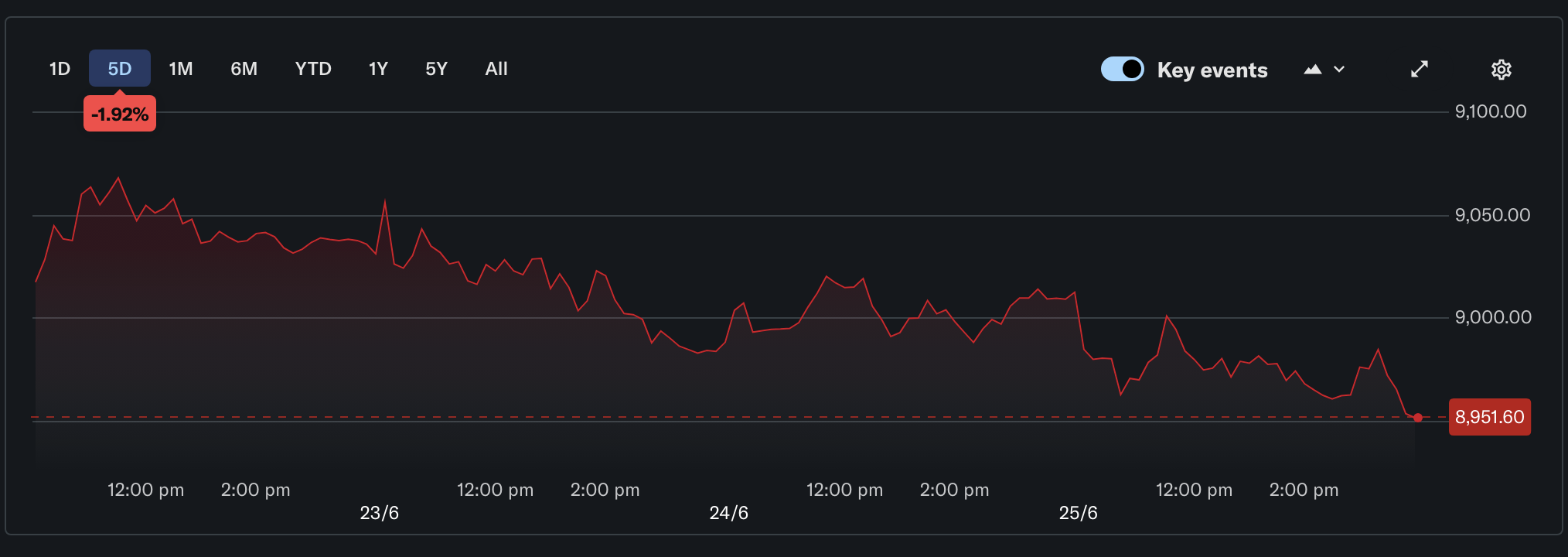
Australia’s All Ordinaries finished the five-day period down 1.92% and it’s been falling even further (and faster) today (it’s around 8913 as of the time I’ve writing this 2:00 pm).
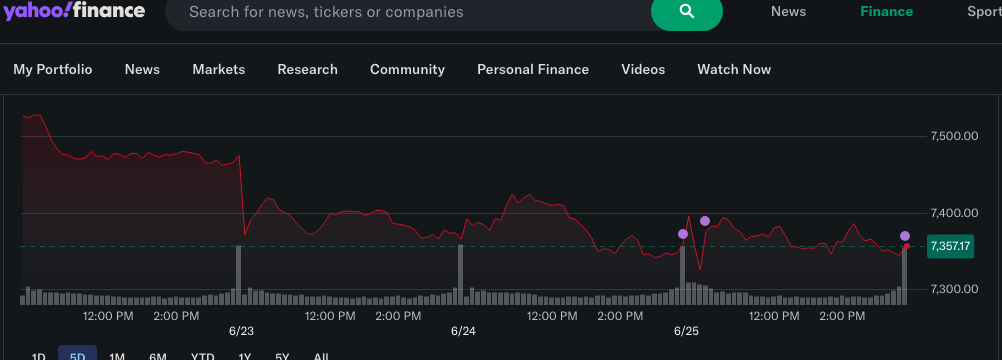
Over the week the S&P 500also trended steadily lower, falling from around 7,500 to close at approximately 7,357, a decline of roughly 1.9% across the period. The weakness was driven largely by renewed jitters around AI valuations and chipmaker earnings. Even SPCX fell back to earth.
So, let’s get into my weekly updates and see where we are at.
All the Best,
Cam
QAV MYTH KILLERS
“No Risk, No Reward”
This week I want to talk about one of the oldest chestnuts in the investing playbook. “No risk, no reward.”
Investopedia – where most people land when they’re starting out – tells you “the potential return rises with an increase in risk”.
Of course it’s true – there’s always a risk associated with investing.
But I think the way this translates into the minds of some investors is “the higher the risk, the higher the reward” – and we all want high rewards. So therefore we think we need to accept high risks.
And that’s a problem in a couple of ways. Either because people don’t end up investing because they don’t want to take high risks, or because they do take high risks and end up losing their shirts.
The truth, of course, is that successful investing doesn’t require taking high risks. In fact, it involves having strategies in place to minimise your risks while at the same time maximising your returns.
Let’s look at some data.
In 2011, three researchers – Baker, Bradley and Wurgler – ran the numbers on US stocks going all the way back to 1968. They sorted them by volatility – volatility just being the technical word for how wild the ride is – and then followed a single dollar invested at each end of the spectrum, right through to the end of 2008. 41 years.
Their conclusion?
“Contrary to basic finance principles, high-beta and high-volatility stocks have long underperformed low-beta and low-volatility stocks.”
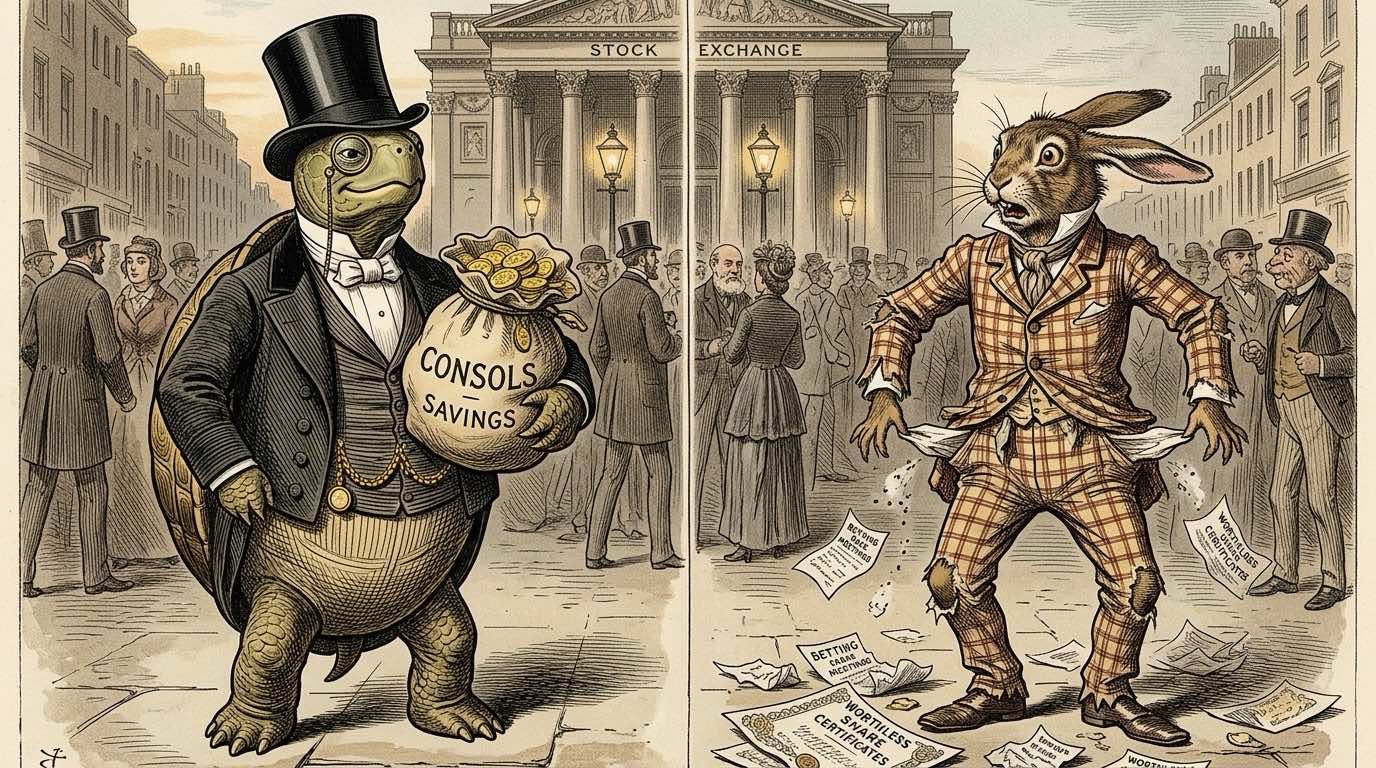
BBW concluded that a dollar in the lowest-volatility stocks – the boring ones – grew to $59.55.
A dollar in the highest-volatility stocks – the white-knucklers, the ones that are supposed to pay you the most – ended up worth… 58 cents.
Over four decades, the high-risk stocks LOST money while the boring ones went up nearly sixtyfold.
And before anyone writes in with “that’s just one study, one market, one stretch of years” – other studies went looking for the same thing and found it everywhere they looked.
Then why does everyone still believe in high risk, high reward?
Two reasons.
One – we love a lottery ticket. People overpay for the dream of the 10-bagger the same way they hand over a couple of bucks for Powerball, knowing full well they probably won’t win. All that demand pushes the exciting assets up to prices that quietly guarantee rubbish returns from there on. Common wisdom is that you can afford to “take a punt” on crypto or gold or the latest hype stock, and, worse still, you’re a complete mug if you don’t.
Two – the professionals can’t help themselves. Most fund managers aren’t allowed to borrow money to gear up a portfolio of safe, dull stocks. So to look like heroes against their benchmark, they pile into the volatile names instead, and bid them up even further. The myth survives because the people being paid to know better are paid to keep feeding it.
Tony has never once told me to buy something because it was risky enough to be worth the gamble. There’s no box on the checklist for “is this terrifying enough?”. The checklist does the opposite. It goes hunting for quality – profitable, well-run, audited businesses that throw off cold hard cash – and it only buys them when they’re cheap.
We don’t set out to buy low-volatility stocks. But screen for boring, profitable companies trading below what they’re worth, and have a guess where you wind up? Down the calm end of the market. That isn’t to say we don’t have some undesired excitement now and again – the occasional African gold miner whose C-suite becomes the guest of a military coup for a few weeks – but we don’t go seeking them. And we have rules in place to get us out quick smart if we stumble into one.
That’s not luck. That’s the whole idea.
And you don’t have to take my word for any of it. The Dummy Portfolio is public – we publish the numbers so anyone can check them. From 2020 to 2025 it returned 16.8% a year against the ASX 200’s 8.2%. Roughly double the market. Not by white-knuckling it through the spec end of the ASX. By being relentlessly, profitably boring.
Minimise your risk – by buying profitable companies at a discount, and then having rules in place for when to get out if things go backwards.
Maximise your reward – by holding those companies as long as you can, letting your flowers bloom, letting the growth compound, and only selling them when the rules force your hand.
Think of it in terms of transportation. You want to travel from one country to another. You want to get there as fast as possible, because travelling is uncomfortable and annoying. Do you take the highest risk mode of transport? Are you jumping in the fastest thing that moves? Jumping on one of Elon’s latest rockets, that tend to blow up on launch? Probably not. You’re going to find a reasonable balance of speed, comfort and safety. You know that flying involves risk, but you don’t want to take more than you have to. Investing should be no different.
min(risk), max(reward)

STOCK ANALYSIS OF THE WEEK
I only had to sell one stock from the Light portfolios this week and you can see my Light posts here.
I also had to sell something from the U.S. Light portfolios this week and added a couple of stocks. U.S. members can read about them here.
Tony did a Pulled Pork on Ashley Services Group (ASH), an ASX-listed labour hire and training firm with a QAV score of 0.24 and a strong owner-founder running what he describes as a thinly traded turnaround story. Catch the full analysis in the podcast linked below.
On the American podcast this week, I did a pulled pork on a crazy story about a small bank on the NASDAQ, CARE. The podcast link is down below if you want the full story.
BUY LIST
Each week, we produce a buy list based on our value investing system that we share with our QAV Club members. The intended primary purpose of this buy list is for club members to use as a reference for comparing their own buy list. In theory, all of our buy lists should look pretty similar each week.
QAV Value Investing Buy List (AU) 2026-06-19
Below is a link to the US list for this week (available exclusively to our U.S. Club members):
QAV Value Investing Buy List 2026-06-23
PORTFOLIO PERFORMANCE
We compare our performance to what we think is the most relevant benchmark (SPDR 200 in Australia, S&P500 in the USA), but if you’re new to investing, these comparisons might not mean much. Instead, you can compare our performance to the top-performing Super Funds in Australia and see why an amateur active investor (who has a system to follow) can out-perform most of the “professionals”.
We publish a fresh performance snapshot once a month. Weekly noise doesn’t tell you much in a value-investing system — what matters is the trend.
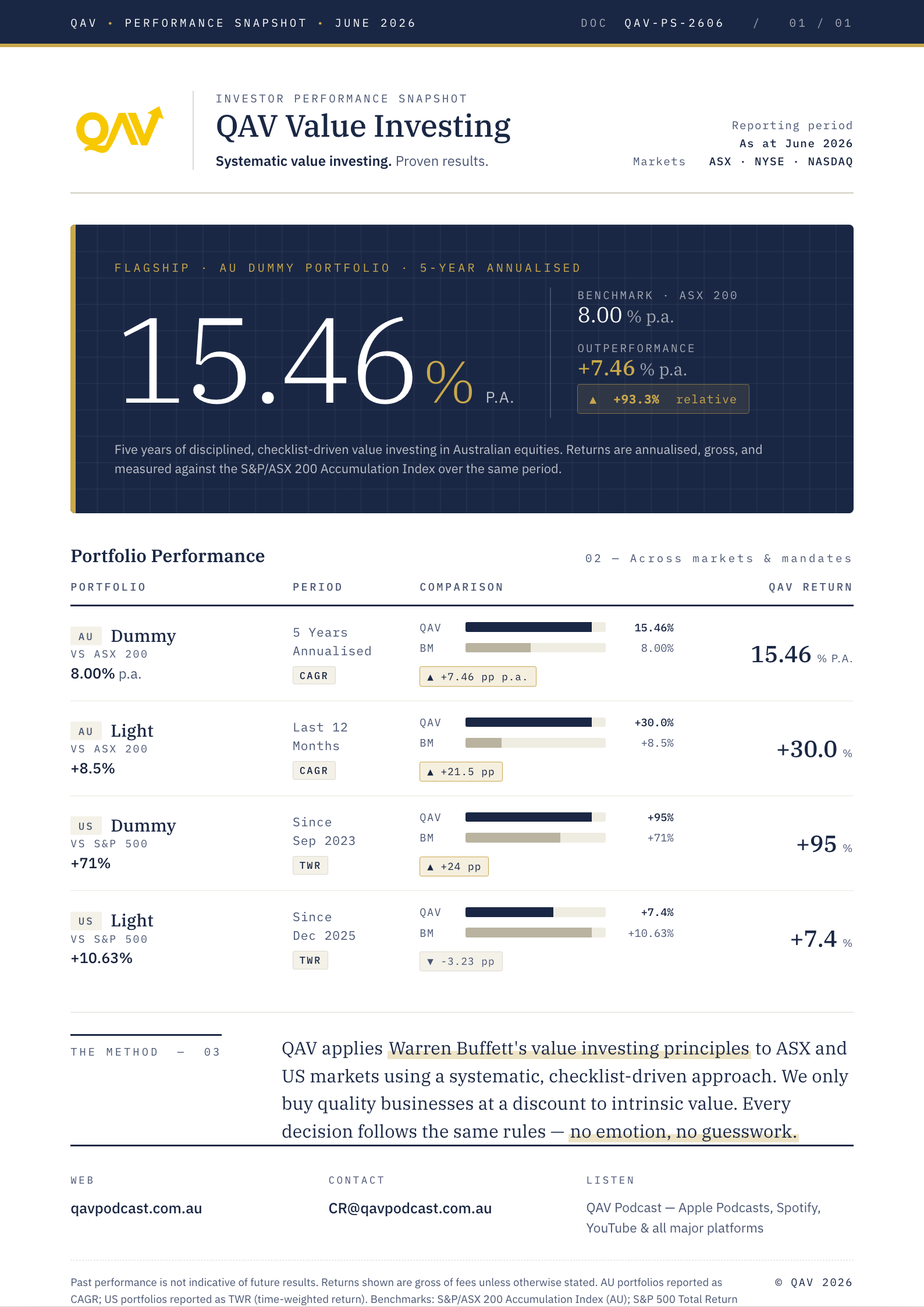
June 2026 performance snapshot.
Become a QAV Light Member today and start your investing on the right track
If you want to find out what we’re trading in QAV Light each week, sign up to become a member. You’ll get an email from me every Monday letting you know what we’re buying and selling in that portfolio. You can choose to copy our trades or not. It’s the easiest way to start your rules-based investing career… and you don’t even need to know the rules. I’ll follow the rules for you. It’s a good first step to eventually becoming a QAV Club member and learning how to run the system by yourself.
QAV LIGHT: He already knows where they are.

(Note: Americans interested in joining QAV Light or Club please go here instead.)
Add QAV America — US stocks, the same QAV method
Already a QAV member? You can add QAV America as your second membership at 50% off — US-listed stocks, the same QAV approach, billed in AUD through this site (just one payment to keep an eye on). Add QAV America →
Not a QAV member yet? Join QAV first, then you can add QAV America at the 50% member rate.
THIS WEEK’S EPISODES

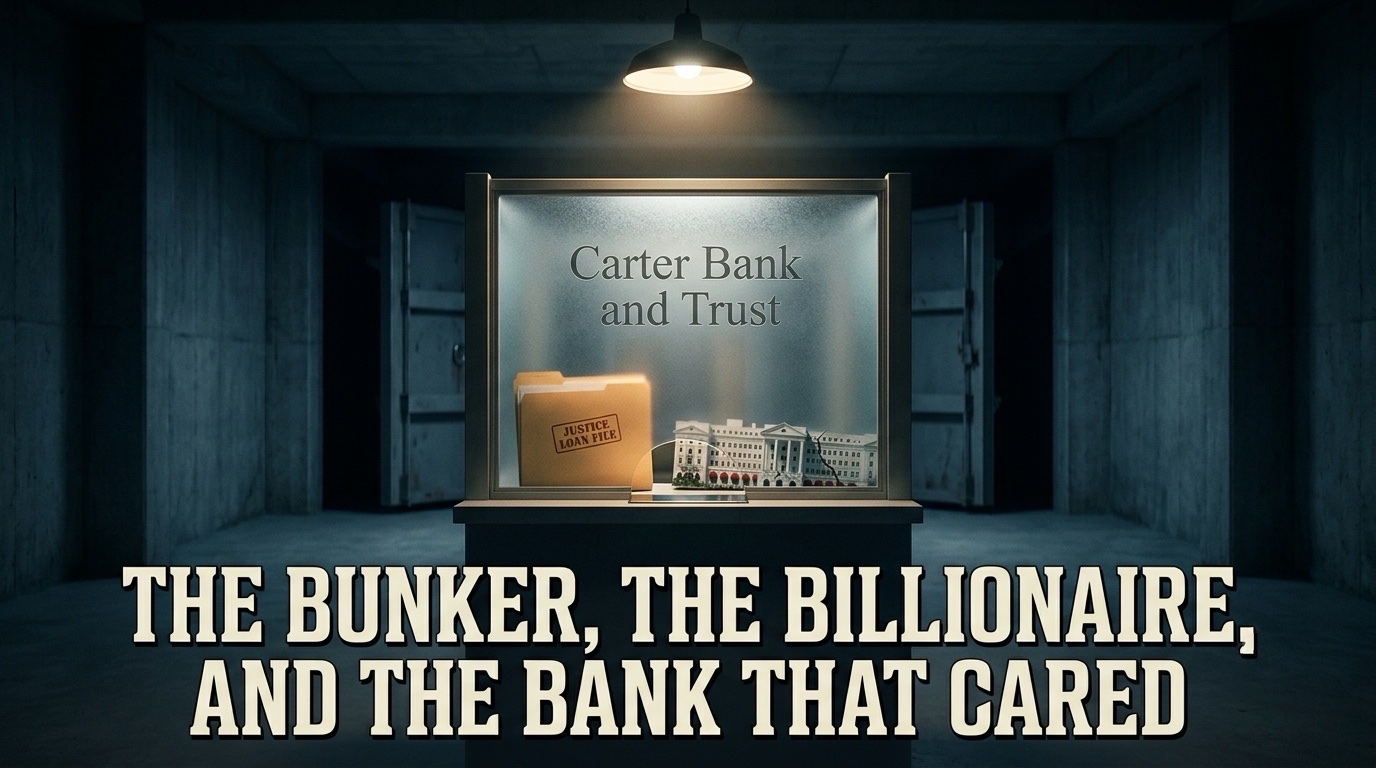
The Bunker, the Billionaire, and the Bank That Cared (CARE): QAV America #58
STOCK NEWS AND UPDATES
COMMODITIES
This week the big changes to commodities were the following:
| Commodity | Status |
|---|---|
| Coal (coking) | JOSEPHINE |
| Copper | JOSEPHINE |
DISCLOSURE
Please review our trading and disclosure policy.
SIGNING OFF
That’s it for this week. Tony pulled apart THAT and I had a crack at AERO, so there’s plenty to chew on if either of those are on your watchlist. Coking coal and copper both moved to Josephine this week, worth keeping an eye on if you’re holding anything exposed to either. Tony will have the scoring implications sorted, I just report the changes. See you next week.
SSDD!
- Cam
That’s it for the week!
QAV A GOOD SHAREMARKET!
Got a question? info@qavamerica.com
Leave a Reply