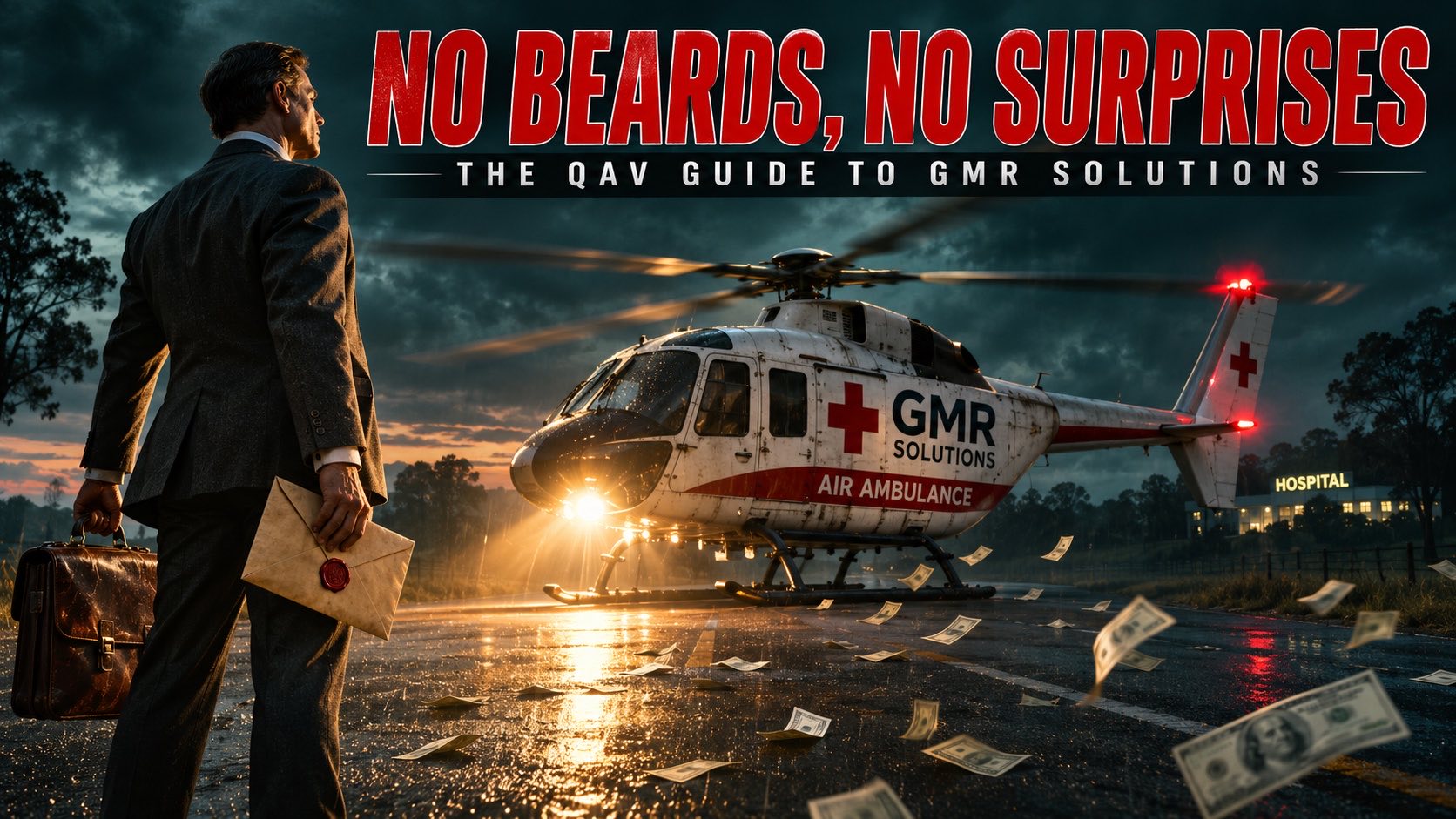
This week we dig into GMR Solutions (GMRS), the air and ground ambulance giant that covers 60% of the US population but has been trading well below its IPO price since floating in May. Cameron breaks down the company’s tangled web of penny warrants, a tax receivable agreement that funnels 85% of tax benefits back to KKR, and a baseball-style arbitration system that’s been winning big for GMR but is now under threat from insurers lobbying to change the rules. We also catch up on the model portfolio, check in on past Pulled Pork picks, and Tony weighs in on whether buying a private equity float is ever a good idea.
This week’s full episode is for QAV Club members only. The free episode is available below. Also check out our podcast archives link and our pages on Apple Podcasts or Spotify or watch clips on TikTok. Or visit our homepage to learn more about QAV and how it works as a value investing system that you can learn and apply to beat the market.
Transcription
QAV AMERICA 79 REVIEW VIDEO
Cameron: [00:00:00] Welcome to QAV America, episode 79. Tony, this is the 17th of November, 2026. Happy birthday to my little sister, Anita, who would be turning 49 today, I think
Tony Kynaston: Who would be turning?
Cameron: Is turning.
Tony Kynaston: Okay
Cameron: I’m trying to work out what the date is. Hold on. No, she was born in 79. No. No, she’s not that old. I don’t know, 40-something. 47 maybe. Um, I did send her a happy birthday message, but I forgot to look up how old she is. How are you, Tony?
Tony Kynaston: Good.
Cameron: on.
Tony Kynaston: H- okay. Stop. Hold on. Holding. On hold. Do, do, do, do, do, do, do. Do, do, do, do, do, do. I’m on hold.
Do, do, do
Cameron: all right. I just thought I’d, from now on I’d do these episodes in my American accent, Tony.
Tony Kynaston: Okay
Cameron: uh, I was helping my son Hunter.
Tony Kynaston: What?
Cameron: I was helping my h- Wait, [00:01:00] what?
Tony Kynaston: Well, speaking of American, when, when was James Bond ever American? Have you heard the news?
Robert Robert Pattinson. Is he Br- is he British? I thought he was American. Okay.
Cameron: he’s
Tony Kynaston: I’m glad. All
Cameron: Yeah.
Tony Kynaston: right.
Cameron: I don’t think you can have the same actor play Batman and James Bond.
Tony Kynaston: I’m gonna have to go
Cameron: The Doctor as
Tony Kynaston: I’m gonna have to watch Batman now. I’m gonna have to go watch Batman now to see what he’s like. I kind of avoided that one.
Cameron: It’s not very good except
Tony Kynaston: Hmm
Cameron: Farrell doing
Tony Kynaston: Ah, The Penguin, right.
Cameron: That’s when he first appeared as the Penguin. He’s great.
Tony Kynaston: Ooh
Cameron: The film itself I thought was ho-hum. Pattinson’s fine, but he doesn’t get to do much. He’s just broody through most of
Tony Kynaston: Yeah
It’s
Cameron: a broody Batman thing Um but yeah I I don’t know I I think he’ll be okay but I I just don’t think I was saying to my boys this morning like I think you wanna cast an unknown as
Tony Kynaston: Yeah,
Cameron: want
Tony Kynaston: agree
Cameron: actor as Bond you know
Tony Kynaston: Unless they’re [00:02:00] Pierce Brosnan
Cameron: years But even Pierce Brosnan like Pierce Brosnan Roger Moore Connery they’d all done other things
Tony Kynaston: Ooh
Cameron: weren’t massively famous when they did Bond They Brosnan had had a TV show and the guy
Tony Kynaston: Yeah, Remington Steel
Cameron: Yeah guy before him whatever his name was um had
Tony Kynaston: Timothy Dalton
Cameron: Yeah Dalton had done stuff He’d been around since the 60s He was in um as a teenager with Anthony Hopkins and Peter O’Toole and Katharine Hepburn in The Lion in Winter I remember
Tony Kynaston: That’s right, Yeah,
Cameron: Uh I think he was like 16 or something when he made that or something like that been around but they weren’t A-lister actors They were you know you may have seen him in something but you didn’t go Oh that’s the guy from
Tony Kynaston: yeah, yeah, right.
Yeah
Cameron: or That’s Batman who’s James Bond That’s can’t do that I
Tony Kynaston: You’re right actually. It should be a standalone franchise, shouldn’t it?
Cameron: I I think you want someone who’s not that well [00:03:00] known But like the guy from The
Tony Kynaston: Like Daniel Craig.
Cameron: the lord Like Daniel Craig he’d been
Tony Kynaston: Yeah.
Cameron: Cake and other stuff but he
Tony Kynaston: Yeah.
Cameron: a name name
Tony Kynaston: Yeah
Cameron: The guy in The Gentlemen who plays the
Tony Kynaston: Hmm
Cameron: you know he’s done White Lotus he’s done Gentlemen he’s done some stuff but I don’t think he’s that I don’t even know his name Like
Tony Kynaston: Hmm.
Cameron: know if you can’t you know So anyway people don’t care about that They want to talk about investing Now I’ve got out of my American accent I was gonna do All right all right all right I was with Hunter last Now I’m trying to Um I was with Hunter last night helping him shoot
Tony Kynaston: Uh-huh
Cameron: reel and he was doing an American accent and he kept It was terrible And I was like I could do a better American accent than that I should just do an American accent in my American show every week
Tony Kynaston: Well, it’s great being a fly on the wall with the Reilly family. It’s like, “I can do it better than that. Ah, come on, I can do it. You’re terrible.”
Cameron: That’s pretty much it That’s my relationship You don’t have sons If you
Tony Kynaston: Yeah.
Cameron: you’d know what it’s like That’s what having sons is like Ah you don’t know [00:04:00] shit So you got a you got a lovely daughter who’s lovely and civilized and uh you know sweet You know you don’t have boys that are full of testosterone that you need to argue and fight with constantly Well Tony America Oh what’s going on in America Well the Nvidia stuff is still going on Um we talked about it in our last show There have been rumors that Jensen Huang may end up running Nvidia again The board leaked something today saying Nuh-uh that ain’t gonna happen But you know America being America who knows really know Nobody knows Um but the market has not been going so well but it’s okay for us really Um we’ve pulled up ahead quite nicely of the S&P 500 again Our [00:05:00] model portfolio is currently 83 up all time versus the S&P 500 which is up 66 over that period of time So we’re not back to double market yet but are pulling away We were back ba back to neutral a little while ago The um light portfolio is running at about 7 versus the S&P which is running at 7.8 So we’ve caught almost caught up to that well It’s only um it’s been running for what Oh just over no nearly a year now It’ll be a year next month Still hasn’t managed to get its uh wind in its sails but it’s basically neck and neck Some of the por some of the stocks in that portfolio have done very well recently though Opportune Financial up 94
Tony Kynaston: Ooh
Cameron: since we added it in April it’s had a [00:06:00] good run Uh Pitney Bowes is up 41 Universal Insurance Holdings is up 29 Hamilton Insurance is up 26 So um some stocks doing well The uh worst performers there are some of the financials though Atlanticus Holdings is down 14 OneMain Holdings is down 12 Bread Financial Holdings is down 5 Shinhan Financial is down 5 Um PBR is now down 3.7 It’s uh s know still taking a battering So the Brazilian election and the American election has still battered some of our stocks Well what what are you gonna do What
Tony Kynaston: Follow the sys- follow the rules.
Cameron: well yeah follow the rules
Tony Kynaston: Yeah, ’cause we, we don’t know what’s gonna happen
Cameron: Yeah Um [00:07:00] Liberty Latin America which I did I think while you were away a couple of weeks ago um is up 18 since I covered it though on Novemb in November 2nd of November
Tony Kynaston: I’ll have to go away more often, Cam.
Cameron: I know
Tony Kynaston: Yeah.
Cameron: Yeah
Tony Kynaston: Well, you- you talking about Big River Industries in the Australian show that you did when I was away, and that’s just had a takeover offer. Yeah
Cameron: Yeah Ardent Health that we covered back in September is up 66 since then Remember Ardent Health hospitals
Tony Kynaston: Hmm
Cameron: because I’m doing another medical
Tony Kynaston: Ooh.
Cameron: So my Pulled Pork today Tony I love this GMR Solutions GMR stands for Global Medical Response You wanna guess how many countries in the globe they do business in
Tony Kynaston: 1
Cameron: One You know why it gets risky
Tony Kynaston: But, you know, you gotta aim big. You gotta.
Cameron: have a big vision [00:08:00] Tony
Tony Kynaston: Yeah. Yeah.
Cameron: a big vision
Tony Kynaston: They’ll have to get a passport if they go past one.
Cameron: Maybe that’s the problem They haven’t been able to get a passport Global Medical Response who do business in one country but you know who cares If it’s not America it doesn’t matter
Tony Kynaston: Yeah
Cameron: Now there are a few tricky things with this one few hidden trap doors Looking forward to getting your thoughts on it at the end I bought it anyway Well I added it to the light portfolio anyway yesterday um but you may tell me I’m stupid so we’ll see how that goes Wouldn’t be the first
Tony Kynaston: I would
I would never tell you that, Cam
Cameron: No you would just give me that look that you give me like Hmm Hmm
Tony Kynaston: Oh, that’s
that’s
what would, that’s the Al- that’s the sort of thing Alex would say. “No, you don’t, you don’t,
Cameron: yeah
Tony Kynaston: you don’t punish me, but you give me a look.” Yeah.
Cameron: give me a look Yeah
Tony Kynaston: Yeah
Cameron: You’re the you’re the anti Klaus Kinski
Tony Kynaston: Right.
Cameron: uh rant and rave and tell me I’m an idiot [00:09:00] You just uh You’re the Klaus Kin You’re the Werner Herzog
Tony Kynaston: You’re my fiend.
Cameron: he goes I I never lost my temper with Klaus I always stayed calm Even when the villagers offered to kill him for me I said No don’t do it But in retrospect maybe I should have accepted their offer They’re based in Lewisville Texas You wanna hear a fun fact about Lewisville Texas Tony
Tony Kynaston: Sure
Cameron: Bad luck There are none Uh I looked it up No no fun facts at all about Lewisville Texas Population is about 140,000 Um so it’s quite small Um now let me tell you a little bit about this uh Global Medical Response Unit It’s kinda sounds like the Thunderbirds uh every time I say that
Tony Kynaston: Oh, it’s funny you should mention that. You know, I was watching a clip of the, what’s it called? The Mechanicator, Mechanilator, whatever it is, that caught the Elon Musk rocket when it returned. [00:10:00] Mechanix?
Cameron: had a name
Tony Kynaston: Yeah. Yeah, or it’s the Mech- Mech- Mechanicsilator or something. And you know what it reminded me of? It reminded me of the Thunderbirds.
It like, I was watching it thinking, “This could have been done with puppets and string
Cameron: Yeah yeah A
Tony Kynaston: for the video.”
Cameron: out and
Tony Kynaston: Yeah, rockets. Yeah.
Cameron: I betcha Elon is uh was inspired by the Thunderbirds at some level Okay So say you’re in a small town in Missouri
Tony Kynaston: Mm-hmm
I’m picturing it
Cameron: you b you break your arm or
Tony Kynaston: Mm-hmm
Cameron: or you or you get
Tony Kynaston: Someone breaks it.
Cameron: Yeah
Tony Kynaston: Yeah
Cameron: Um cause you’re you’re sleeping with their 14-year-old You knock up their 14-year-old daughter and you get you know a belly full of shotgun um pellets or whatever it is Local hospital can’t give you the treatment by the way their 14-year-old daughter also happens to be your auntie and your stepsister at the same time uh cause it’s Missouri Uh you can’t get the treatment you need at the [00:11:00] local hospital You need a helicopter to take you to a bigger hospital in a bigger town There’s a company called Air Evac will provide the helicopter and the pilot and the nurse and the paramedic is part of Global Medical Response GMR Solutions ticker code GMRS There’s another part of the business They’ve got a few different divisions Another one is called American
Tony Kynaston: Mhm
Cameron: Response It’s got a l little bit more of a
Tony Kynaston: It’s the little brother. It’s the little brother of Global Medical Response. Yeah.
Cameron: they run road ambulances So you’ve
Tony Kynaston: Mm-hmm
Cameron: air ambulances you’ve got your road ambulances The thing is they only floated this year in May only as a publicly listed entity little over six months old And we’ll talk about the wheres and the why fors as I get into it They’ve got about 7,254 ground vehicles e.g [00:12:00] ambulances on the ground with wheels 404 rotor wing aircraft and about 114 fixed wing aircraft 34,000 clinicians and support personnel They operate in 50 states They handle over
Tony Kynaston: Well that’s
global.
Cameron: Well hold on You don’t You’re stepping on my next joke
Tony Kynaston: Sorry
Cameron: about 5.5 million patient encounters every year and their company mission statement on their website is Providing care to the world at a moment’s notice
Tony Kynaston: I’ll give him a call. What’s their number, Cam?
Cameron: I I My next line stop stepping on my jokes was I called them up and asked them to send a helicopter to Brisbane and they’re all like Uh what now Yeah
Tony Kynaston: That’s Brisbane, Brisbane, Missouri.
Cameron: you know
Tony Kynaston: Mm
Cameron: do everything at a fee which is one
Tony Kynaston: Yeah
Cameron: parts of the story Uh in Australia we’re not used to having to pay for [00:13:00] things like this depending on
Tony Kynaston: Ooh
Cameron: you don’t have to pay for an ambulance It’s all paid for by the government Victoria uh you do have to have some coverage
Tony Kynaston: Yeah
Cameron: normally bundle bundled into other things as I recall from my 20 years living in Melbourne It was bundled in my insurance I
Tony Kynaston: Insurance, yeah, medical insurance
Cameron: So the story starts with Air Evac in West Plains Missouri in 1985 Tony um their logo was probably uh pastel pink and a pastel gray I think Uh something like that Okay Being fond memories of 1985 Mostly
Tony Kynaston: a bad stage, wasn’t
Cameron: David Lee Roth with
Tony Kynaston: it?
Cameron: and uh teased up hairspray hair That’s what I was trying to do when I was 15 Uh fun fact about West Plains
Tony Kynaston: You gotta, you’re gonna have to post a photograph of that, Cam.
Cameron: I have a couple I will
Tony Kynaston: Okay
Cameron: fun fact about West Plains Missouri um according to [00:14:00] a 2016 to 2020 survey about 28 of the population are below the poverty line
Tony Kynaston: Wow
Cameron: So that’s what you’re dealing with here Um and back in 1985 a group of local people wanted an air ambulance based near them in the Ozarks which I believe is a mountain range
Tony Kynaston: Mhm.
Cameron: watched the TV show I think I saw one episode of that but you said it was pretty good
Tony Kynaston: It was, yeah
Cameron: Ozarks can cover a significant portion of Northern Arkansas most of the southern half of Missouri and little bits in Oklahoma and Kansas So most of the hospital-y type services then were based in cities and their argument was the people living furthest from a hospital were the ones that needed a helicopter to get there they built this business and the road ambulance business came together separately when a bunch of regional ambulance companies California and Portland Oregon mostly where they were [00:15:00] from merged in 1991 1992 to form AMR Medical American Medical Response then they’ve grown through more acquisitions since then Then there’s a group called Air Medical Group Holdings which brought together a bunch of air ambulance operators And then old friends Kohlberg Kravis Roberts got involved KKR the infamous merchant bank investment firm famous during the 1980s buyout boom did the buyout of RJR in 1989 Basis of the book Barbarians at the Gate widely considered to be the preeminent example of corporate greed in the 1980s and where former Australian Prime Minister and my former boss Malcolm Turnbull now works as a global senior advisor They bought the air group in 2015 then they agreed to buy the road [00:16:00] ambulance business AMR for 2.4 billion in 2017 Then they bought uh no Then they merged them together under Global Medical Response in 2018 acquired a ton of debt to do all of this as you do and then they floated it this year to pass the debt onto shareholders and go Not our problem anymore
Tony Kynaston: Yeah. Well tr- well true, but they’re, they’re still a big shareholder from what I saw
Cameron: Well they’re a holder of many things as I’ll get into it Mm So um they did cut back some of the businesses that the group owned before they floated They sold off the fire services flying some overseas operations which would’ve actually qualified for the global name I guess but
Tony Kynaston: Yeah. [00:17:00] They sold off Uni- Universal Fire Services and y-
Cameron: Galactic charter flying Um yeah the they should be uh the like should do the Prince thing the uh business formerly known as Global uh something Medical Response The interesting thing about that is when you look at their uh revenue history their revenue actually came down from twenty f twenty-four to twenty twenty-five but that’s largely because they sold off some of these uh other businesses that they had But they’re still making money In the September twenty-six quarter which is the first real one that they’ve got post the float made $135.6 million net profit on $1.596 billion of revenue So that’s net of costs interest and tax Earlier a year quarterly profit was Sorry a year earlier the quarterly profit was $74.6 million so that’s [00:18:00] quite a jump But there’s some interesting things tied up in this which we’ll get into This being America how they get paid is a bit of a convoluted mess Uh yeah we covered a little bit of this when we talked about Ardent Health and I’m sure Americans listening to this know this far better than I do But the way that uh medical service providers get paid is a mixture of private and public and court cases and agreements and contracts and getting handed a bill for tens of thousands of dollars et cetera et cetera Um so if you get picked up by a ho an ambulance um there’s a whole bunch of things that kick in So it can come from a private health insurer or it can come from some sort of a public medical program have Medicare in the US mainly for older people They have Medicaid which covers eligible people on low [00:19:00] incomes So what GMR collects depends on what level of cover the patient has where the journey is how far the journey is what the payment arrangements are For Australians listening to this how this compares is Queensland and Tasmania fund ambulance transport through state governments so you pay nothing out of pocket Victoria and South Australia you have to have either a state ambulance subscription or private health health cover to avoid paying a big ambulance bill New South Wales and the ACT charge user fees unless you hold a concession card or private cover and WA and the Northern Territory contract services to St John Ambulance apparently So it’s also a little bit messy here depending on which state you’re in but each state you have your own deal
Tony Kynaston: Yeah, and I would, I would think if maybe it’s the same in the US, but, uh, as an Australian, you wouldn’t give a second [00:20:00] thought to calling an ambulance and just it would be taken care of either by the, your government or your insurer.
Cameron: Yeah
Tony Kynaston: Hmm.
Cameron: And at worst it’s gonna be a few hundred bucks I would imagine for an ambulance ride not $10,000 Um and if it’s like rural here it’s mostly run by non-profits like the Royal Flying Doctor Service funded by the government and donations and things like that But the US system it’s heavily private for-profit operators billing a patchwork of commercial insurers Medicare Medicaid and then hitting up the patients for self-pay And for GMR getting paid for a flight can be uh a a long argument Um if GMR and a private insurer haven’t agree haven’t agreed on a price it can be a dispute that goes to an independent decision maker and it was a lot more complicated before [00:21:00] 2022 Before
Tony Kynaston: Mhm
Cameron: private equity-backed air ambulance operators like GMR would charge patients a s what’s called a surprise bill for up to five figures if it was out of network you could get a $10,000 bill for s an air ambulance But then something called the No Surprises Act was brought in F US federal law took effect on the 1st of January 2022 to ban what’s called balance billing unexpected out of network bills emergency care and out of network air ambulance flights So patients only pay their normal or deductible if GMR and the insurer can’t agree on the price the dispute goes to a federal independent dispute resolution [00:22:00] arbitration where by the way GMR says it has won more than 90 of rulings since 2022 Ground ambulances were excluded from the federal law because they’re mostly regulated at the local or county level then that comes down to the individual state that you’re living in But uh going back to that flight from the small town hospital so GMR will fly the patient to wherever they need to go but they haven’t been paid so then they need to go and figure out where the money’s gonna come from then they have to go and fight for that g generally to try and get as much money as they can So the revenue is a little bit hit and miss for these guys It comes down to how well they play the game Of course their costs going up I was gonna say remain the same but they’re actually going up as everything’s becoming more expensive In the September quarter road transports grew two and a half percent [00:23:00] Flights were roughly unchanged but their revenue per trip increased And when I tried to drill into why I discovered It’s something called emergent and non-emergent contracts Emergent ground transports refer to an emergency US healthcare jargon for emergency Lights and sirens 911 responses that kind of stuff opposed to non-emergent which is scheduled routine patient transfers Moving someone from hospital to a rehab or something like that So the emergent side of their business is about 81 of ground transport now They’ve been down their non-emergent and focusing more on emergent According to their COO Edward Van Halen uh sorry Edward Van [00:24:00] Horn If it was Edward Van Halen he would’ve said it was like What a little little little little little Um Eddie Van Halen Um Edward Van Horn said that in um Q2 2026 on their e earnings call he said they they only stay in non-emergency contracts where they make fiscal and strategic sense because low margin scheduled runs tie up ambulances and crews that earn much better rates on 911 emergency calls So they go where the money is Th they they they’re not ambulance chasers They are chasing
Tony Kynaston: And money chasers. Yeah.
Cameron: With my ambulances
Tony Kynaston: Mm-hmm. Yeah
Cameron: Um so they’re fo you know focusing on the the more profitable side of of doing what they do [00:25:00] Meanwhile they’ve been able to their debt load which is still significant They’ve been able to get better financing deals I think when they floated by the looks of it Moody’s increased their credit rating from B2 to B1 and some things kick in then so they can get better interest rate deals also just been renegotiating some of their financing arrangements to lower the charges is interesting because I would’ve thought it would’ve been getting more expensive to do refinancing when with interest rates going up in the US but they’ve been able to lock in some good deals On the flip side staff maintenance and fuel costs are rising because and Trump’s stellar management of the economy uh Nothing to do with the war though Nothing to do with the war apparently
Tony Kynaston: Hmm. Well, you know, well, there’s been one or two gas stations where the prices. There’s one or [00:26:00] two. Yeah
Cameron: but the gas companies are making so much money
Tony Kynaston: Ooh, they’re winning
Cameron: making trillions He actually said that in like his last campaign speech They’re making trillions Yeah we know We’re giving them the trillions everyone said Do you see too that um uh version of the Federal Reserve whatever it is has said that they’re gonna have to put up interest rates and all of Scott Bessent’s efforts
Tony Kynaston: Ooh
Cameron: prevent the Japanese economy from unraveling have come to naught it
Tony Kynaston: Yeah. And, and therefore then they need to sell US
Cameron: Dump US
Tony Kynaston: Yeah.
Cameron: Yeah To get the cash
Tony Kynaston: Mm-hmm.
Cameron: Anyway uh back to GMR So over the first nine months of the year net profit went from 193 million last year to 213 million this year They brought in 412 million of [00:27:00] operating cash in the first nine months about 223 million went back out on property and equipment and they also bought some aircraft with cash So there’s real cash coming in but they’re spending a lot of it to buy more equipment But their borrowings fell from about 5.1 billion at the end of 2025 to 4.3 billion in September As I said they uh Well they’re able to get some better deals but they also executed two big pay downs So the first was with some of the proceeds from the IPO They got about million that they used to pay off some loans and this is where it becomes a little bit tricky they got another 500 million from warrants Um which they used to pay down some debt then they used $200 million of cash to pay off some other debt Um the warrants is one of the things I wanted to ask you about So they floated in May at [00:28:00] $15
Tony Kynaston: Mhm
Cameron: One of the reasons they’re on our buy list is their Pr/OpCaf is very low It’s like 1.6 or 1.7 or something But um they have a lot of warrants that are um open uh they floated in May for $15 When I did my analysis on the weekend the price was $11.54 about 23 below the issue price Yeah It’s uh
Tony Kynaston: Did, did Donald Trump buy some shares here?
Cameron: Yeah yeah yeah It’s it’s doing a Trump coin level of winning
Tony Kynaston: Yeah.
Cameron: level of winning these
Tony Kynaston: Mm-hmm.
Cameron: I think they they had planned the IPO price to be like $22 It ended up being
Tony Kynaston: Yeah
Cameron: and then it immediately dropped Um but so they’ve got about 67 million issued shares plus 169 [00:29:00] million warrants that were sold at $15 which is where they got that 500 million to pay off some of the debt I don’t know if that math works out but something like that But they have a one penny exercise price
Tony Kynaston: Yeah
Cameron: If all the warrants are exercised the share count jumps from 67 million to 236 million which is gonna affect our Pr/OpCaf So the Pr/OpCaf at the moment is 1.2 times um that’s the undiluted So that’s 66.7 million shares at a price of $11.54 gives you 769.7 million divided by the operating cash flow which is about 641 million But if all the penny warrants if all of them get exercised it would change the Pr/OpCaf to 4.24 [00:30:00] So you
Tony Kynaston: Go on. Sorry.
Cameron: I was k
Tony Kynaston: The pennies, the penny warrants are, are dropping like a penny at the moment in my head from what you’re saying. Yeah. So, uh, the penny war- Okay, so background on the penny warrants.
Cameron: Yeah
Tony Kynaston: KKR have funds which they’ve used to in- invest in the company and the float and hold shares in, et cetera.
But because GMR is classified as an aviation con- company, which they are, there’s a rule in the US or the law in the US which says you can’t have more than twenty-five percent foreign ownership of a aviation company. And so KKR would have fallen foul of that rule if they’d floated GMR, um, and, and they own a, they own still the vast majority of the shares.
The way they got around it was to use penny warrants. [00:31:00] So they paid fourteen
Cameron: have they got to do with foreign ownership They’re not foreign are they KKR
Tony Kynaston: KKR aren’t foreign, but they have investors who are, so sovereign wealth funds and super funds and things like that from overseas pension funds.
Cameron: that and that counts
Tony Kynaston: Yeah. And that–
Cameron: raise the money that all f all flows through Right
Tony Kynaston: Yeah, and they put them over the limit. So they, they paid for shares in the company using a warrant, and what that means is that they’ve paid fourteen ninety-nine for a fifteen dollar share, but can– but legally, it doesn’t take effect until they pay the last one cent,
Cameron: Until they exercise it
Tony Kynaston: until they exercise it.
And it’s, it’s more than likely that they’ll only exercise it when they want to sell the shares. So they’ll just keep the warrants at fourteen ninety-nine. Company gets the money from the float less one cent, and KKR can take foreign investors into the float. So that’s, that’s why that’s happened. Um, it, it does affect the share count, uh, ‘ [00:32:00] cause they’re not shares yet, they’re warrants.
But I’m just wondering, what calculation have you used for the Pr/OpCaf? So it’s price to operating cash flow, so the price side of things doesn’t change because they’re warrants rather than shares. Have you done a division somewhere by the share count in your calculation, have you?
Cameron: Well price Yeah but you do the m um the market cap So you do the number of shares by the price by the operating cash flow you’re using total numbers not operating cash flow per share
Tony Kynaston: Yeah, okay
Cameron: if you do the market cap it’s the total sh issued share count by the price divided by the total operating cash flow
Tony Kynaston: Yeah. So if you do it that way. So market cap doesn’t, isn’t affected by the share count. It’s only if you’re taking everything back to a per share number. So it just depends how you’ve done your [00:33:00] operating cash flow calculation. If you’ve just taken, um, the price, so the market caps, which is the price times the number of shares on issue, and then the total operating expenses and divide one by the other, you should be fine because the market cap will include the warrants.
But if you’ve, if you’ve divided i- if you divided the market cap by the number of shares and then the operating cash flow by the number of shares, just trying to work out whether you’re still fine. I don’t think you are because you’re not taking into account the warrants in that case
Cameron: Right So the Pr/OpCaf that I used to get the one point two for the buy list
Tony Kynaston: Yep
Cameron: account the warrants
Tony Kynaston: Uh-huh
Cameron: If I add the warrants in and assume they were all exercised it would st and use the current cash flow and the current share price it would
Tony Kynaston: Yeah
Cameron: a Pr/OpCaf of four point two
Tony Kynaston: Okay, so either way it’s in
Cameron: still [00:34:00] in the buy list It’s
Tony Kynaston: Yeah.
Cameron: the
Tony Kynaston: The score. Right
Cameron: But here’s my question those hundred and whatever you know extra hundred and seventy million shares turn up it’s also gonna affect the share price I would assume
Tony Kynaston: No, I don’t think so, ’cause those warrants will be in the share price
Cameron: Right
Tony Kynaston: Yeah, no, it’s, it’s going to affect the number of shares ’cause I, because they convert from warrants to shares, ordinary shares
Cameron: But you said before they wouldn’t exercise them unless they’re gonna sell em
Tony Kynaston: Yeah. So someone’s gotta buy them, though. They’re not, they’re not canceled
Cameron: Right But if you all of a sudden have 160 million new shares on the market and they’re all being sold that’s gonna affect the share price in some way shape or form Could go up could go down could go neutral But if all of a sudden people are exercising and then selling 160 million worth of shares it’s gonna have an impact on the share price [00:35:00] which is gonna affect the
Tony Kynaston: Yeah
Cameron: and it all becomes
Tony Kynaston: Yeah, don’t know.
Cameron: too hard to predict right
Tony Kynaston: Yeah, don’t know, sorry.
Cameron: Anyway
Tony Kynaston: question
Cameron: I base the QAV score just on the currently issued 67 million shares and it’s um Yeah that’s Cause that’s the way the my script calculates it It doesn’t take into
Tony Kynaston: Mm-hmm
Cameron: the warrants It ta it gets the numbers from Stockopedia which has the
Tony Kynaston: Mm-hmm.
Cameron: number of
Tony Kynaston: Yeah
Cameron: right
Tony Kynaston: Yeah
Cameron: have known about the warrants until I cracked it open and
Tony Kynaston: Yeah
Cameron: into the details right
Tony Kynaston: Yeah, it’s very complicated. Yep. I’d have to go through and have a look in detail to work it out, but yeah
Cameron: And there’s more complications that we haven’t even got to yet that’s the first one The second is the TRA Gotta love the old TRA Tony TRA is tax receivable [00:36:00] agreement
Tony Kynaston: Yeah
Cameron: when they Oh you know that So
Tony Kynaston: I do.
Cameron: listed
Tony Kynaston: it in the research too, yeah.
Cameron: okay When they listed GMR agreed to share some tax benefits including old tax losses and other tax benefits def uh associated with the IPO When I say share basically
Tony Kynaston: was gonna say, yeah, give.
Cameron: give A lot of it not all of it
Tony Kynaston: 85%.
Hmm
Cameron: to KKR So yeah KKR are taking their tax losses with them on the way out the door We’re taking the cash and the tax benefits when we float this thing So when KKR owned GMR privately the business piled up huge tax deductions
Tony Kynaston: Mm-hmm
Cameron: losses deferred interest write-offs IPO related deductions Normally when a company floats the new public shareholders get the benefit of those tax shields because they lower the [00:37:00] company’s future tax bills and leaves more cash in the business just before the IPO GMR signed a contract with KKR the senior executives saying that they get 85 of the tax benefits So basically every dollar on the income tax bill that they would have benefited from they have to give 85 cents KKR and participating managers and keep 15 cents So it’s a bit of a sneaky dodge
Tony Kynaston: Yeah, it is. KKR and Ares. So, KKR have the bulk of the shares, something like eighty-one percent, and then, uh, with the warrants included. And then Ares, who was also involved in the roll-up of all these medical companies in the past, I think has about eight percent, and together they get eighty-five percent of the carry forward tax losses until they’re exhausted.
It doesn’t go on [00:38:00] forever. But yeah, I mean, these companies were loaded up with debt in particular, which was deductible, and if they weren’t making any money after they had paid their debt bills, then they can carry forward the losses. And there was another wrinkle, I think, where I think there, I think there’s a law in the US which says you can only claim up to thirty percent on debt in your tax returns as a deduction.
You carry forward the rest. And so there’s all these carry forward losses, as you said. Um, and KKR said, “Hey, we generated those. We want, we want them going forward.” And, and that’s okay. I can see the logic behind that, but it does affect the company’s performance going forward, which is why they’re in a hurry to pay down debt, not just because they’ve got an interest bill, but because they also want to use up these, these, um, tax losses.
Uh, and uh, the other interesting thing is that at first I thought, that’s not a bad thing because KKR then, and Ares stay on the register while they, you know, keep, keep [00:39:00] getting these, um, tax losses funneled to them. But it turns out that they get them whether they sell their shares or not, so it doesn’t tie them in
Cameron: And the senior management of the company get the tax benefits Doesn’t seem really to be senior executives having the same incentives as the shareholders if the senior
Tony Kynaston: Yeah, I didn’t see that.
Cameron: tax benefits
Tony Kynaston: What, do they have equity, do they?
Cameron: I guess they probably do yeah
Tony Kynaston: Yeah, okay
Cameron: But that was just part of the deal as I understand it
Tony Kynaston: Okay, I didn’t see that part. But yeah, it’s an issue to watch out for. Hmm
Cameron: yeah Some other interesting stories I found out about them Breaking news yesterday the no beard settlement
Tony Kynaston: Was that Pete Hegseth?
Cameron: Yeah
Tony Kynaston: high testosterone and no beards. Okay.
Cameron: Yeah the Pete Hegseth
Tony Kynaston: No weirdies, no beardies, no fatties, no, no trannies.
Cameron: No pigs No ugly pigs just journalists on Air Force One [00:40:00] The US Equal Employment Opportunity Commission announced that GMR and AMR will pay 2.2 million to settle a nationwide discrimination lawsuit over AMR’s strict no beard policy Since December 2018 EMTs and paramedics who kept facial hair for religious reasons including Sikhism Islam Judaism and Christianity or skin conditions were denied alternative respirators or either forced to shave fired or turned away Uh
Tony Kynaston: Of course
Cameron: rationale was that paramedics and EMTs have to wear tight-fitting N95 style respirators when dealing with airborne infections and facial hair breaks the seal so they had a blanket clean shaven policy And under US federal law [00:41:00] if you can’t shave for religious reasons or a medical condition your employer has to offer a reasonable accommodation unless it causes undue hardship So there are alternative loose-fitting respirators like a powered air purifying hood doesn’t rely on skin seals flat out refused to let them use one so they got sued and they lost So anyway thought that was weird bizarre
Tony Kynaston: Yeah
Cameron: Another interesting bit of color I got this is a little bit old now 2018 but uh they were facing massive class action exposure after California ruled that employees couldn’t be kept on call during rest breaks And so AMR bankrolled California Proposition 11 which got passed 61 to 39 because they ran [00:42:00] ad campaigns warning of slower 911 response times if uh people were allowed to take breaks So they rewrote the state labor code to require private ambulance crews to stay on call during breaks and wiped out these uh pending lawsuits that they had So America Tony
Tony Kynaston: Ooh, wow
Cameron: So uh it’s showing up as cheap on our buy list even though they’re making money To the best of my understanding the reasons why this might be are that institutions tend to hate IPOs that exist to pay off private equity debt rather than fund growth Um and uh the warrants that KKR are sitting on that could basically dilute existing shareholders at some point in the future [00:43:00] Um it’s also you know a very expensive business to run all these aircraft and ambulances that are It’s capital intensive to run this kind of a business the TRA cash drain that we mentioned the the tax dodge
Tony Kynaston: Mm-hmm
Cameron: and management have in place So cheap probably for all of those reasons good reasons Um that said
Tony Kynaston: Well there’s some other
Sorry, there are a couple of other reasons I just want to throw in there, too. This company’s called a, is, is classified as what’s called a controlled company in the US. That means that, um, KKR and Ares together have, own something like ninety percent of the market cap. So they exert all, all kinds of control over it even though it’s publicly floated.
So there are some rules around that about having independent directors and board committees and things like that. But the, the reason why I raise it is be- uh, is because a controlled company can’t be part of an [00:44:00] index, so you’re not gonna get any index buying
Cameron: okay
Tony Kynaston: on the company. And as you said, there’s a lot of investment firms, uh, that mandate that you.
They don’t, they won’t buy shares in controlled companies as well.
Cameron: Right
Tony Kynaston: And there’s some other, you know, practical, um, reasons for not owning them. Uh, you know, if. There, there’s no takeover premium in the stock because KKR own eighty-one percent, so they’ve got to approve a takeover. Um, so it’s very hard for someone to take over a company that’s controlled like this
Cameron: Unless they wanna sell
Tony Kynaston: they want to sell it, yeah.
Cameron: Get out of it Yeah
Tony Kynaston: Yeah, but it’s not like someone can build a stake and then launch a, a raid
Cameron: Yeah On the flip side uh even if all of those warrants are exercised you’re still paying four times operating cash flow depending on
Tony Kynaston: Yeah
Cameron: share price and all that kind of stuff They have an infrastructure network covering 60 of the US population They’ve been able to reduce their net leverage from 4.3 times down to [00:45:00] 3.4 Interest expense plunged 36.5 year on year in Q3 management is saying they expect that to hit three times leverage by late 2027 They keep winning 90 or more of their ambulance arbitrations and keep the debt pile shrinking could be a good deal So like my mindset on this and I wanted to run it past you like when I see a stock like this on the buy list and it was pretty high up It was in the top 10 this week but this is on the cheaper cash um Pr/OpCaf When I when I break it open and I spot problems If they aren’t Oh my God this is probably a complete fraud scam aha gonna fall over tomorrow this is a doddle Um My mindset tends to be if the if it’s on the buy list it’s on the buy list and unless there [00:46:00] are structural issues that hit me you know major red
Tony Kynaston: Yeah
Cameron: I’m gonna let it go
Tony Kynaston: Yep
Cameron: buy list determine my thinking I’m not gonna try and second guess it I’m not gonna try and be smarter than the buy list Even though there are some structural issues with this
Tony Kynaston: Mm-hmm
Cameron: can understand why it might be cheap I let the buy list guide my thinking on this
Tony Kynaston: Yeah, I agree. Same. Yeah. Look, I, look, I, I had the same thought process as you did because I don’t like buying from private equity. There’s been a number of cases in Australia where a company gets taken private by private equity. It was listed and then comes back onto the market loaded up with debt, and it doesn’t do so well
Cameron: the shit out of it.
Tony Kynaston: Yeah.
Cameron: Yeah.
Tony Kynaston: Yeah. Um, and there’s been cases where companies have re-listed and eventually gone broke trying to
Cameron: Yeah
Tony Kynaston: the debt load. So yeah, it’s not a, not a great business plan. I actually, um, did some AI research on it, [00:47:00] and AI said, “Look, it’s. There’s some winners and losers, but it generally buying from private equity is about the same as buying into any other IPO.”
So
Cameron: Right.
Tony Kynaston: thought that was interesting. Y-
Cameron: Yeah,
Tony Kynaston: yeah. Yeah.
Cameron: Mm-hmm.
Tony Kynaston: I thought that was interesting because the rule of thumb is you don’t buy from private equity in Australia. But, you know. But I agree with you. It’s, it’s on the buy list. It’s cheap. It’s. As you said before, it was when they were marketing the IPO, the price was 22 bucks, and they dropped it to 15 to get someone buying it.
Um, and now it’s trading less than that. So, you know, it is, it is a viable business and it’s cheap. And it’s very hard for someone to pull this kind of business together again on a, a national scale because one of the things that I found in the research was just getting the FAA approvals for all these air ambulance networks is really, really difficult to do and took years to put together.
So to have someone to come in and compete with them on a national scale is very, very hard. So that’s the benefit for them. Something else I found recently [00:48:00] that they’re innovating into is on the ambulance side of things. They’re using a service now which is using nurses to attend, uh, ’cause there was.
They did research to find that a lot of 911 calls for ambulances are actually just for routine things, “I’ve sprained my foot.” It’s. And sometimes it’s, “I need a prescription refilled,” you know. So it’s. There, there are a lot of stray calls that aren’t emergencies which were tying up ambulances. They found a way to put a system in place which screens those calls and then sends a nurse out in a car to service that kind of call, and it’s, it’s, it’s working for them.
Um, it’s saving the cost of the paramedic team going out to a, a sprained ankle. Um, and it’s now, I think I saw numbers saying it’s about 2% of their business, but it’s growing rapidly. It’s growing 50% every year. So, like, they’re, they’re innovating, I guess, um, and taking costs out of their business. [00:49:00] Um, so there are some good things happening.
Um, so good reasons to like the company really. There are some risks. You mentioned before about the insurance arbitration, and you’re right. It’s interesting sort of situation. When that no surprises legislation came in and it stopped being a patient bill and became a bill to the insurer, um, the arbitration system uses an interesting process.
It’s called the baseball arbitration process. I’m not sure why, but apparently if there are disputes in baseball, they adopt this process. But, um, the way it works is if you’re the insurer and I’m GMR, we go into a dispute resolution process. I put a sealed envelope into the arbitrator saying, “Here’s what the cost was.
Here’s my rationale for it. Here’s what the bill should be.” The insurer puts a sealed envelope in, “Here’s what we think the cost should be based on how far the patient was flown, et cetera, and the costs involved.” The [00:50:00] arbitrator opens both letters and makes a ruling, but it’s one or the other. It’s not an average.
It’s, “Yeah, I agree with the, I agree with GMR or I agree with the insurer,” and then that’s the finding. GMR were winning 80 to 90% of those arbitrations. So what did they do? They flooded the market. Their arbitrations went up 10 times in, uh, over the last couple of recent years because they’re winning through arbitration processes.
The result of that is that now the industry, the insurance industry is doing what GMR did with Prop whatever it was in California. They’re, they’re now lobbying very aggressively to change the arbitration process to try and stop all these wins for GMR. So there’s a risk that the, the, the insurance companies, you know, sort of address the tide that’s been flooding against them and GMR don’t make as much through the arbitration process and can’t [00:51:00] recover as much from the insurance companies
Cameron: I thought you were gonna say the arbiter gets the two envelopes and holds one up to his head and goes, “Hmm.” And has to pick one
Tony Kynaston: They,
Cameron: Yeah
Tony Kynaston: they get two envelopes and the one that’s got $100 taped to the back of it,
Cameron: I thought it
Tony Kynaston: they take that one.
Cameron: Penn and Teller thing, and then they have to, like, pick it up. Oh, yeah, yeah.
Tony Kynaston: Yeah
Cameron: All right. Well, um, that’s that. By the way, um, just looking at the Pulled Porks that we’ve done on this show over the last year or whatever, um, yo, more than that, March 2025, a year and a half. Um, 55.8% of them are currently in positive territory. Um, so yeah, just a little bit below our 60/40 win
Tony Kynaston: Yep.
Cameron: point.
Tony Kynaston: Yep.
Cameron: most
Tony Kynaston: send it.
Cameron: well
Tony Kynaston: We’ll go to arbitration with that. Put it in the secret envelope. Yep
Cameron: Yeah. [00:52:00] You know, and, uh, the, it’s interesting looking through them. Like, some have done very well. Sasol is up 179% since we talked about it July 2025. Some have done very, very badly, like AMTD Idea Group. Actually, that one’s tricky. Uh, s- it says it’s down 80%, but I think there was some sort of a weird, um, consolidation with that one
Tony Kynaston: Mm-hmm
Cameron: coming through in the Google
Tony Kynaston: Right
Cameron: so ignore that one. yeah, O- Opportune Financial Corp is up, uh, 95%, as I said, since we talked about it just, uh, earlier this year. There’s some big winners, there’s some big losers. Um, uh, all in all, mostly, mostly doing quite well. Some strange ones that have gone backwards. Who’s the one you liked there? It’s the golf company.
Um,
Tony Kynaston: Topgolf
Cameron: Topgolf. Where are Wind- Oh, there you go. They’re up 60%. There you go. [00:53:00] Topgolf
Tony Kynaston: Mm. And as our, uh, as our financial licensee likes to tell us, past results are no guarantee of future results
Cameron: We don’t have to say that for America, but yeah. Our financial license doesn’t cover America. But yes, that is true for Australians listening, I guess. Yes, we have to say that. Yes. But they do.
Tony Kynaston: But they do, yeah.
Cameron: But they
Tony Kynaston: But like we said, we, we look for 60% on average over a long time. We’re at 55.6
Cameron: Yeah
Tony Kynaston: success rate on the Pulled Porks anyway. That’s not the buy list, so it’s a bit different. But yeah
Cameron: Yeah. Yeah, the stocks that we picked out of the buy list. Uh,
Tony Kynaston: No, we were just la- we’re just laughing off air about the fin– about having to make a disclaimer saying that past results don’t guarantee future results, which is fair enough, except they have for the last 100 years of value investing, really
Cameron: And because we have a system that gets us to sell the ones that go [00:54:00] backwards,
Tony Kynaston: Mm-hmm
Cameron: that go the wrong way we sell and, uh, keep the ones that win, um, you know. It does tend to work out that way over time that we end up with more winners than losers.
Tony Kynaston: Yep. But yeah, do your own research.
Cameron: indeed. Well, that is, uh, QAV America for this week, Tony.
Happy hunting everyone
Tony Kynaston: Yes, likewise
Cameron: Particularly Jensen Huang. Happy hunting to Jensen Huang if he’s listening
Tony Kynaston: Oh, wouldn’t you like to be around the kitchen table at the Huang household last
Cameron: No. I don’t think anyone’s sitting around the kitchen table at the Huang household. I think Jensen’s staying in a hotel, probably
Tony Kynaston: Hmm
Cameron: right now
Tony Kynaston: Hmm. All right
[00:55:00]
Previous Pulled Porks
Here’s the performance of the “pulled porks” (eg deep dives) we’ve done on the show in the past.
| Ticker | Company | Covered | Price then | Price now | Return | Ep. |
|---|---|---|---|---|---|---|
| BLMN | Bloomin' Brands | 22 Oct 2026 | $9.95 | $9.97 | +0.2% | 75 |
| APA | Apa | 13 Oct 2026 | $45.88 | $45.03 | -1.9% | 74 |
| ATLC | Atlanticus Holdings | 6 Oct 2026 | $92.86 | $76.96 | -17.1% | 73 |
| CAL | Caleres | 28 Sep 2026 | $12.52 | $11.81 | -5.7% | 72 |
| VLGEA | Village Super Market | 21 Sep 2026 | $44.74 | $40.61 | -9.2% | 71 |
| OMF | OneMain Financial | 14 Sep 2026 | $62.75 | $54.51 | -13.1% | 70 |
| ARDT | Ardent Health | 7 Sep 2026 | $10.91 | $15.08 | +38.2% | 69 |
| SND | Smart Sand | 1 Sep 2026 | $5.27 | $4.65 | -11.8% | 68 |
| CRGY | Crescent Energy | 25 Aug 2026 | $13.85 | $10.57 | -23.7% | 67 |
| SLDE | Slide Insurance | 18 Aug 2026 | $21.60 | $26.21 | +21.3% | 66 |
| RJET | Republic Airways | 10 Aug 2026 | $21.39 | $19.94 | -6.8% | 65 |
| BBDO | Banco Bradesco SA | 3 Aug 2026 | $3.44 | $2.09 | -39.2% | 64 |
| RM | Regional Management | 27 Jul 2026 | $41.65 | $32.65 | -21.6% | — |
| PBR | Petrobras | 20 Jul 2026 | $17.97 | $16.01 | -10.9% | 62 |
| TEO | Telecom Argentina | 14 Jul 2026 | $13.47 | $9.58 | -28.9% | 61 |
| FG | F&G | 7 Jul 2026 | $28.55 | $21.96 | -23.1% | 60 |
| KSS | Kohl's | 1 Jul 2026 | $17.34 | $22.25 | +28.3% | 59 |
| CARE | Carter Bankshare | 23 Jun 2026 | $31.00 | $28.41 | -8.4% | 58 |
| AERO | Aeromexico | 18 Jun 2026 | $17.34 | $15.30 | -11.8% | 57 |
| NRIM | Northrim Bancorp | 1 Jun 2026 | $24.71 | $22.66 | -8.3% | 55 |
| MGA | Magna International | 27 May 2026 | $65.20 | $58.53 | -10.2% | 54 |
| BWLP | BW LPG Limited | 18 May 2026 | $21.06 | $21.60 | +2.6% | 53 |
| KNOP | Knot Offshore Partners Com Unt | 14 May 2026 | $10.78 | $7.32 | -32.1% | — |
| GSL | Global Ship Lease | 13 May 2026 | $41.79 | $39.12 | -6.4% | — |
| DB | Deutsche Bank | 4 May 2026 | $31.11 | $31.40 | +0.9% | 51 |
| UEIC | Universal Electronics | 29 Apr 2026 | $4.25 | $5.44 | +28.0% | — |
| OPRT | Oportun Financial Corp. | 20 Apr 2026 | $5.88 | $10.30 | +75.2% | 49 |
| PAGS | PagSeguro Digital | 13 Apr 2026 | $10.67 | $7.31 | -31.5% | 48 |
| CVGI | Commerical Vehicle Group | 6 Apr 2026 | $3.56 | $3.06 | -14.0% | 47 |
| PBI | Pitney Bowes | 30 Mar 2026 | $10.86 | $14.62 | +34.6% | 46 |
| KODK | Eastman Kodak | 23 Mar 2026 | $7.83 | $7.81 | -0.3% | 45 |
| GPRK | GeoPark | 17 Mar 2026 | $8.77 | $8.70 | -0.8% | 44 |
| MUR | Murphy Oil | 9 Mar 2026 | $34.55 | $32.15 | -6.9% | 43 |
| NBR | Nabor Industries | 3 Mar 2026 | $77.80 | $69.51 | -10.7% | 42 |
| BFH | Bread Financial | 28 Feb 2026 | $70.86 | $92.12 | +30.0% | 41 |
| SHG | Shinhan FInancial Group | 17 Feb 2026 | $69.83 | $62.51 | -10.5% | 40 |
| EC | Ecopetrol | 3 Feb 2026 | $12.57 | $13.36 | +6.3% | 38 |
| CHRD | Chord Energy Corporation | 24 Jan 2026 | $95.53 | $136.48 | +42.9% | 37 |
| AMTD | AMTD IDEA Group | 20 Jan 2026 | $61.20 | $12.40 | -79.7% | 36 |
| VLRS | Controladora Vuela Compania de Aviacion SAB de CV | 13 Jan 2026 | $9.45 | $7.95 | -15.9% | 35 |
| TUSK | Mammoth Energy Services, Inc. | 10 Jan 2026 | $2.45 | $2.94 | +20.0% | 39 |
| XIFR | Xplr Infrastructure | 6 Jan 2026 | $10.17 | $6.52 | -35.9% | 34 |
| AMCX | Amc Networks | 1 Jan 2026 | $9.52 | $8.74 | -8.2% | 33 |
| ZD | Ziff Davis, Inc. | 16 Dec 2025 | $36.48 | $49.35 | +35.3% | 32 |
| VALE | Vale SA | 11 Dec 2025 | $12.90 | $9.49 | -26.4% | 31 |
| AER | AerCap Holdings NV | 29 Nov 2025 | $131.82 | $164.09 | +24.5% | 30 |
| KEP | Korea Electric Power Corporation | 29 Nov 2025 | $16.74 | $9.06 | -45.9% | 29 |
| PCG | PG&E Corporation | 24 Nov 2025 | $15.67 | $13.78 | -12.1% | 28 |
| CALY | Topgolf Callaway Brands Corp. | 12 Nov 2025 | $10.60 | $15.96 | +50.6% | 27 |
| CALM | Cal-maine Foods, Inc. | 23 Oct 2025 | $94.56 | $72.33 | -23.5% | 25 |
| AAL | American Airlines Group Inc. | 20 Oct 2025 | $13.78 | $11.90 | -13.6% | 26 |
| DCH | Dauch | 9 Oct 2025 | $6.16 | $3.73 | -39.4% | 24 |
| CYH | Community Health Systems, Inc. | 3 Oct 2025 | $3.01 | $1.62 | -46.2% | 23 |
| MEOH | Methanex Corporation | 15 Sep 2025 | $39.81 | $61.18 | +53.7% | 21 |
| SUZ | Suzano Inc. | 1 Sep 2025 | $9.73 | $9.10 | -6.5% | 20 |
| KE | Kimball Electronics, Inc. | 26 Aug 2025 | $28.65 | $17.92 | -37.5% | 19 |
| TITN | Titan Machinery Inc. | 14 Aug 2025 | $18.98 | $19.89 | +4.8% | 18 |
| GTN | Gray Media, Inc | 7 Aug 2025 | $4.42 | $5.46 | +23.5% | 17 |
| SENEA | Seneca Foods Corporation | 30 Jul 2025 | $102.12 | $34.83 | -65.9% | 16 |
| BHC | Bausch Health Companies Inc. | 22 Jul 2025 | $6.32 | $8.22 | +30.1% | 15 |
| SSL | Sasol Limited | 17 Jul 2025 | $4.99 | $11.52 | +130.9% | 14 |
| ZEPP | Zepp Health Corporation | 11 Jul 2025 | $2.98 | $2.31 | -22.5% | 13 |
| PKX | POSCO Holdings Inc. | 1 Jul 2025 | $48.49 | $44.84 | -7.5% | 12 |
| PDS | Precision Drilling Corporation | 27 Jun 2025 | $47.78 | $86.25 | +80.5% | 11 |
| IX | Orix Corporation | 19 Jun 2025 | $21.00 | $32.01 | +52.4% | 10 |
| JXN | Jackson Financial Inc. | 11 Jun 2025 | $83.00 | $127.12 | +53.2% | 9 |
| IHS | IHS Holding Limited | 30 May 2025 | $5.38 | $8.44 | +56.9% | 7 |
| F | Ford Motor Company | 21 May 2025 | $10.80 | $11.17 | +3.4% | 6 |
| ENIC | Enel Chile SA | 14 May 2025 | $3.97 | $3.99 | +0.5% | 5 |
| CM | Canadian Imperial Bank Of Commerce | 8 May 2025 | $63.76 | $102.84 | +61.3% | 4 |
| DAC | Danaos Corporation | 2 May 2025 | $82.47 | $144.20 | +74.9% | 3 |
| CX | Cemex Publicly Traded Stock Corporation With Variable Capital | 28 Mar 2025 | $5.66 | $9.28 | +64.0% | 2 |
| ZIM | Zim Integrated Shipping Services Ltd | 13 Mar 2025 | $17.97 | $29.32 | +63.2% | 1 |
4 more recent picks from the last 30 days are available to QAV America members — members hear every deep dive a month before it appears here. Become a member
Returns exclude dividends and are measured from the price on the day each stock was covered on the show. Prices as of Sun 22 Nov 2026, 8:46 pm ET. Updated automatically. Not financial advice.