
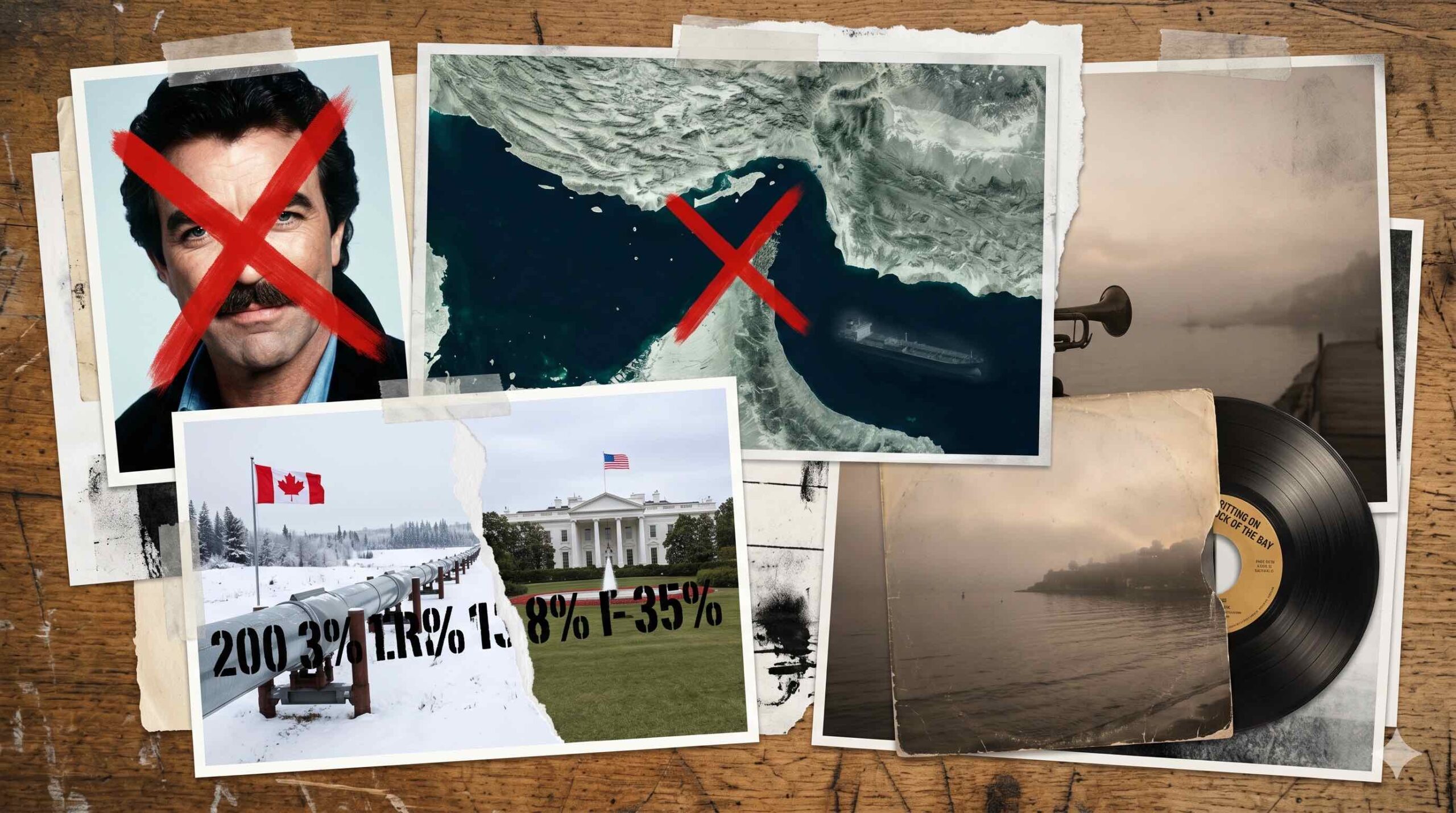
On this episode we dig into Trump’s claim that America doesn’t need the Strait of Hormuz — and why it’s complete nonsense once you look at where US refineries actually get their oil. We also run through the QAV America portfolio, which is up 113% since inception and 30% year-to-date, before Cameron does a deep dive on PagSeguro Digital (PAGS) — a Brazilian FinTech that’s basically PayPal meets Square meets a full digital bank, navigating 14.75% interest rates and 34 million customers in the favelas of Brazil.
This week’s full episode is for QAV Club members only. The free episode is available below. Also check out our podcast archives link and our pages on Apple Podcasts or Spotify or watch clips on TikTok. Or visit our homepage to learn more about QAV and how it works as a value investing system that you can learn and apply to beat the market.
Transcription
QAV America 48 Club
[00:00:00] Cameron Reilly: Welcome to QAV America tk, episode 48, 14th of April, 2026. Close. [00:00:10] Open the damn straight. You crazy bastards. Why? So I can close the fucking strait. You crazy bastards. Um, Trump’s great strategy, [00:00:20] greatest strategy of all time. Uh, Tony, I’ve got some quotes. Um, we did sort of spoiled this on the last show, [00:00:30] but I’m gonna do it again.
[00:00:32] Cameron Reilly: Um, some quotes about Donald.
[00:00:34] Tony Kynaston: Do I have to give the same answers?
[00:00:36] Cameron Reilly: No, no, but this is a different person. This is, [00:00:40] um, quotes about Donald Trump. You have to guess who said it. He is proud of being a serial philanderer. He describes his own battles with venereal diseases as his own [00:00:50] personal Vietnam. He’s a pathical liar, pathological liar, utterly immoral, a narcissist at a level.
[00:00:56] Cameron Reilly: I don’t think this country’s ever [00:01:00] seen.
[00:01:00] Tony Kynaston: Jeffrey Epstein.
[00:01:03] Cameron Reilly: Whatever lie he’s telling at that minute, he believes it. The man is utterly immoral. [00:01:10] Morality does not exist for him.
[00:01:12] Tony Kynaston: Maxwell
[00:01:14] Cameron Reilly: Those were, um, Ted Cruz, uh, 2016. [00:01:20] Um, this one, uh.
[00:01:25] Tony Kynaston: Oh dear.
[00:01:26] Cameron Reilly: He should have Mo Trump [00:01:30] should have moral clarity and know the difference between right or wrong. He’s just toxic. Many of the same politicians who publicly embrace Trump privately dread [00:01:40] him. They know what a disaster he’s been and will continue to be. They’re just too afraid to say it out loud. I’m not afraid to say the hard truth out loud.
[00:01:48] Cameron Reilly: I feel no [00:01:50] need to kiss the ring.
[00:01:55] Cameron Reilly: That was, uh, Nikki Haley, former UN Ambassador, um, [00:02:00] has been sidelined by Trump, but that’s what she said in I think February, 2024. Um, yes. And of course the other ones that I read out on our last [00:02:10] show, uh, I go back and forth between thinking Trump is a cynical asshole like Nixon, who wouldn’t be that bad and might even prove useful, or that he’s America’s Hitler.[00:02:20]
[00:02:20] Cameron Reilly: That was, um, JD Vance in 2016. Um,
[00:02:25] Tony Kynaston: who know Trump in fairly intimately. They’ve worked with him
[00:02:29] Cameron Reilly: yeah.
[00:02:29] Tony Kynaston: [00:02:30] for a while. Yeah.
[00:02:31] Cameron Reilly: Hmm. He’s a con artist. He runs on this idea. He is fighting for the little guy, but has spent his entire career sticking it to the little guy. It’s Marco Rubio, [00:02:40] currently Secretary of State, 2016.
[00:02:43] Tony Kynaston: So what’s, what’s your point, Ken? There’s, there’s something going on that we can’t see every [00:02:50] day in the news.
[00:02:51] Cameron Reilly: No, it’s just the hypocrisy I think is, uh, fascinating. So, um, I did, I was fascinat so obviously, [00:03:00] um, Vance went to have negotiations with the Iranians in Islamabad. Um, didn’t go well, no surprise to anybody. [00:03:10] And despite all of this rhetoric that Iran was desperate to make a deal turned out they weren’t that desperate really?
[00:03:17] Cameron Reilly: And they’re like, nah, we don’t think so. We’re good. [00:03:20] Um, we can keep this up for a lot longer. And Trump has been claiming that he doesn’t need the straight America doesn’t need the straight, they don’t need the oil. The rest of the world [00:03:30] needs the oil. America doesn’t need the oil. So I drilled down into that a little bit because I also noticed that.
[00:03:36] Cameron Reilly: Gas prices in the US have been shooting up. They’ve [00:03:40] doubled in the last six weeks. And so I was trying to connect the dots, and this is what I discovered. Uh, this may not be news to you, but it, it was, [00:03:50] uh, enlightening to me. The US was the world’s largest crude oil producer in 2025 at 13.58 million barrels per day ahead of Russia and [00:04:00] Saudi Arabia.
[00:04:00] Cameron Reilly: Russia produced about nine and a half million barrels a day. Saudi Arabia at 9 million. Barrels a day. So the US is producing nearly 50% more [00:04:10] oil than both Russia and Saudi Arabia, which surprised me,
[00:04:13] Tony Kynaston: Well, they drive pretty cars. There can. They drive trucks
[00:04:17] Cameron Reilly: right?
[00:04:18] Tony Kynaston: now.
[00:04:19] Cameron Reilly: [00:04:20] But the US still physically imports about six and a half million barrels of crude per day a
[00:04:28] Cameron Reilly: uh, which is [00:04:30] roughly,
[00:04:30] Tony Kynaston: work then.
[00:04:31] Cameron Reilly: roughly.
[00:04:32] Tony Kynaston: isn’t cutting it
[00:04:33] Cameron Reilly: Roughly 30 to 35% of their total oil consumption they have to import.
[00:04:39] Tony Kynaston: from [00:04:40] Venezuela.
[00:04:40] Cameron Reilly: No. Do you wanna guess where most of it comes from?
[00:04:43] Tony Kynaston: Hum,
[00:04:44] Cameron Reilly: No.
[00:04:46] Tony Kynaston: Russia,
[00:04:47] Cameron Reilly: No.
[00:04:48] Tony Kynaston: uh, [00:04:50] Canada.
[00:04:50] Cameron Reilly: Yes. 60% of it comes from Canada. Which makes the whole tariff war with Canada. [00:05:00] Interesting surprise. Mark Carney doesn’t, doesn’t just go, you know what?
[00:05:03] Cameron Reilly: We’re not selling you any more oil. Go to hell. See what happens. Did he,
[00:05:07] Tony Kynaston: Yeah. He, he struck deals with, [00:05:10] um, India and other places to sell oil to them instead.
[00:05:13] Cameron Reilly: oh, interesting.
[00:05:14] Tony Kynaston: Hmm.
[00:05:15] Cameron Reilly: So the reason is structural. So the US [00:05:20] refineries were largely built to process heavy, sour crude, that kind that comes from Canada and Mexico and the Gulf, not the light sweet shale oil [00:05:30] that they pull outta the ground. Now in the us so the US exports, its light crude and imports heavy crude because to.
[00:05:39] Cameron Reilly: [00:05:40] Re-engineer the refinery infrastructure would take years and years and cost billions and billions of dollars. But the [00:05:50] other interesting thing I learned was that even if the US was able to consume every barrel, IT producers, domestic gasoline prices would still be set [00:06:00] by global Brent Crude. Prices because it’s a global market and American oil producers are gonna try and get the [00:06:10] best price they can get.
[00:06:11] Cameron Reilly: ’cause capitalism,
[00:06:12] Tony Kynaston: Mm-hmm.
[00:06:13] Cameron Reilly: and same reason Australians are paying through the nose for gas prices when we produce so much gas because they’re gonna [00:06:20] sell it. If they can get a better price offshore, they’re gonna sell it. They’re not gonna keep, unless you nationalize the oil industry or pass some legislation that forces ’em to sell it at cheaper [00:06:30] prices.
[00:06:30] Tony Kynaston: Yeah.
[00:06:30] Cameron Reilly: They’re just gonna sell it where they can get the best price. So this whole line that Trump is trying to spend that America doesn’t need the straight of Horus and is [00:06:40] disconnected from Global Oil prize, is just like everything else. He says, complete, utter nonsense.
[00:06:45] Tony Kynaston: Well, they might, they, but they don’t need the straights if they’re getting the petrol from [00:06:50] Canada.
[00:06:50] Cameron Reilly: Well they do ’cause they’re paying the global price for it. It doesn’t matter where they get it from. Gas prices are going up. They’ve doubled
[00:06:59] Tony Kynaston: yep.
[00:06:59] Cameron Reilly: average [00:07:00] across the US because the global price has gone up because.
[00:07:04] Tony Kynaston: Mm-hmm.
[00:07:05] Cameron Reilly: up and closed the strait of Hormuz. So yeah, this, [00:07:10] this whole idea that the US is somehow independent from global oil prices is complete nut nonsense.
[00:07:18] Tony Kynaston: Yep. [00:07:20] True.
[00:07:20] Cameron Reilly: And when he did have his little tariff tiff with Canada, apparently uh, he did a carve out. For Canadian [00:07:30] oil and energy exports, they got a 10% tariff, not the full 25% that he was, uh, applying to everything else. [00:07:40] And Canadian oil to the US increased in the last year despite the trade war. So there you go.
[00:07:47] Tony Kynaston: Yeah. Right.
[00:07:48] Cameron Reilly: Well, there you [00:07:50] go. I learned something there that, uh, not that Donald Trump just makes stuff up, but, uh. The fact that America is not independent [00:08:00] despite being the high, you know, the biggest oil producer in the world, they’re still very deeply impacted by global oil prices.[00:08:10]
[00:08:12] Cameron Reilly: I’m just looking at our portfolio, the US dummy portfolio, Tony, um, inception date, uh, [00:08:20] September, 2023. Is currently up 113%. That’s a time weighted return, uh, versus the s and p [00:08:30] 500, up 55%. So we are doing double market over the last two and a half years roughly. [00:08:40] Year to date, uh, it is up 30% versus the s and p 500, up 0.6%.
[00:08:49] Tony Kynaston: [00:08:50] that’s a big difference. 30 more than 30 times.
[00:08:55] Cameron Reilly: And in the last 30 days, our portfolio is up [00:09:00] 16% versus the s and p 500, up 4%, a little bit less than 4%, really? So we’re doing four times in the last 30 days. But yeah, it’s going [00:09:10] gangbusters over there. The best performances. That portfolio as always, Willis Lease Finance Company, it’s currently up [00:09:20] 338% since we bought it in Nova.
[00:09:21] Cameron Reilly: International is up 152. Euroes is up 148. Sarcos Energy Navigation, Greek Shipping Company up [00:09:30] 125 KO Latino is up 124. There’s a bunch of others doing well. Career Electric Power is the [00:09:40] only one that isn’t doing well. It’s down about 13%. Everything else is above water. Um, the QAV America Light [00:09:50] portfolio, which has an inception date of the 29th of December, 2025, uh, all time, [00:10:00] whatever that’s worth, last few months is up 5% versus the s and p 500 up 0.11%.
[00:10:09] Cameron Reilly: So. [00:10:10] It’s doing pretty well, relatively as well. And, uh, you wanna take a guess what the number one performer on the light portfolio is?
[00:10:18] Tony Kynaston: Do you have [00:10:20] Willis Lee’s finance in there?
[00:10:21] Cameron Reilly: No, I don’t. No, it’s Kodak.
[00:10:25] Tony Kynaston: Oh really?
[00:10:27] Cameron Reilly: Kodak
[00:10:29] Tony Kynaston: [00:10:30] Wow.
[00:10:30] Cameron Reilly: we bought on the 23rd of March. So three weeks ago is up [00:10:40] 53%.
[00:10:42] Tony Kynaston: Wow.
[00:10:45] Cameron Reilly: I have no idea why. I haven’t bothered to check the news. I got no [00:10:50] idea. It’s just doing gangbusters
[00:10:53] Tony Kynaston: Well, we’re coming into, well, I think it is now company reporting season in the us so perhaps there was an announcement about their results.
[00:10:59] Cameron Reilly: [00:11:00] possibly. Cord energy that I bought at the end of January is up 41% S-S-P-E-W. Scripps Media Company [00:11:10] that we bought at the end of February is up 24% commercial CVGI that I [00:11:20] added a week ago. That was my pulled pork last week. It’s up 18% since last week, like just as nuts. [00:11:30] That’s, these aren’t even oil companies.
[00:11:32] Cameron Reilly: Well caught. Energy is,
[00:11:34] Tony Kynaston: Yeah.
[00:11:34] Cameron Reilly: aren’t. Even oil companies. Eco petrol, which is an oil company, is up 15%. Geo parks up 14. Murphy [00:11:40] Oil is up 13. Just, uh, bonkers. Tony, absolutely bonkers the American market right now, and as we said on the [00:11:50] last show,
[00:11:51] Cameron Reilly: for no good reason, like things are not going well.
[00:11:55] Tony Kynaston: Uh, well, you look at inflation is up, uh, [00:12:00] unemployment’s steady at best. Um, I don’t think interest rates they have, they’re on hold at the us They’re rising in Australia and they’re rising in other countries [00:12:10] around the world, so could rise in the us but yeah, a lot of things a market would normally jump at and fright and, and there’d be a cell.
[00:12:18] Tony Kynaston: None of that’s happening at the moment. Is [00:12:20] it?
[00:12:20] Cameron Reilly: Either they know something we don’t know, or they’re just doing way too much Coke. I mean the Coke, I dunno what Coke prices are like. But uh, [00:12:30] maybe that’s why Kodak, maybe they thought it was just the code in Kodak was cocaine. I don’t know. So [00:12:40] anyway, that’s, uh, going on. I don’t have any other US market news this week.
[00:12:44] Cameron Reilly: Just everything’s going bonkers over there. And again, as,
[00:12:49] Tony Kynaston: like I said, it’s [00:12:50] reporting season, so we might see stock prices jump around and we’ll certainly get new numbers to run through the filters.
[00:12:56] Cameron Reilly: yeah, well, like I did the buy list over the [00:13:00] weekend, as I always do, and, um, the. There was a lot of stocks on the buy list this week and you know, [00:13:10] in the Australian, uh, show I was talking about trying to buy stuff yesterday from our Australian buy list was hard because everything was having a down day.[00:13:20]
[00:13:20] Cameron Reilly: But, um, when I went to buy something in the, for the American Buy list, I did not have that problem. Everything was looking great. And the buy list, the American buy list [00:13:30] this week, they’re, um, 71 stocks that got a pass on our buy list. I haven’t checked, uh, some of those are josephine’s, to be [00:13:40] fair. So, uh, if I take out the Josephines, uh, there’s still about 30.
[00:13:48] Cameron Reilly: 30 stocks. [00:13:50] So it’s, uh, it’s quite healthy. There’s a lot of, lot of opportunity there. Um, and then if I look at, uh, the pulled [00:14:00] porks that I’ve done since we started doing this show on a regular basis, about a year ago. Like some crazy, crazy, [00:14:10] uh, stories on from this list Of the 46 companies that we’ve talked about, 34 are up, [00:14:20] 12 are down, so 74% win ratio, um, chemics or cex.
[00:14:29] Cameron Reilly: The, [00:14:30] uh, concrete company, cement company that we talked about a year ago is up 110% Zep Health Corporation. The Chinese watch [00:14:40] manufacturer from uh, July last year is up 350%. Sasol. Dirty oil is up 160% since we talked about ’em in [00:14:50] July. Uh, methane X is up 50%. Top golfers up 32%. Veil is up 35.
[00:14:58] Tony Kynaston: I nearly, he sent you a [00:15:00] screenshot on over the weekend. ’cause at the Masters, a couple of the players were sponsored by Top Golf.
[00:15:04] Cameron Reilly: Yeah, they were
[00:15:05] Tony Kynaston: Yeah.
[00:15:06] Cameron Reilly: good stuff. Yeah, like a lot of winners and big, [00:15:10] big numbers for stocks that we’ve only held for a year. 50%, 60%, 110%, 94 Precision Drilling Corporation, up 95%. [00:15:20] And you know, as I, um, I talked about in my newsletter last week. You know, we, we don’t know a lot about these companies. Like we don’t have any [00:15:30] domain expertise in any of these sectors or industries.
[00:15:34] Cameron Reilly: We’ve never heard of most of these companies. We’ve heard of Kodak, but had no idea that they didn’t make [00:15:40] cameras anymore. Honestly.
[00:15:41] Tony Kynaston: And they license the brand.
[00:15:43] Cameron Reilly: Yeah. But the system that you developed, uh, just identifies winners. And I see [00:15:50] people all the time in the value investing forum saying, oh, there’s nothing to buy. I can’t find anything.
[00:15:54] Cameron Reilly: They’re always talking about the Mag seven. It’s the only thing anyone can talk about. Do you think Google’s undervalued [00:16:00] and we just find opportunity left, right, and center? It’s, it’s crazy to me.
[00:16:06] Tony Kynaston: Yep.
[00:16:07] Cameron Reilly: Yeah, in the newsletter last [00:16:10] week I was talking about this idea of value traps, and quite often when I post about one of our stocks on the value investing subreddit, people will [00:16:20] say it’s a value trap.
[00:16:21] Cameron Reilly: It’s down. It’s cheap for a reason.
[00:16:23] Tony Kynaston: Mm-hmm.
[00:16:24] Cameron Reilly: Like, well, you might be right. I mean, I don’t, I don’t know enough to say whether you’re right or you’re wrong, but. [00:16:30] You know, 73% of the stocks that we’ve, uh, talked about, and that’s not even all of the ones on the buy list, but 73% of the ones that I’ve chosen to talk about are up, and I only [00:16:40] picked them because they look like an interesting story or is really no other reason.
[00:16:43] Cameron Reilly: They’re just on our buy list.
[00:16:45] Tony Kynaston: And I think also too, like it’s, it’s part of human psychology. A lot of people [00:16:50] are kind of binary when it comes to risk. It’s like, oh, I’m not touching that sector because of. Whatever risk interest rates are high. I’m not touching banks or whatever,
[00:16:59] Cameron Reilly: [00:17:00] Yeah.
[00:17:00] Tony Kynaston: but you know, when you get sort of a more granular assessment of the risk, it’s actually quite apparent that yes, there’s a risk, but being, you’re being insured against that risk by [00:17:10] buying the stock so cheaply.
[00:17:11] Cameron Reilly: Yeah. And as I said in our article, if it goes the wrong way, we sell it. I mean, we, we assume that [00:17:20] 40% of them are gonna. Turned out to be duds. That’s sort of factored into the system, right? I think it was the great buffet himself who said that he [00:17:30] has about a 60% win rate and uh, your glasses look much like his.
[00:17:35] Cameron Reilly: So we assume the same style of glasses should bring about the same sort of result. [00:17:40] Uh, so we, we assume, you know, we’ll have about a 60 40 win loss rate. And that’s okay. We have our cell triggers firmly in place. Something goes the wrong [00:17:50] way, we replace it with something else. And you know, we still get obviously double market, uh, on average over time.
[00:17:57] Cameron Reilly: So risk [00:18:00] is, you know, that’s one of the things I’ve learned from doing the show with you over the years is that volatility is our friend. Risk is our friend. It’s not something to be [00:18:10] feared, it’s something to be. Um, assumed accommodated. You build systems around it and every time I jump in the car, there’s a risk.
[00:18:19] Cameron Reilly: That’s why I wear a [00:18:20] seat belt, you know?
[00:18:21] Tony Kynaston: Yeah,
[00:18:22] Cameron Reilly: So we have our seat belts.
[00:18:23] Tony Kynaston: Yeah.
[00:18:24] Cameron Reilly: have call them the seat belts. Yeah.
[00:18:26] Tony Kynaston: Yeah,
[00:18:27] Cameron Reilly: Helmets. Helmets and seat belts.
[00:18:29] Tony Kynaston: [00:18:30] there’s a different way of thinking about risk, I think when you’re an investor. For me, it’s how quick do I get my money back?
[00:18:34] Cameron Reilly: Yeah. Right.
[00:18:36] Tony Kynaston: I like what’s, what’s more risk, what’s more risky? And I use the coffee shop [00:18:40] analogy. I can buy a coffee shop, is in the side street.
[00:18:43] Tony Kynaston: Not many customers are in there buying every day, but I can buy it so that it pays me back in a year. [00:18:50] do I go to a freeway off ramp where there’s a big McDonald’s or a chain. Style coffee shop, and it takes me 25 years to get my [00:19:00] money back.
[00:19:00] Cameron Reilly: Yeah. Yeah.
[00:19:00] Tony Kynaston: A lot of things can go wrong in 25 years, even though it’s in a good location with the trusted brand
[00:19:05] Cameron Reilly: Yeah.
[00:19:06] Tony Kynaston: to, uh, you know, buying, uh, buying something that pays it back [00:19:10] in a year.
[00:19:10] Cameron Reilly: Yeah.
[00:19:11] Tony Kynaston: goes broken in year two, I’m covered.
[00:19:14] Cameron Reilly: Yeah, exactly. Alright, well without any further [00:19:20] ado, um, I’m gonna talk about my Paul Pork of the Week, pug ro, digital [00:19:30] Pug ro. Only because I like saying that name.
[00:19:35] Tony Kynaston: where’d you get the pronunciation from? For P? It’s PAG, isn’t it?
[00:19:39] Cameron Reilly: [00:19:40] It is PAG. It comes from the Brazilian Portuguese term PTO
[00:19:46] Tony Kynaston: So it’s not Pag Sgu.
[00:19:49] Cameron Reilly: [00:19:50] pug. That’s what I said.
[00:19:51] Tony Kynaston: Oh, sorry. I’m hearing PUGP, isn’t it? PARG.
[00:19:57] Cameron Reilly: P. What’s the difference? You sound like my [00:20:00] wife. I.
[00:20:00] Tony Kynaston: Well, she looks a bit better than me, so that’s, I guess there’s a compliment there somewhere.
[00:20:06] Cameron Reilly: Pao, as I said to you in the other show, because we [00:20:10] both dab dabble in Italian the same as P in Italian tope P, same Latin root. Anyway, the. Pug bank. [00:20:20] So this is a, uh, interesting story. It is Brazilian and the reporting figures are in the Brazilian real, so you have to convert those to the USD one. [00:20:30] BRL is about 20 cents.
[00:20:33] Cameron Reilly: USD 0.1 9 9 7 3 0 6 0. When I did my numbers, let’s say 20 cents,
[00:20:39] Tony Kynaston: [00:20:40] I
[00:20:40] Cameron Reilly: uh.
[00:20:40] Tony Kynaston: I should have brought some along. I’ve got some still from my trip to Rio a long
[00:20:45] Cameron Reilly: Oh, from when you went to the, uh, the,
[00:20:49] Tony Kynaston: The [00:20:50] soccer
[00:20:50] Cameron Reilly: oh, oh,
[00:20:51] Tony Kynaston: Yeah.
[00:20:51] Cameron Reilly: I was gonna say it was the, what’s the big parade they have in Rio de Janeiro? The carnival. Yeah. [00:21:00] So this is not an a DR, uh, despite its, uh, foreign. We, I think we’ve talked about this in. Other shows, there’s sort of a Latin American thing where they’re able to directly list [00:21:10] common stock stuff.
[00:21:11] Cameron Reilly: It’s is.
[00:21:11] Tony Kynaston: I think if they’re incorporated in the Cayman Islands, which is company is, they can do it.
[00:21:15] Cameron Reilly: Which they are exactly. So you don’t have to worry about 80 hours, but you [00:21:20] do need to worry about exchange rate issues and those sorts of things. So I’ll talk about that in the risks. But who are they? Well, Wikipedia says Pug. Seguro Digital [00:21:30] Limited is a disruptive provider of financial technology solutions focused primarily on consumers.
[00:21:36] Cameron Reilly: Individual entrepreneurs, micro merchants, [00:21:40] small companies, and medium-sized companies in Brazil, it’s end-to-end. Digital ecosystem enables its merchants not only to accept payments, but also to grow and [00:21:50] manage their businesses. The company operates in a single segment that is financial service agents. It offers a two-sided ecosystem providing banking and [00:22:00] payments experience through a single interface with one app.
[00:22:02] Cameron Reilly: One platform and one customer support. Its digital banking ecosystem features. Its free Pug [00:22:10] Bank digital account under the brand pug bank and offers approximately 40 payment methods and 13 cash out options. The [00:22:20] company offers a range of point of sale and mobile point of sale devices specifically designed to fit customers’ business needs, its end-to-end payment.
[00:22:29] Cameron Reilly: Its [00:22:30] ecosystem enables its customers to accept a range of online and in-person payment methods. So it’s a FinTech, but it’s sort of a combination of [00:22:40] PayPal and Square and it’s turning into more of a bank that’s sort of part of its progression. Story been around about 20 [00:22:50] years, was formed in 2006 as a subsidiary of Universal Online, UOL.
[00:22:58] Cameron Reilly: One of Brazil’s [00:23:00] largest internet service providers, and it was deliberately created to fill the gap in digital payments for Brazil’s growing e-commerce [00:23:10] sector. UOL itself has been around since 1996. Talking to my mother the other day, and, uh, it was, she was, she was talking about something in the cloud, how [00:23:20] things aren’t secure in the cloud.
[00:23:21] Cameron Reilly: What if the cloud goes away? What if it turns off? Everything’s gone. And I was sort of explaining about. Data centers and redundancy and blah, blah, blah. And I was saying, look, I’ve been around this [00:23:30] game long enough. I can remember doing presentations in the late nineties, probably 96, 97, 98, when I [00:23:40] worked for Australia’s ISP, uh, Aussie male, drawing a cloud on the whiteboard with a marker pen, and having to [00:23:50] explain to people what the cloud.
[00:23:53] Cameron Reilly: Was, and we call it the cloud. I don’t know who came up with the cloud. I, I probably did at one point, but everything goes [00:24:00] up to the cloud. What’s the cloud? Well, it’s just what, you know, all of the data centers and the servers and all this kinda stuff. We take it for granted now.
[00:24:09] Tony Kynaston: [00:24:10] Having a conversation with the boss around the same time. When I was working at Shell, he said, where’s the internet based? I’m like, I wanna go and see him. Where’s the internet based?
[00:24:18] Cameron Reilly: Yeah,
[00:24:19] Tony Kynaston: it’s not
[00:24:19] Cameron Reilly: [00:24:20] yeah.
[00:24:20] Tony Kynaston: It’s distributed. What do you
[00:24:21] Cameron Reilly: Mm.
[00:24:22] Tony Kynaston: be based somewhere?
[00:24:23] Tony Kynaston: Who looks
[00:24:23] Cameron Reilly: Yeah,
[00:24:24] Tony Kynaston: I’m
[00:24:24] Cameron Reilly: yeah,
[00:24:24] Tony Kynaston: a lot of people do. Yeah.
[00:24:26] Cameron Reilly: yeah. So, [00:24:30] um, over time these guys have grafted on lending insurance, full banking services, investment [00:24:40] products, rebranded its consumer facing bankers Pug Bank listed on the New York Stock Exchange in January, 2018, raised about 2.3 billion. [00:24:50] At the time, it was the largest. IPO by a Brazilian company on the New York Stock Exchange.
[00:24:56] Cameron Reilly: Since 2011, shares were priced at [00:25:00] $21 50 when it listed got up to $57 in 2021. Today they’re about $10 67, [00:25:10] so. It has been a bit of a choppy ride for them, um, and really no good reason why. Apart from [00:25:20] just Brazil, I think, um, Brazil’s had a bit of a rough trot economically, politically, bolsonaro, all [00:25:30] that kinda stuff going on.
[00:25:31] Cameron Reilly: So yeah, it, it, it’s a tricky, um, market for. [00:25:40] I don’t think any business, but you know, particularly if you’re in payments and lending and that sort of stuff to navigate. So.
[00:25:47] Tony Kynaston: if I can just jump in there. So, um, I [00:25:50] did a bit of digging around and they’ve did the strategy is to transit more towards the banking side of digital, um, business [00:26:00] now rather than the payment side, or they still do it and it’s the banking side I think, which is spooked the market because, um, did you, did your research. Come up with what [00:26:10] the, uh, interest rates were in
[00:26:12] Cameron Reilly: The Slic, Tony, the The Slic? Yes.
[00:26:18] Tony Kynaston: You
[00:26:19] Cameron Reilly: Well, that’s what, [00:26:20] yeah, I am, and that’s what I was getting towards. Like it’s, it’s, it’s, it’s a difficult market. Like it’s, uh, you know, it’s been very choppy and very, you know, [00:26:30] right now interest rates are insane. So, yeah. I mean there’s,
[00:26:35] Tony Kynaston: is
[00:26:37] Cameron Reilly: yeah.
[00:26:37] Tony Kynaston: the central bank row.
[00:26:39] Cameron Reilly: [00:26:40] What is it in Australia at the moment?
[00:26:41] Cameron Reilly: It’s about four point something.
[00:26:43] Tony Kynaston: Yep.
[00:26:45] Cameron Reilly: Yeah, so this is a TI mean, there’s good and bad I guess, in [00:26:50] that, um, depending on what side of the ledger you’re on, but yeah.
[00:26:55] Tony Kynaston: good interest rates if you put your money in for a deposit. But um, yeah, if you are [00:27:00] trying to run a business and it’s, it’s 14% interest rates plus a margin, it’s
[00:27:04] Cameron Reilly: Yeah,
[00:27:05] Tony Kynaston: Mm-hmm.
[00:27:05] Cameron Reilly: exactly.
[00:27:06] Tony Kynaston: And so the market, I think is scared about default, uh, [00:27:10] for the bank side of, um, arg. And that’s one of the reasons why the share price is down.
[00:27:15] Tony Kynaston: I think.
[00:27:16] Cameron Reilly: Yes, exactly. So [00:27:20] let me just talk a little bit about their operations, their core business. So they’ve got. Two engines really. One is the toll booth side of it, payments and merchant services. So they’ve got pause [00:27:30] terminals, payment links, e-commerce processing card acquiring. Merchants pay a fee on every transaction.
[00:27:37] Cameron Reilly: This is the legacy business. They sell [00:27:40] relatively cheap card readers to micro merchants who previously had no way to accept cards. So it’s like the square side of the [00:27:50] business.
[00:27:50] Tony Kynaston: And I don’t think that can be underemphasized for us Westerners, because having been to Brazil, and I dunno if Rio is the. An example of the other cities in Brazil, but [00:28:00] there’s huge, huge areas called Vals, which are basically shanty towns. fully functioning, you know, a lot of business going on in them, [00:28:10] uh, no bank branches.
[00:28:11] Tony Kynaston: So a large part of the population was under serviced by banks before mobile technology came along.
[00:28:18] Cameron Reilly: And I [00:28:20] assume carrying less cash means less opportunity to get robbed.
[00:28:24] Tony Kynaston: Yep.
[00:28:25] Cameron Reilly: Um, harder to get robbed anyway, so, [00:28:30] uh, this is a, this is a good part of the business. Payment revenue grew 9% year on year in FY 2025. So I mean, that’s [00:28:40] not. Massive, but it’s not nothing either. It is decelerating. It’s a difficult market.
[00:28:46] Cameron Reilly: Part of the reason is the interest rates, as you said, it’s a bit of a [00:28:50] maturing market, I think for this as well over there. Lot of competition. But it’s a tall booth, right? They’re still for that. They’ve got a pretty good install base. They’re not the biggest [00:29:00] player, but they’ve got a pretty good installed base and they clip the ticket the second side of their.
[00:29:06] Cameron Reilly: Revenue Generation is the bank branch, pug [00:29:10] Bank, full digital bank that offers deposits, credit cards, personal loans, insurance investments, and an in-app marketplace called Shopping Pug Bank. [00:29:20] This is the growth engine. It grew 51% year on year and FY 2025, and in Q4 alone [00:29:30] banking gross profit grew 54% at a 72% margin.
[00:29:36] Cameron Reilly: Again, they’re not the biggest player. There’s a, a lot of risks and issues with [00:29:40] that, but, uh, you know, it’s a, it’s a growing part of the business. I’ve got the CEO’s report, which I’ll get into in a second, but if you look at their, if you just look at the Wikipedia page, if you look at [00:29:50] their revenue over the last f.
[00:29:52] Cameron Reilly: Five years, it’s pretty incredible. This is in Rial 2020. Total revenue 6.8 billion [00:30:00] 20 21, 10 and a half billion 20 22, 15 0.3 billion 2023, just south of 16 billion 20 24, [00:30:10] 18 0.8 billion, 20 25, 20 0.4 billion, 2026. Estimate is 21 and a half billion and 2027. Estimate is [00:30:20] 23. Billion. That’s a CAGR of 24.5% over that period.
[00:30:26] Cameron Reilly: So they’re growing. [00:30:30] Massively operating profit has been growing similar levels, um, from 1.8 billion in 2020 to 8 billion in [00:30:40] 2025. Net profit, not as, that’s 34% cga, by the way. Net profit, not as impressive. It’s about 10% per annum over that period, 1.3 to [00:30:50] 2.1 over the five year period. Earnings per share from $3 92 [00:31:00] to $7 18.
[00:31:04] Cameron Reilly: So, you know, not bad. 13% CAGR over five years. [00:31:10] Um, operating margin, roughly 32% on average, uh, over the period. So I look at, on paper, I look at it and I go. [00:31:20] Nice looking business. Cash has gone up and come back down again. Working capital’s gone from 7.6 billion in 2020 to roughly 17 billion. [00:31:30] Um, I’ve got the CEO’s, uh, some of his statements from their Q4 2025 earnings release, which came out on March 4th this year.
[00:31:39] Cameron Reilly: [00:31:40] By the way, the CEO’s only been in the job since January. His name is Carlos Moad. And he holds a degree in mechatronics [00:31:50] engineering. You know what that is?
[00:31:52] Tony Kynaston: No, never
[00:31:54] Cameron Reilly: yeah.
[00:31:54] Tony Kynaston: mechatronics. Is
[00:31:55] Cameron Reilly: I know. But it sounds cool, right?
[00:31:56] Tony Kynaston: is he a transformer?
[00:31:58] Cameron Reilly: He builds transformers. [00:32:00] Yeah, that’s it. Maybe he is one himself. Uh, but it is what it sounds like it’s robotics, uh, robotics engineering and all that kinda stuff, which is interesting for the guy who [00:32:10] runs a,
[00:32:10] Tony Kynaston: A bank.
[00:32:11] Cameron Reilly: a digital bank.
[00:32:14] Cameron Reilly: Uh, maybe it makes sense. Maybe, you know, digital banking and getting all these things to talk to [00:32:20] each other is somewhat similar to robots. I don’t know, maybe they’re gonna have robot bank tellers in their banks. Uh, I don’t know. Maybe, maybe you won’t carry [00:32:30] a square anymore. You’ll just have robots that will walk around.
[00:32:33] Cameron Reilly: I saw. A video yesterday I saw a TikTok, um, by an artist who [00:32:40] I follow who does a lot of, um, weird, um. What do you call a sculpted Still life. Like a, [00:32:50] like a diorama. He does a lot of weird dioramas. He did one a few years ago, Mel Gibson getting pulled over by the cops in LA when he insulted the [00:33:00] cops and called one of them a lesbian and started reading about the Jews.
[00:33:03] Tony Kynaston: Yeah.
[00:33:03] Cameron Reilly: did a did diorama of that, which was great. A few years ago he did, he did a project where he took [00:33:10] a, took a. Credit card and dissolved it in acetate to get the chip out of it.
[00:33:15] Tony Kynaston: Yep.
[00:33:16] Cameron Reilly: then he put it into an eye, uh, like a [00:33:20] lens for a friend of his who doesn’t have any hands, so he could have it in his eye and he could pay [00:33:30] for drinks at the pub by putting his eye up to a card reader.
[00:33:33] Cameron Reilly: So maybe that’s the future. Maybe mechatronics and, you know, robot card readers. I dunno. [00:33:40] Anyway, um, he said gross profit, uh, grew 5.9% year on year, totaling real, 2.1 billion. Uh, credit [00:33:50] portfolio grew 32.8%, year on year reaching 4.6 billion Real.
[00:33:55] Tony Kynaston: How does a guy drink without any arms?
[00:33:58] Cameron Reilly: With a straw.
[00:33:58] Tony Kynaston: is paid for it.
[00:33:59] Cameron Reilly: With [00:34:00] a straw.
[00:34:00] Tony Kynaston: Yeah. Okay. I guess you could drink beer through a straw. All right. I’m just thinking of this guy. [00:34:10] He’s nice, cool glass of beer on the bar. He can’t, can’t get to it. He’s worked out how to pay for it.
[00:34:17] Cameron Reilly: Uh,[00:34:20]
[00:34:22] Cameron Reilly: it reminds me of a joke, which I’ll tell you off air, um, ’cause. I’ll probably forget to edit it out and then I’ll get us into all sorts of trouble. [00:34:30] Um, total clients reached 34 million at the end of the quarter, an increase of 2.3% year on year. Big country Brazil.
[00:34:38] Tony Kynaston: Mm-hmm.
[00:34:39] Cameron Reilly: [00:34:40] Total active clients was 17.3 million. Uh, an increase of 11 percentage points quarter over quarter and stable year over year.[00:34:50]
[00:34:50] Cameron Reilly: I dunno if you’ve got 34 million clients and only 17.3 million active clients, what are the rest doing? Just signing up and they’re not using it?
[00:34:57] Tony Kynaston: yeah, especially if you paid for the equipment [00:35:00] to be delivered to those people. Yeah.
[00:35:02] Cameron Reilly: Well, maybe they’re clients that have, uh, you know, it’s like having a PayPal account. I’ve got a PayPal account, but I don’t, well, I do [00:35:10] use it ’cause people pay me with it. I don’t use to buy stuff, but I get paid into it, I guess. I don’t know. Anyway, um, I don’t know. I could run through all of their numbers, but basically [00:35:20] they’re, they’re doing well, although financial costs were up 39% year on year in Q4, driven by the seic rates.
[00:35:29] Cameron Reilly: So [00:35:30] that gets us to selic. Not Tom Sellek.
[00:35:33] Tony Kynaston: Mm-hmm.
[00:35:34] Cameron Reilly: you know, I don’t think Tom Sellek has a rate. I think he just charges whatever he wants ’cause he’s Tom Sellek. [00:35:40] We were talking about Sam Elliot in the last show, you know,
[00:35:43] Tony Kynaston: Hmm.
[00:35:43] Cameron Reilly: the only other actor defined by a mustache in the last 40 years. Tom [00:35:50] Sellek. Sellek stands for.
[00:35:58] Cameron Reilly: Brazil’s special [00:36:00] clearing and custody system. It’s the overnight interbank lending rate set by Brazil’s Central Bank Bank, Brazil. It’s basically Brazil’s equivalent to the US [00:36:10] Federal funds rate, or the RBA cash rate in Australia. As I said before, the Australian rate’s roughly about four, 4.1%. I think it was a bit higher.
[00:36:19] Tony Kynaston: [00:36:20] Yeah.
[00:36:20] Cameron Reilly: 4.35.
[00:36:21] Tony Kynaston: Yeah.
[00:36:21] Cameron Reilly: okay. It’s been, it’s been easing or did it, it just went up in the last round. Yeah, it was easing, then it went up.
[00:36:28] Tony Kynaston: Yep.
[00:36:29] Cameron Reilly: [00:36:30] Brazil celek is at 14.75%, so that’s what Brazilian banks earn lending to each other overnight, which means any [00:36:40] investment in Brazil needs to beat that to be worth the risk. It has been as high as 26.5%.
[00:36:49] Cameron Reilly: [00:36:50] 2003
[00:36:50] Tony Kynaston: Oh
[00:36:51] Cameron Reilly: down to 2% in 2021 during the COVID stimulus and then shot back up, [00:37:00] um, was about 13.75, seven 5% in 2223 briefly got to 15% and now has just been cut to [00:37:10] 14.75.
[00:37:10] Tony Kynaston: You are right. Australia’s 4.1% at the moment.
[00:37:13] Cameron Reilly: Right? So, um. That’s kind of crazy business [00:37:20] environment. It, you know, it, uh, it matters in a number of ways. I guess for pag bank funding costs, they have to borrow to fund their credit book, and the [00:37:30] cost of that funding is tied to the selic. So. Lending is expensive, borrowing is expensive. Um, and I imagine as a [00:37:40] bank you are offering rates on deposits, which are locked in for certain terms, and that can either make you [00:37:50] money or cost you money depending on where the interest rates are.
[00:37:53] Cameron Reilly: And it’s a, it’s a balancing act. So very tricky for. Bank in [00:38:00] Brazil to work all that out, I guess. And Brazilian savers can earn 14.75% risk free in government bonds. Although I’m not sure I [00:38:10] I’d ever talk about the Brazilian government as being risk free. I think Lula is the, currently the president, uh, got outta jail, became president again.[00:38:20]
[00:38:20] Cameron Reilly: Bolsonaro is in jail. Was he still, I think he’s still in jail. Um, yes. It’s, it’s, uh. A bit of a turbulent political system
[00:38:28] Tony Kynaston: Hmm.
[00:38:29] Cameron Reilly: there [00:38:30] as Latin American countries, uh, tend to be, uh, uh, only a matter of time before Trump takes it over and becomes president of Brazil as well, I’m sure. Or [00:38:40] tries to anyway.
[00:38:41] Tony Kynaston: Did you see the the post he was gonna become president of Venezuela
[00:38:45] Cameron Reilly: Hmm.
[00:38:46] Tony Kynaston: end of his term in the US
[00:38:47] Cameron Reilly: Oh, I thought he was gonna do them like [00:38:50] both. He’s, he’s running, uh, yeah. Board of Peace, us Venezuela. He is about to take over Cuba as well. He wants to take over Iran, be the [00:39:00] ayatollah of Iran. He’s got a, he’s got it all sorted out. Grand plan, uh, anyw who?
[00:39:06] Tony Kynaston: the, the Post said something like, really good with [00:39:10] languages. I’ll, I’ll learn Spanish in a day when I take become president.
[00:39:14] Cameron Reilly: Well, his Spanish can’t be any worse than his English. [00:39:20] Um, so that’s a risk, that’s an issue. I’m not gonna pretend that I understand all of this.
[00:39:26] Tony Kynaston: the biggest issue, I think, ’cause banks will always get a spread [00:39:30] between their borrowing and lending costs or the, or their deposits and their lending costs, though it’s, it’s still gonna be strain on the business, but I think the biggest risk is just watch [00:39:40] defaults like.
[00:39:40] Cameron Reilly: Yes.
[00:39:41] Tony Kynaston: If
[00:39:41] Cameron Reilly: Uh.
[00:39:42] Tony Kynaston: business owner anywhere, trying to run a business and pay 15% interest or 17% interest or whatever is really, really [00:39:50] hard.
[00:39:50] Cameron Reilly: They call it the NPL rate non-performing loan rate. And that is one of the worries, one of the risks that comes up with this. Um, there’s also the FX [00:40:00] exposure, the foreign exchange exposure, which is something you need to watch. And then they, as I said, they’re not the biggest, uh, they have competitors over there.
[00:40:07] Cameron Reilly: New bank in you has 109 [00:40:10] million customers. Mecado, pago the payment market, I guess. Uh, 66 million. Park Bank, as we said before, about 33 30 [00:40:20] 4 million. So they’re number three in Brazil. So competitive pressures there.
[00:40:26] Tony Kynaston: And also to, I mean, I can’t help thinking it’s of the [00:40:30] parallels between say, a OL trying to out and do different things. They were
[00:40:34] Cameron Reilly: Yeah.
[00:40:34] Tony Kynaston: provider and they, you know, got to a growth pla plateau there and try. To do [00:40:40] other things. That may be the case the, uh, what’d you call it? Uh,
[00:40:45] Cameron Reilly: UOL.
[00:40:46] Tony Kynaston: UOL. Thank you.
[00:40:47] Tony Kynaston: I was trying to put a B in there somewhere for Brazil. UOL. [00:40:50] Yeah. Um,
[00:40:51] Cameron Reilly: Hmm.
[00:40:51] Tony Kynaston: in which case, you know, they’re always gonna be the number three player to the established banks who are doing it.
[00:40:56] Cameron Reilly: Hmm. Yeah. Hmm.
[00:40:59] Tony Kynaston: I [00:41:00] dunno enough about the market in Brazil, but the nu a number three player, is a follower usually in terms of interest rates and all the rest of it.
[00:41:07] Cameron Reilly: Yeah. Which isn’t necessarily a [00:41:10] bad thing. Sometimes it means a merger, an acquisition, anything can happen. So, uh, in terms of, uh, PS itself, [00:41:20] uh, UOL group, which is actually called Foer, UOL. Sa, uh, controls about 38% of the stock in it. Couple [00:41:30] of big funds hold another chunk of it. There’s no founder equity in there because it was spun out of this publicly listed company already.
[00:41:39] Cameron Reilly: Um, [00:41:40] interesting management structure though. So you’ve got Carlos Moad, who’s the CEO as of January 1st this year, as I said, he was previously the COO, but then you’ve got a guy [00:41:50] called Ricardo Ura, who’s the principal executive officer of P Digital, and he’s also the CEO of the UOL [00:42:00] group. So not sure that matters that much, but he’s kind of the big, big boss, um, [00:42:10] and is the face of the business to institutional investors.
[00:42:12] Cameron Reilly: And then you got, I guess, Carlos, who’s the day-to-day, uh, running the things with his mechatronics [00:42:20] background. So, um, that’s basically the summary of the business. FinTech Brazil risks, making money, growing fast, [00:42:30] growing hard, seem to be doing an all right job. I’ll just drill down into the financials or the, the QAV scoring ’cause I gotta get to kung fu.
[00:42:39] Cameron Reilly: Uh, when I was doing [00:42:40] the analysis, they were trading at $10 67, gives them a market cap of about 3.26, 1 billion. Proprietary QAV [00:42:50] score came in at 0.392. Our QAV quality score was about 85%, so it’s pretty good,
[00:42:58] Tony Kynaston: Good.
[00:42:58] Cameron Reilly: know, pretty good from [00:43:00] our numbers.
[00:43:01] Tony Kynaston: well, yeah.
[00:43:02] Cameron Reilly: Was, uh, share price was above our intrinsic value, number one, which was about $7 35, but below our intrinsic value [00:43:10] number two, which is about $17 87.
[00:43:13] Cameron Reilly: The book value was 1.11, so, [00:43:20] um. We couldn’t score ’em for that, but we could score them for Book plus 30, which gives ’em a little bit more space, so that’s good. The price to [00:43:30] operating cash flow was 2.16. So really, really cheap.
[00:43:35] Tony Kynaston: Yeah.
[00:43:35] Cameron Reilly: Yeah, really cheap, really low from our perspective. Average daily trade [00:43:40] volume’s about 43 million.
[00:43:41] Cameron Reilly: So big enough for even you, Tony. Um. The earnings per share is [00:43:50] about dollar 43. PE ratio is about 7.44. Analyst forecast project their EPS for the next fiscal year at a dollar 72, so [00:44:00] that’s pretty good growth. Stock Edia, stock rank of 99. Stock edia quality rank of 94, Petrovsky F score of [00:44:10] seven. So scores really high on Wikipedia’s metrics.
[00:44:15] Cameron Reilly: Shareholders equity shows positive growth over the last few years [00:44:20] has got a relatively new three point upturn Dividend yield is low, it’s 1.44%, so we’re not scoring it on that, particularly with the bank rate at, what did [00:44:30] we say, 15% roughly? So, um, all up it did very well. Oh, one other thing, I looked at the share buybacks, [00:44:40] um, even though I still haven’t figured out how to score this in the us, but.
[00:44:46] Cameron Reilly: Depending on how you, which numbers you look at. Wikipedia [00:44:50] says they’ve dropped from 320 million shares to 305.7 in the last year, which isn’t quite the 5% reduction we look for. [00:45:00] But Fin Viz has them dropping from three oh 4 million to 280 million, which is over 5%. So they are doing buybacks, um, and. [00:45:10] It’s kind of 5%, a little bit less, a little bit more depending on whose numbers you believe.
[00:45:14] Cameron Reilly: So there you go. Uh, the auditor is PricewaterhouseCoopers, gave them a clean [00:45:20] audit. Um, couldn’t find any mention of board ownership, as I said before, except UOL. Um, the parent company owns a big chunk.
[00:45:28] Tony Kynaston: I, I should just [00:45:30] also mention, I think they own preference shares as well, so they have, there’s two class of shares in this company.
[00:45:34] Cameron Reilly: That’s right. They do. Yeah. So that’s basically it, Tony. Um, genuinely [00:45:40] profitable cash, generative business, um, Brazil country risk, high interest rates. Um, but you know, [00:45:50] on paper looked like a really nice little option to me and I added it to QAV lights, uh, [00:46:00] portfolio. Uh, yesterday.
[00:46:02] Tony Kynaston: Excellent. Thank you. Interesting company. Isn’t it Interesting place too. Brazil. Fantastic
[00:46:08] Cameron Reilly: I think we should, [00:46:10] uh, go there and do a QAV
[00:46:12] Tony Kynaston: it? Yeah,
[00:46:13] Cameron Reilly: tour. Rio Dig Janeiro? Yeah, just site visit. Yeah, check it out. Tax Dodge, I mean business trip.
[00:46:19] Tony Kynaston: [00:46:20] yeah. Sounds
[00:46:20] Cameron Reilly: Yeah.
[00:46:21] Tony Kynaston: All.
[00:46:23] Cameron Reilly: Alright. After hours. Tony, what do you got? Golf by The
[00:46:27] Tony Kynaston: Yeah, love watching the Masters all [00:46:30] weekend. Um, came down to a close finish and Rory Mac Mackelroy won again, so he’s back one of the only four people in history who’ve won the Masters back to [00:46:40] back. So it was a lot of fun and good timing for us too. I’d get up in the mornings and it’d be the back nine.
[00:46:45] Tony Kynaston: So you’d see a, a fair bit of golf and exciting stuff.
[00:46:48] Cameron Reilly: Isn’t he happy? [00:46:50] Gilmore’s nemesis, Rory McElroy.
[00:46:52] Tony Kynaston: Nah, that shoot a Gavin?
[00:46:54] Cameron Reilly: That’s right.
[00:46:56] Tony Kynaston: Yeah.
[00:46:56] Cameron Reilly: Rory McElroy. Sounds like someone from a [00:47:00] Adam Sandler or a Ben Stiller comedy or something like that.
[00:47:03] Tony Kynaston: Yeah. Northern Ireland. Northern Ireland player. One of the few. Mm-hmm.
[00:47:08] Cameron Reilly: Hmm. [00:47:10] What else? What else have you been watching? Listening to reading? What’s been keeping
[00:47:14] Tony Kynaston: Yeah, Jenny and I binged, uh, landman season two, [00:47:20] which was really good. Have you seen It is, yeah,
[00:47:24] Cameron Reilly: No,
[00:47:24] Tony Kynaston: season,
[00:47:25] Cameron Reilly: of those.
[00:47:25] Tony Kynaston: season two stars. Uh, well, Demi Moore’s been in season one, but she has a bigger heart to [00:47:30] play in season two. Uh, but Andy Garcia is in it, who’s great, and Sam Elliot’s in it, who’s great as well. So it was really good to see [00:47:40] good acting, good scripts.
[00:47:41] Tony Kynaston: Um, Jenny loved it and it’s, it appeals to, I guess, males and females because you’ve got this sort of somber one problem [00:47:50] on top of another being solved by Billy Bob in the oil industry. And then you’ve got his wife, who’s this blonde tornado who goes out to old people’s homes to volunteer and gets them [00:48:00] old drunks and takes ’em to strip clubs and all this kind of stuff.
[00:48:02] Tony Kynaston: So it’s, um, it’s, it’s got a light side to it too, which is good.
[00:48:07] Cameron Reilly: Sam Elliot, I just looked him [00:48:10] up. He’s 81. When he played Virgil Urp in Tombstone in 1993. He was only 49. looked like he’s [00:48:20] 75, I reckon for the last 40 years.
[00:48:22] Tony Kynaston: He has. Yeah. And he is got that deep, deep movie preview voice, hasn’t he? You know?
[00:48:29] Cameron Reilly: he’s, [00:48:30] he got the greatest voice in the greatest mustache.
[00:48:32] Tony Kynaston: Yeah.
[00:48:32] Cameron Reilly: have actually seen a couple of his films from like the seventies before the mustache when he was sort of.
[00:48:38] Tony Kynaston: Oh
[00:48:39] Cameron Reilly: Like [00:48:40] a sex, sex symbol leading man kind of thing. And then at some point he just grew that mustache and that was it. He was just the cowboy.
[00:48:47] Tony Kynaston: yeah.
[00:48:48] Cameron Reilly: last remaining cowboy [00:48:50] in Hollywood beat a cowboy. You get Sam Elliot, uh, good stuff. Is this by the same guy who did Yellowstone and all those?
[00:48:59] Tony Kynaston: It is. [00:49:00] It is. Yeah.
[00:49:01] Cameron Reilly: He has a, he has a, like a, a template, doesn’t he?
[00:49:05] Tony Kynaston: Ooh.
[00:49:06] Cameron Reilly: these
[00:49:06] Tony Kynaston: Hmm. I, I, I really [00:49:10] enjoyed early Taylor. Sheridan, so I think, um, he was hell or high water, the movie, which I think is fantastic. Really highly recommended if people haven’t seen it. Um, [00:49:20] and then I wasn’t a big Yellowstone fan or any of the other ones, but I do like Landman. It’s good.
[00:49:25] Cameron Reilly: Hmm. I thought you were into the other ones. I thought you liked Yellowstone.
[00:49:29] Tony Kynaston: No, [00:49:30] to me it was, it was Dallas
[00:49:32] Cameron Reilly: Yeah. I.
[00:49:33] Tony Kynaston: for, for this century.
[00:49:34] Cameron Reilly: We watched the first episode of one of those. It, it might’ve been Yellowstone, I think. And [00:49:40] it was, yeah, it was just too networky formulaic
[00:49:43] Tony Kynaston: Yeah. Yeah. So I found it too. Yep.
[00:49:46] Cameron Reilly: Same, same with Sons of Anarchy, um, which I think he [00:49:50] acted in, but, uh, I
[00:49:51] Tony Kynaston: Oh, really?
[00:49:52] Cameron Reilly: that sadly.
[00:49:52] Tony Kynaston: I never saw that.
[00:49:54] Cameron Reilly: uh, it was by one of the guys who, um, Kurt Sutter created it. He was one of the [00:50:00] writers on the Shield, which we loved.
[00:50:01] Tony Kynaston: Oh, right.
[00:50:02] Cameron Reilly: in the shield. Anyway, well, uh, what have I got? Uh, the John Candy Doco. We started [00:50:10] watching
[00:50:10] Tony Kynaston: Yeah, I’ve seen that. It’s good, isn’t it? Yeah.
[00:50:12] Cameron Reilly: so great.
[00:50:13] Tony Kynaston: Yep.
[00:50:14] Cameron Reilly: I mean, everyone loves John Candy.
[00:50:17] Cameron Reilly: How do you not love John Candy?
[00:50:18] Tony Kynaston: Mm.
[00:50:19] Cameron Reilly: [00:50:20] Um, what a sweetheart he was. Uh, I’ve been watching the later season or the final season of the boys, I think. ’cause my boys keep saying, have you watched the [00:50:30] boys yet? So
[00:50:31] Tony Kynaston: You recommend it?
[00:50:33] Cameron Reilly: Have you seen any of it?
[00:50:35] Tony Kynaston: No.
[00:50:36] Cameron Reilly: Oh yeah. Like it’s [00:50:40] super Seth Rogey, like, it’s
[00:50:43] Tony Kynaston: Okay.
[00:50:44] Cameron Reilly: sexually disgusting, uber violent, but sort of that, [00:50:50] you know, Tarantino comical levels of uber violence,
[00:50:54] Tony Kynaston: Mm-hmm.
[00:50:55] Cameron Reilly: lot of guts, a lot of super violence.
[00:50:58] Cameron Reilly: But [00:51:00] you know, it depicts psychopathic superheroes and the psychopathic good guys that are trying to stop the psychopathic superheroes based on a really good comic by Garth [00:51:10] Enni from the nineties. But, um, as the show’s gone on, they’ve just lent more and more into Trump’s America. So [00:51:20] the superheroes are basically running a fascist state where, freedom is for the free. They have concentration camps called Freedom Camps that they put lefty [00:51:30] protestors in. And uh, yeah, they just, it’s like down to ride a season. They just take everything that Trump and his cabinet’s done in the last six months and they just [00:51:40] work it into storylines. But it’s fascists, superheroes are doing it instead of Trump and his, uh, um, [00:51:50] uh, the highest grossing Bollywood film of all time, which only came out last year.
[00:51:59] Tony Kynaston: [00:52:00] I thought bride and prejudice was the highest grossing.
[00:52:05] Cameron Reilly: I think it was every year, whatever film
[00:52:07] Tony Kynaston: Yeah. Okay.
[00:52:08] Cameron Reilly: grossing, they get bigger and bigger [00:52:10] every year.
[00:52:10] Tony Kynaston: Yeah, it makes sense. Yep.
[00:52:11] Cameron Reilly: is a full on action film on a true story of. [00:52:20] during the, the Pakistan India border wars terrorist attacks, they send a guy, the Indians send a [00:52:30] guy in undercover into to infiltrate the gangs in the terrorist networks and to bring him down from the inside. uh, [00:52:40] he looks like a, an Indian version of, uh, uh, Carl Drogo, whatever that actor’s name is, um,
[00:52:47] Tony Kynaston: Oh
[00:52:48] Cameron Reilly: of
[00:52:48] Tony Kynaston: yeah. Okay.
[00:52:49] Cameron Reilly: moa, [00:52:50] Jason Mao,
[00:52:50] Tony Kynaston: Yeah, right.
[00:52:51] Cameron Reilly: guy with big, long hair and like, not fit in. You know, you’re looking around the slums of Karachi and you see this guy and you’d [00:53:00] be like, really?
[00:53:01] Tony Kynaston: Yeah. You eating two or three little guys a day.
[00:53:04] Cameron Reilly: Yeah, wouldn’t be an undercover guy. Come down, take us down. Why do you look [00:53:10] like John Rambo? Uh. You are working in a, you know, a chai tea shop. Really? Ah, something doesn’t work with this [00:53:20] picture. Anyway. Very, very
[00:53:21] Tony Kynaston: it’s like, like that movie. Do you ever see the Australian movie Stone from the seventies?
[00:53:27] Cameron Reilly: Oh, no, I don’t think I’ve ever seen
[00:53:29] Tony Kynaston: Yeah. It’s, [00:53:30] it’s not bad. It’s worth watching action movie from the seventies about motorcycle gangs. But the,
[00:53:34] Cameron Reilly: Yeah.
[00:53:34] Tony Kynaston: the cop sent an undercover copying to these bikes with long hair and denim jackets and [00:53:40] he’s got short backing sides and tucks his shirt in and
[00:53:43] Cameron Reilly: Mustache.
[00:53:45] Tony Kynaston: it’s like, but none of them say, oh, you must be a cop
[00:53:49] Cameron Reilly: They [00:53:50] don’t pick it up. Uh, and apart from Asher Bley, I’ve been listening to Otis Redding. I [00:54:00] really, you know, I’ve only ever heard Otis Redding’s. hits sitting
[00:54:04] Tony Kynaston: dock of the.
[00:54:04] Cameron Reilly: the bay, that kinda stuff. I’ve been going deep dive into Otis Redding’s small [00:54:10] catalog. Oh my God.
[00:54:11] Tony Kynaston: It’s good, isn’t it?
[00:54:12] Cameron Reilly: oh, amazing. I’d forgotten that he wrote hard to handle, the song that the Black [00:54:20] Crows had a hit with in the nineties.
[00:54:22] Cameron Reilly: Uh, did the original version of that, but just, and he wrote respect,
[00:54:25] Tony Kynaston: Mm
[00:54:26] Cameron Reilly: originally, but just like the brass section and [00:54:30] the whole thing. Oh man. So good. And do you know how he died?
[00:54:34] Tony Kynaston: Oh, yeah. Um, didn’t they pull him out of the bay? His plane crashed into the bay or something.
[00:54:39] Cameron Reilly: [00:54:40] Yeah. Plane
[00:54:40] Tony Kynaston: Mm-hmm.
[00:54:40] Cameron Reilly: three days after he recorded sitting on the dock of the Bay plane crashed, uh, a little light aircraft here and the Barques were in his band and they all [00:54:50] died except one, one guy survived. The rest of them died. Tragic. Um,
[00:54:56] Tony Kynaston: Yeah. I once had a double album record of his [00:55:00] greatest hits, I guess, or his canon. It was really good.
[00:55:03] Cameron Reilly: Oh, so good. I’m kicking myself that I’ve, you know, he is one of those guys, one of those r and b guys that, you [00:55:10] know, he turns up on playlists and you go, that’s great, but never taken the time to drill down. Really, really enjoying it. Well, that’s it for [00:55:20] me,
[00:55:21] Cameron Reilly: Alright, well that’s it, Tony. How’s your back? I, I forgot to ask you this week.
[00:55:24] Tony Kynaston: better. Um, I, I tried to do some exercise last week, which kind of triggered it again, so I’m just taking [00:55:30] it easy. see the physio tomorrow, try and work out a plan with her, but yeah, slowly, slowly, unfortunately.
[00:55:38] Cameron Reilly: Mm. That’s rough.
[00:55:39] Tony Kynaston: [00:55:40] Hmm,
[00:55:40] Cameron Reilly: Um, did Alex tell you that she’s finished our painting that I commissioned
[00:55:44] Tony Kynaston: no
[00:55:45] Cameron Reilly: five years ago? Yeah.
[00:55:47] Tony Kynaston: Oh, you’re a, you’re a privileged client. I’m [00:55:50] still waiting for mine.
[00:55:52] Cameron Reilly: Yeah, so I’m looking forward to getting that. Yeah, it looks great too. She sent us a photo. Very happy.
[00:55:58] Tony Kynaston: Well,
[00:55:58] Cameron Reilly: an,
[00:55:59] Tony Kynaston: I know [00:56:00] you’ll appreciate that, but it’ll take some stress off her. She really very anxious about having all these commissions outstanding and then trying to work full time and do them still.
[00:56:09] Cameron Reilly: yeah. [00:56:10] Well, I’ve deliberately tried not to.
[00:56:12] Tony Kynaston: thank you.
[00:56:12] Cameron Reilly: Hassle or about it. Yeah. It’s alright. Yeah. But it’s nice. Yeah. Looking forward to getting that.
[00:56:17] Tony Kynaston: Oh good.
[00:56:18] Cameron Reilly: Alright, tk, you have a [00:56:20] good week. I’ll, uh, we’ll see what, uh, this week’s news brings.
[00:56:24] Tony Kynaston: I can’t wait.
[00:56:26] Cameron Reilly: Yeah,
[00:56:26] Tony Kynaston: depictions of Jesus and attacks on the Pope [00:56:30] and attacks on Iran.
[00:56:31] Cameron Reilly: yeah. Praise to Allah. I.
[00:56:34] Tony Kynaston: Thanks Ken. I.
Previous Pulled Porks
Here’s the performance of the “pulled porks” (eg deep dives) we’ve done on the show in the past.
| Ticker | Company | Covered | Price then | Price now | Return | Ep. |
|---|---|---|---|---|---|---|
| VLGEA | Village Super Market | 21 Sep 2026 | $44.74 | $45.36 | +1.4% | 71 |
| OMF | OneMain Financial | 14 Sep 2026 | $62.75 | $56.77 | -9.5% | 70 |
| ARDT | Ardent Health | 7 Sep 2026 | $10.91 | $12.26 | +12.4% | 69 |
| SND | Smart Sand | 1 Sep 2026 | $5.27 | $4.84 | -8.2% | 68 |
| CRGY | Crescent Energy | 25 Aug 2026 | $13.85 | $13.42 | -3.1% | 67 |
| SLDE | Slide Insurance | 18 Aug 2026 | $21.60 | $27.77 | +28.6% | 66 |
| RJET | Republic Airways | 10 Aug 2026 | $21.39 | $17.22 | -19.5% | 65 |
| BBDO | Banco Bradesco SA | 3 Aug 2026 | $3.44 | $3.61 | +4.9% | 64 |
| RM | Regional Management | 27 Jul 2026 | $41.65 | $34.46 | -17.3% | — |
| PBR | Petrobras | 20 Jul 2026 | $17.97 | $25.69 | +43.0% | 62 |
| TEO | Telecom Argentina | 14 Jul 2026 | $13.47 | $12.60 | -6.5% | 61 |
| FG | F&G | 7 Jul 2026 | $28.55 | $21.30 | -25.4% | 60 |
| KSS | Kohl's | 1 Jul 2026 | $17.34 | $24.74 | +42.7% | 59 |
| CARE | Carter Bankshare | 23 Jun 2026 | $31.00 | $30.56 | -1.4% | 58 |
| AERO | Aeromexico | 18 Jun 2026 | $17.34 | $14.92 | -14.0% | 57 |
| NRIM | Northrim Bancorp | 1 Jun 2026 | $24.71 | $24.18 | -2.1% | 55 |
| MGA | Magna International | 27 May 2026 | $65.20 | $64.29 | -1.4% | 54 |
| BWLP | BW LPG Limited | 18 May 2026 | $21.06 | $24.68 | +17.2% | 53 |
| KNOP | Knot Offshore Partners Com Unt | 14 May 2026 | $10.78 | $10.05 | -6.8% | — |
| GSL | Global Ship Lease | 13 May 2026 | $41.79 | $41.39 | -1.0% | — |
| DB | Deutsche Bank | 4 May 2026 | $31.11 | $31.47 | +1.2% | 51 |
| UEIC | Universal Electronics | 29 Apr 2026 | $4.25 | $5.20 | +22.4% | — |
| OPRT | Oportun Financial Corp. | 20 Apr 2026 | $5.88 | $9.41 | +60.0% | 49 |
| PAGS | PagSeguro Digital | 13 Apr 2026 | $10.67 | $11.26 | +5.5% | 48 |
| CVGI | Commerical Vehicle Group | 6 Apr 2026 | $3.56 | $2.88 | -19.1% | 47 |
| PBI | Pitney Bowes | 30 Mar 2026 | $10.86 | $17.56 | +61.7% | 46 |
| KODK | Eastman Kodak | 23 Mar 2026 | $7.83 | $9.15 | +16.9% | 45 |
| GPRK | GeoPark | 17 Mar 2026 | $8.77 | $11.35 | +29.4% | 44 |
| MUR | Murphy Oil | 9 Mar 2026 | $34.55 | $42.75 | +23.7% | 43 |
| NBR | Nabor Industries | 3 Mar 2026 | $77.80 | $78.48 | +0.9% | 42 |
| BFH | Bread Financial | 28 Feb 2026 | $70.86 | $105.17 | +48.4% | 41 |
| SHG | Shinhan FInancial Group | 17 Feb 2026 | $69.83 | $67.80 | -2.9% | 40 |
| EC | Ecopetrol | 3 Feb 2026 | $12.57 | $17.05 | +35.6% | 38 |
| CHRD | Chord Energy Corporation | 24 Jan 2026 | $95.53 | $150.73 | +57.8% | 37 |
| AMTD | AMTD IDEA Group | 20 Jan 2026 | $1.02 | $1.02 | -0.4% | 36 |
| VLRS | Controladora Vuela Compania de Aviacion SAB de CV | 13 Jan 2026 | $9.45 | $5.75 | -39.2% | 35 |
| TUSK | Mammoth Energy Services, Inc. | 10 Jan 2026 | $2.45 | $2.73 | +11.4% | 39 |
| XIFR | Xplr Infrastructure | 6 Jan 2026 | $10.17 | $9.73 | -4.3% | 34 |
| AMCX | Amc Networks | 1 Jan 2026 | $9.52 | $9.31 | -2.2% | 33 |
| ZD | Ziff Davis, Inc. | 16 Dec 2025 | $36.48 | $57.53 | +57.7% | 32 |
| VALE | Vale SA | 11 Dec 2025 | $12.90 | $12.25 | -5.0% | 31 |
| AER | AerCap Holdings NV | 29 Nov 2025 | $131.82 | $147.47 | +11.9% | 30 |
| KEP | Korea Electric Power Corporation | 29 Nov 2025 | $16.74 | $10.71 | -36.0% | 29 |
| PCG | PG&E Corporation | 24 Nov 2025 | $15.67 | $12.75 | -18.6% | 28 |
| CALY | Topgolf Callaway Brands Corp. | 12 Nov 2025 | $10.60 | $14.44 | +36.2% | 27 |
| CALM | Cal-maine Foods, Inc. | 23 Oct 2025 | $94.56 | $63.94 | -32.4% | 25 |
| AAL | American Airlines Group Inc. | 20 Oct 2025 | $13.78 | $12.54 | -9.0% | 26 |
| DCH | Dauch | 9 Oct 2025 | $6.16 | $4.72 | -23.4% | 24 |
| CYH | Community Health Systems, Inc. | 3 Oct 2025 | $3.01 | $2.88 | -4.3% | 23 |
| MEOH | Methanex Corporation | 15 Sep 2025 | $39.81 | $60.58 | +52.2% | 21 |
| SUZ | Suzano Inc. | 1 Sep 2025 | $9.73 | $8.56 | -12.0% | 20 |
| KE | Kimball Electronics, Inc. | 26 Aug 2025 | $28.65 | $25.26 | -11.8% | 19 |
| TITN | Titan Machinery Inc. | 14 Aug 2025 | $18.98 | $22.85 | +20.4% | 18 |
| GTN | Gray Media, Inc | 7 Aug 2025 | $4.42 | $4.67 | +5.7% | 17 |
| SENEA | Seneca Foods Corporation | 30 Jul 2025 | $102.12 | $164.25 | +60.8% | 16 |
| BHC | Bausch Health Companies Inc. | 22 Jul 2025 | $6.32 | $6.44 | +1.9% | 15 |
| SSL | Sasol Limited | 17 Jul 2025 | $4.99 | $17.41 | +248.9% | 14 |
| ZEPP | Zepp Health Corporation | 11 Jul 2025 | $2.98 | $2.65 | -11.1% | 13 |
| PKX | POSCO Holdings Inc. | 1 Jul 2025 | $48.49 | $52.30 | +7.9% | 12 |
| PDS | Precision Drilling Corporation | 27 Jun 2025 | $47.78 | $91.38 | +91.3% | 11 |
| IX | Orix Corporation | 19 Jun 2025 | $21.00 | $36.67 | +74.6% | 10 |
| JXN | Jackson Financial Inc. | 11 Jun 2025 | $83.00 | $132.87 | +60.1% | 9 |
| IHS | IHS Holding Limited | 30 May 2025 | $5.38 | $8.42 | +56.5% | 7 |
| F | Ford Motor Company | 21 May 2025 | $10.80 | $11.89 | +10.1% | 6 |
| ENIC | Enel Chile SA | 14 May 2025 | $3.97 | $4.35 | +9.6% | 5 |
| CM | Canadian Imperial Bank Of Commerce | 8 May 2025 | $63.76 | $114.86 | +80.1% | 4 |
| DAC | Danaos Corporation | 2 May 2025 | $82.47 | $157.03 | +90.4% | 3 |
| CX | Cemex Publicly Traded Stock Corporation With Variable Capital | 28 Mar 2025 | $5.66 | $10.13 | +79.0% | 2 |
| ZIM | Zim Integrated Shipping Services Ltd | 13 Mar 2025 | $17.97 | $29.08 | +61.8% | 1 |
4 more recent picks from the last 30 days are available to QAV America members — members hear every deep dive a month before it appears here. Become a member
Returns exclude dividends and are measured from the price on the day each stock was covered on the show. Prices as of Thu 22 Oct 2026, 3:04 pm ET. Updated automatically. Not financial advice.