
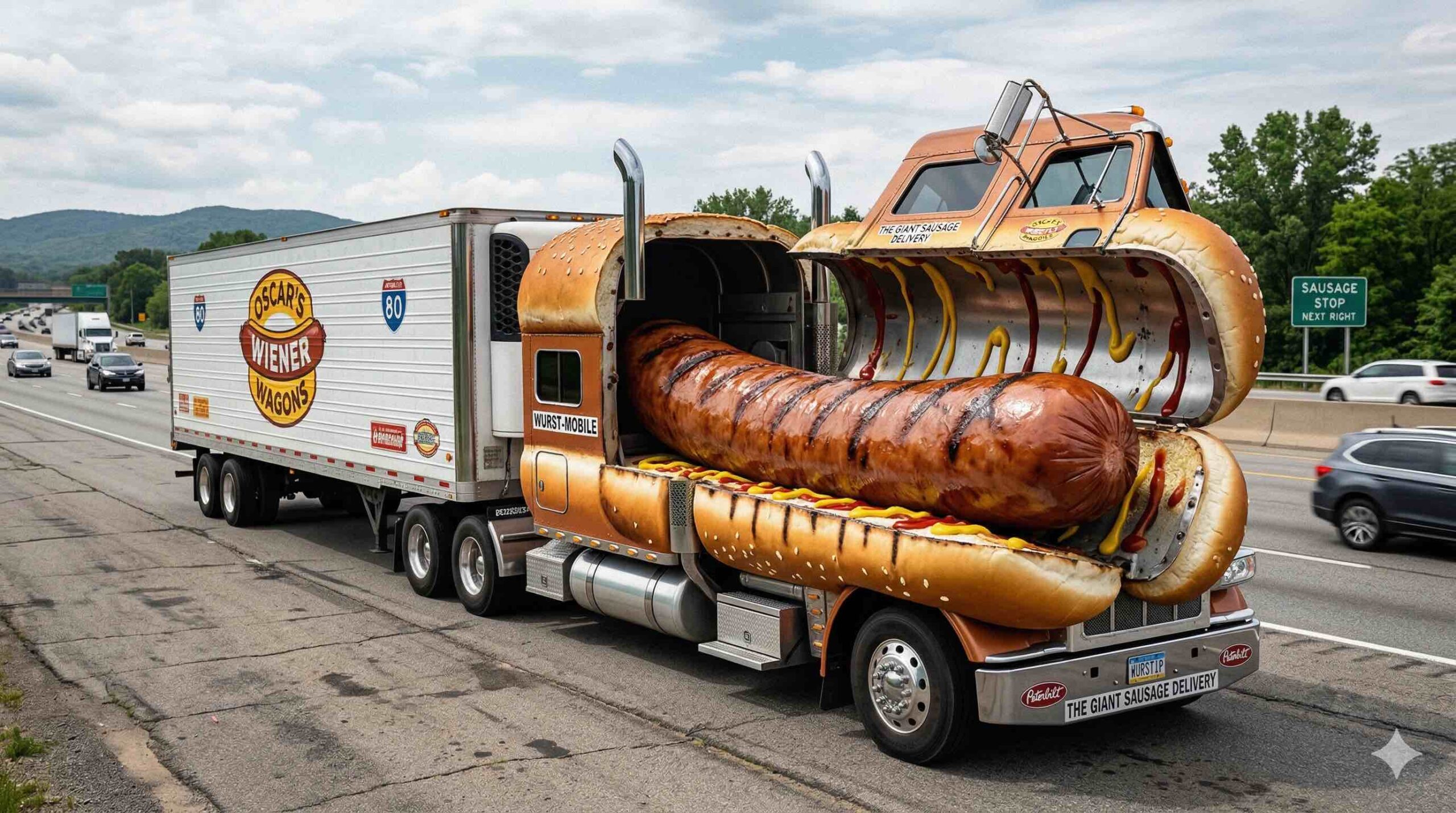
On the club episode we do a deep dive on Commercial Vehicle Group (CVGI) — a boring-as-batsh*t truck cab outfitter that somehow jumped 20% the day after Cameron added it to the QAV Light portfolio. We also run through some big portfolio wins (Kodak up 47%, Zep up 326%, CEMEX up 100%), and Tony shares his takes on horse racing, Jeff Beck, and Moby’s new ambient record.
This week’s full episode is for QAV Club members only. The free episode is available below. Also check out our podcast archives link and our pages on Apple Podcasts or Spotify or watch clips on TikTok. Or visit our homepage to learn more about QAV and how it works as a value investing system that you can learn and apply to beat the market.
Transcription
QAV America 47 Club
[00:00:00] Cameron Reilly: Welcome to QAV America, Tony, episode 47. It’s the 7th of April, 2026. Any [00:00:10] minute now, Donald Trump is going to wipe Iran off the map, blow them back into the stone ages. ’cause apparently there was more than one that he’s [00:00:20] aware of.
[00:00:20] Cameron Reilly: But uh, yes, the market doesn’t know if it’s coming or going as usual. It’s up, it’s down, it’s sideways. [00:00:30] Every tweet is, drives the market, uh, movement. It would seem, or every suit truth, social post, whether he is [00:00:40] demanding Iran, open the fucking straight. Crazy bastards, Presby or not. I, I expected to see more media coverage [00:00:50] of a president, the sitting president, dropping the f-bomb in a, an official communication.
[00:00:55] Cameron Reilly: I think that’s another first, another downgrading of [00:01:00] the, uh, professionalism of the, of the office.
[00:01:04] Tony Kynaston: Well, it worked at the Australian market was up 2% this morning, so I think our Prime Minister should be using the [00:01:10] FBO a lot more to get us going upwards.
[00:01:13] Cameron Reilly: You think that’s what it was? Just the The swearing dividend.
[00:01:17] Tony Kynaston: Swear dividend. Yes. [00:01:20] Wager.
[00:01:21] Cameron Reilly: Well, I’m, I’m, I am gonna do a deep dive, a very interesting deep dive today, Tony. Probably the most interesting deep [00:01:30] dive the world has ever seen. The greatest, greatest deep dive of all deep dives. But before I do that, let me just do a few updates of portfolios and [00:01:40] also some of the recent. Movements of pulled porks, et cetera.
[00:01:44] Cameron Reilly: So we can see how the QAV system is doing in America. [00:01:50] Our, uh, main portfolio, the QAV portfolio that I started in September, 2023 is up 96%. [00:02:00] Time weighted return since then versus the s and p 500, up 48, 40 9% over the same period of time. [00:02:10] So that’s not quite double market actually. No, it’s exactly double market.
[00:02:14] Cameron Reilly: Yeah, exactly. Double market. Uh, that’s despite, uh, [00:02:20] quite a bit of turbulence. We were up 110%, uh, back at the end of February, but there you go. So that’s doing okay. The QAV light portfolio that I started at [00:02:30] the end of December last year is currently up 4% time weighted return over that period of time [00:02:40] versus the s and p 500 down 4%.
[00:02:43] Cameron Reilly: So I guess that’s double market as well, really.
[00:02:46] Tony Kynaston: Kind of, yeah.
[00:02:47] Cameron Reilly: Yeah, some of the big [00:02:50] winners in that portfolio, uh, cord energy that we talked about not that long ago. I seem to recall it’s up 48% Kodak, [00:03:00] that we talked about last week was, did we do Kodak last week?
[00:03:04] Tony Kynaston: I think we did
[00:03:05] Cameron Reilly: It’s up 47% since, yeah,
[00:03:09] Tony Kynaston: [00:03:10] what?
[00:03:10] Cameron Reilly: yeah, yeah. That’s the,
[00:03:12] Tony Kynaston: that,
[00:03:13] Cameron Reilly: well us talking about it on the show obviously.
[00:03:15] Tony Kynaston: that? Yeah.
[00:03:16] Cameron Reilly: Just that, um, eco Petrol’s up [00:03:20] 20%. Murphy oil’s up 20%, but here’s the, here’s the big one, the comp.
[00:03:24] Tony Kynaston: leave, before we leave Kodak, I would just get in there before you thunder. You sent me a photograph of a [00:03:30] stand of a Kodak
[00:03:31] Cameron Reilly: Yeah.
[00:03:32] Tony Kynaston: display from local store in Australia. What, what was that about?
[00:03:36] Cameron Reilly: Well, I went in, I had to, uh, replace [00:03:40] my, uh, wifi system. So I went into an electronics, uh, store here, and up at the counter it was JB Hi-Fi for Australian listeners. And up at the counter there was, there was, there was a stand, a [00:03:50] Kodak stand selling like retro Instamatic cameras. And I was talking to the shopkeeper and he saw me looking at him.
[00:03:58] Cameron Reilly: He goes, yeah, they’re pretty cool. I [00:04:00] just bought one. I said, uh, you wanna know the bad news? Uh, Kodak don’t make cameras anymore. And he goes, oh, these are the last ones. And I go, [00:04:10] no, no, they didn’t. Kodak didn’t make these cameras. He goes, what? It says Kodak on? I go, yeah. They just, they just licensed the brand out to third party manufacturer.
[00:04:19] Cameron Reilly: He [00:04:20] goes, oh, what? Oh, you just ruined my day. I was like, sorry man. I know too much. I know too much.[00:04:30]
[00:04:30] Cameron Reilly: The company I’m gonna talk about today, Tony, that I added to the light portfolio yesterday
[00:04:38] Tony Kynaston: Mm-hmm.
[00:04:38] Cameron Reilly: when I did the, uh, [00:04:40] QAV America buy list is up 20% since I added it yesterday.
[00:04:47] Tony Kynaston: Not quite a Kodak, [00:04:50] half a Kodak.
[00:04:52] Cameron Reilly: It’s, yes, half a Kodak. Well give it a week, we’ll see where it is. Um. [00:05:00] Which is, uh, interesting and, and it’s very koki in its story too. It’s another classic Berkshire [00:05:10] kind of value investing stock that, you know, sort of, I, I think over the time we’ve been doing this American show, [00:05:20] the companies are either major disasters, burnt something to the ground, killed a bunch of people, and have been rebuilding or.
[00:05:29] Cameron Reilly: [00:05:30] Businesses that have gone through the ringer for a variety of reasons and have slimmed right down, sold off a bunch of assets and are turning [00:05:40] themselves around this, this is kind of one of those, it’s not overly dramatic, it’s kind of boring in many ways, but we like [00:05:50] boring, right? We like boring, boring businesses that make money.
[00:05:53] Cameron Reilly: Is a, is a classic QAV kind of stock.
[00:05:55] Tony Kynaston: Correct.
[00:05:56] Cameron Reilly: So anyway, this, uh, the ticket code for this company is [00:06:00] CVGI, uh, it’s Commercial Vehicle Group, Inc. Probably the most boring name of [00:06:10] any company we’ve ever done. I want you to,
[00:06:14] Tony Kynaston: can’t they put AI in there somewhere?
[00:06:16] Cameron Reilly: can you, yeah. The ticket should be CVG ai. They’d [00:06:20] be, they’d go up 200%.
[00:06:21] Tony Kynaston: Hmm.
[00:06:22] Cameron Reilly: Can you guess what commercial vehicle group might do, Tony?
[00:06:27] Tony Kynaston: Well, it’s, I’m gonna, I could, but I [00:06:30] already know the answer.
[00:06:30] Cameron Reilly: ‘ cause you looked it up.
[00:06:32] Tony Kynaston: Yeah. Truck parts.
[00:06:33] Cameron Reilly: No, not truck parts. Truck fitouts. Really. But yeah, I guess you could call that [00:06:40] truck parts listed on the nasdaq and they, um. Well, according to their website, they’re based in New Albany, Ohio. Not to [00:06:50] be confused with Old Albany, which is in New York State, uh, website says a leading supplier of a full range of cab related [00:07:00] products and systems for the global commercial vehicle market, including the medium and heavy duty truck market, the medium and heavy construction vehicle market.
[00:07:08] Cameron Reilly: The military [00:07:10] bus, agriculture, specialty transportation, mining, industrial equipment, and off-road recreational markets. So basically they’re a [00:07:20] cab outfitter. You, you get something comes off the, comes off, the roller comes outta the factory. It’s, uh, bare [00:07:30] bones. These are the guys.
[00:07:32] Tony Kynaston: right?
[00:07:32] Cameron Reilly: Yeah.
[00:07:33] Tony Kynaston: to be bare bones.
[00:07:33] Cameron Reilly: Right.
[00:07:34] Tony Kynaston: I tell you interesting story? So
[00:07:35] Cameron Reilly: You can.
[00:07:36] Tony Kynaston: in, uh, Georgia. [00:07:40] Three years ago, going to the masters this week, ’cause the masters starts on Thursday. Uh, we were in a bus going down the interstate I was [00:07:50] just blown away. Like we, so we were at the same eye line as the heavy vehicles, as the semi trailers. up and down the interstate I, you’d sort of look in, [00:08:00] you could see into their cabs, and they were, were more, were plusher than my lounge room. They were like these huge armchair the drivers were sitting in. I [00:08:10] remember in particular, one was being driven by a lady, like a mid, like a sort of 50, 60-year-old lady in this big armchair with her. Arm rest and her arm resting on it and [00:08:20] driving this truck and it was just, the fit out was amazing. It’s, it was far more advanced than I’d ever seen before. So maybe she was a beneficiary of this company?
[00:08:29] Cameron Reilly: [00:08:30] Maybe, and it’s not the same here. I’ve seen a few truck interiors in Australia that they don’t seem to be that plush.
[00:08:37] Tony Kynaston: this was lush. I.
[00:08:38] Cameron Reilly: So I [00:08:40] wonder what’s going on, uh, with truck fit outs in America. Why, why do truck drivers in America need to have the, uh, plush lounge rooms? Is this a, is it a [00:08:50] union thing?
[00:08:51] Tony Kynaston: I dunno. It’s
[00:08:52] Cameron Reilly: Oh.
[00:08:53] Tony Kynaston: know, they got the cash and they’re spending it on their themselves. They’re, they’re in the cab or however many hours a day it is,
[00:08:59] Cameron Reilly: [00:09:00] Mm-hmm.
[00:09:00] Tony Kynaston: whatever it is. Maybe
[00:09:01] Cameron Reilly: Hmm,
[00:09:01] Tony Kynaston: spending their money on themselves.
[00:09:03] Cameron Reilly: hmm.
[00:09:03] Tony Kynaston: can blame them?
[00:09:04] Cameron Reilly: Fair enough. Well, this company, um, if you look at its [00:09:10] chart, it’s come off a long way from where it was in middle of 2023 when I was trading around 11 bucks. At the time, I did my analysis, it was trading at [00:09:20] $3 56. It’s now trading at $4 27, [00:09:30] but it had already gone up a hundred percent in the proceeding, sort of, uh, couple of weeks because they came out with a good [00:09:40] report, um, which we’ll talk about.
[00:09:42] Cameron Reilly: But that’s basically, they’re a truck cab outfitter when a truck like a, a Kenworth rolls off the assembly line. These guys [00:09:50] supply, uh, all the stuff that goes inside of it, the seat, the wire harness, the dashboard trim. They’re basically a B2B manufacturer. [00:10:00] Most consumers wouldn’t know who they are, wouldn’t see them, dunno the brand, but anyone who’s driving a truck or [00:10:10] a construction vehicle or agricultural vehicle is using their stuff, whether they know it or not.
[00:10:18] Cameron Reilly: Um, one of the [00:10:20] analogies that I came up with is that CVG is the sausage to the truck manufacturer’s bun. Yeah, the, that’s the [00:10:30] title of the episode. Truck Sausage.
[00:10:35] Cameron Reilly: Oh, I love it. Truck sausage. Oh,
[00:10:39] Tony Kynaston: [00:10:40] I hope that doesn’t have a double meaning in the us.
[00:10:42] Cameron Reilly: I’m sure it does. If it doesn’t, it will by the time I’m finished with it. Um, this [00:10:50] company doesn’t have a flashy backstory like Kodak. We talked about last time, it’s basically a rollup, uh, a August, 2000. It was a [00:11:00] rollup of distressed and undervalued heavy truck cab component businesses during a cyclical trough.
[00:11:06] Cameron Reilly: And that is something that this business goes through a lot and it’s [00:11:10] one of the reasons their share prices way off. It goes through cyclical troughs and some, so group of guys got together. Did a roll [00:11:20] up, classic sort of private equity playbook. 2000 mid two thousands, uh, sorry, mid year 2000, August, 2000, and [00:11:30] created the entity was bankrolled by Canadian private equity powerhouse called the Onyx Corporation, and then it went public on the NASDAQ in [00:11:40] 2004, under the ticker CVGI.
[00:11:45] Cameron Reilly: So. Their core business has actually a couple of segments, [00:11:50] and some of them are boring and one of them’s kind of could be interesting. So the main one is global seating. They [00:12:00] design and manufacture vehicle seats for heavy duty trucks, medium duty trucks, last mile delivery vans and construction, agricultural [00:12:10] military vehicles.
[00:12:11] Cameron Reilly: This is sort of the, the, the heritage business. They’ve got very sticky relationships with OEM customers, which [00:12:20] is good, but as I said, it’s a very cyclical business. Um, p truck trucks roll off the assembly line in [00:12:30] very choppy chunks. Apparently people, all of a sudden, everyone needs to get a new truck and then they don’t need a new truck for a few years, and so the [00:12:40] truck business goes quiet.
[00:12:42] Cameron Reilly: So that’s the main part of the business, the main revenue generator. The second is called global electrical systems, cable and harness assemblies [00:12:50] for high and low voltage applications, control boxes and dashboard assemblies. This is sort of the potential [00:13:00] growth engine of the business, mostly because of the EV transition.
[00:13:04] Cameron Reilly: That’s what they wanna be doing, is supplying all of this stuff for the EVs, both traditional [00:13:10] OEMs that are building EVs and also to new EV manufacturers, mostly in the United States. Don’t think they’re gonna get the China EV business, but mostly [00:13:20] in the US and they’ve got a good story here, which we’ll talk about in a minute.
[00:13:26] Cameron Reilly: One of the reasons why their share price is up a hundred percent. The third [00:13:30] component of the business is trim systems and components, interior trim and cab components. It’s lower margin commoditized work, but they [00:13:40] do a lot of it. It’s very volume driven and very stable when trucks are selling. So that’s it.
[00:13:46] Cameron Reilly: Kind of boring. They fit out unless you’re in the truck [00:13:50] game, which I’m not. So, I dunno a lot about trucks. Don’t even care much about my car. So fit out. So
[00:13:58] Tony Kynaston: if
[00:13:58] Cameron Reilly: I’m not the target [00:14:00] market.
[00:14:00] Tony Kynaston: if you don’t know trucks, you can get trucked as the
[00:14:03] Cameron Reilly: Yes,
[00:14:04] Tony Kynaston: Yeah.
[00:14:05] Cameron Reilly: go. Yeah, go get a truck sausage up here. Um. [00:14:10] So looking at their revenue numbers, FY 24 was brutal. It was down 27% [00:14:20] year over year from FY 23. This was part of the cyclical downturn, particularly in Class eight truck orders.
[00:14:29] Tony Kynaston: Mm-hmm.
[00:14:29] Cameron Reilly: [00:14:30] Now, you know your Class eight truck, Tony? Um, I know nobody knows their truck classes, uh, better than you, Tony.
[00:14:38] Cameron Reilly: Uh, but the Class eight trucks are [00:14:40] the big ones, your 18 wheelers, which makes me think they should be class 18. But what do I know? Your 18 wheelers long haul rigs.
[00:14:49] Tony Kynaston: They dropped the [00:14:50] one.
[00:14:50] Cameron Reilly: Yeah, yeah, yeah. Two didn’t have time. Didn’t have time to include the one. Anything. Over 33,000 pounds gross vehicle weight. So [00:15:00] from what I understand, the cycle works like this.
[00:15:02] Cameron Reilly: Trucking fleets buy in waves when freight demand is strong and their existing trucks are getting a little bit [00:15:10] creaky. They put in huge orders all at once. OEMs ramp up production. Suppliers like CVG run hot. Everyone’s hiring. Then the fleet [00:15:20] replacement cycle is done. Freight rates soften. Orders fall off a cliff, often 30 to 40% peak to trough, and [00:15:30] it’s not gradual.
[00:15:31] Cameron Reilly: It’s like a full step function. One day you’re flat out. Next day everyone’s sitting around, twiddling their thumbs. Wonder
[00:15:38] Tony Kynaston: That’s incredible,
[00:15:38] Cameron Reilly: wondering what [00:15:40] happened.
[00:15:40] Tony Kynaston: for a mature industry, you would’ve thought were manufacturing trucks and sales went down, you’d drop the price. And if the volume would go up and over time, that would even out the cycle. [00:15:50] So it’s uh, interesting. It hasn’t evolved that way.
[00:15:52] Cameron Reilly: You would think somebody would work that out and, uh, make some changes to the industry. But hey, again, what do I [00:16:00] know? So if you look at their, uh, revenue in 2020 718 million twenty twenty one, nine hundred and seventy two, twenty [00:16:10] twenty two, nine hundred eighty two. 2020 3, 835 2020 four, seven hundred and twenty three, [00:16:20] twenty twenty five, six forty nine,
[00:16:22] Tony Kynaston: Hmm.
[00:16:22] Cameron Reilly: and the 2026 estimate is at 6 67, so went up by 20 [00:16:30] 30% and then came back by 30, 40% and apparently nothing to do with them really, it’s just that’s how the business works as [00:16:40] I understand it.
[00:16:42] Cameron Reilly: So there was also, the whole COVID thing played into that too. The post COVID freight boom that we talked about [00:16:50] with wasn’t, uh, Kodak, it was, uh, PBI that we did last week. Pitney bows.
[00:16:59] Tony Kynaston: I was gonna say it was [00:17:00] the company we talked about who did the mail.
[00:17:02] Cameron Reilly: Yeah.
[00:17:02] Tony Kynaston: Yeah.
[00:17:03] Cameron Reilly: They tried to take advantage of the whole freight boom thing and came in guta. Well, apparently it did lead a Mabb [00:17:10] to a massive class eight ordering cycle in 2021 to 2023 fleets, overorder to replace some of the aging trucks, and they didn’t want [00:17:20] supply chain delays. So everyone’s getting in and then obviously everything got replaced and freight rates collapsed.
[00:17:29] Cameron Reilly: Oh, [00:17:30] I hear a green smoothie being made in the other room. Ah, yeah. She must have heard you or heard me explaining why she wasn’t making me a green smoothie. [00:17:40] Can you hear that?
[00:17:40] Tony Kynaston: off a bike. No.
[00:17:41] Cameron Reilly: yeah, yeah, yeah. Not making me enough smoothies. So, um, here’s the thing though. Um, there’s a company called a CT [00:17:50] Research.
[00:17:50] Cameron Reilly: There’s another one called FTR. They’re the two main industry forecasters. And they tracked year over year order declines of 20 to [00:18:00] 30% over the sort of 23, 24 period. But according to the latest report from CVG, they’re expecting the same research companies are [00:18:10] expecting. The next cycle will hit sort of 27, 28.
[00:18:14] Cameron Reilly: So there’s got another cycle coming back.
[00:18:16] Tony Kynaston: Yeah. Right.
[00:18:17] Cameron Reilly: Um, but. [00:18:20] It hit CVG harder than it might have otherwise because they were going through a major restructuring at the time. They were selling off a whole different. [00:18:30] Uh, a bunch of different businesses, business units, they were stripping it back. They cut 1300 jobs, so their revenue decline was actually a [00:18:40] combination of a couple of different forces, organic revenue falling because fewer trucks were being ordered, and then also inorganic revenue disappearing because they were deliberately selling off [00:18:50] entire business lines to streamline the business.
[00:18:54] Cameron Reilly: And the market got freaked out. The share price completely crashed. [00:19:00] But uh, before I get into the current figures, one of the things that I think you’ll find interesting is there’s a couple of really big investors in [00:19:10] this. There’s all the usual major institutionals, but there are two sort of major investors.
[00:19:18] Cameron Reilly: A guy called Arnold, [00:19:20] er, S-I-E-M-E-R, holds about eight and a half to 9% of the stock. He founded a [00:19:30] company called the Desco Corporation, D-E-S-C-O in 1966. Not a fund, not a PE firm, just a privately held [00:19:40] operating company headquartered in New Albany, Ohio. A coincidence and over the last 60 years, he’s used Desco as a vehicle to [00:19:50] acquire more than 30 industrial and manufacturing companies, ranging from 5 million to a hundred million in size across the us, Canada, Europe, [00:20:00] and Asia.
[00:20:01] Cameron Reilly: So he just goes around and injects capital into these businesses or buys shares or whatever and takes a stake in them. Long term [00:20:10] industrialists who buys and holds operating businesses, a bit like a Buffet, Munger, kind of, but privately owned, as far as I can tell. I’m not sure what the shareholding of Deco [00:20:20] Corporation is, but.
[00:20:21] Cameron Reilly: So he joined the CVG board in November, 2011, I think, and he’s sort of a [00:20:30] bit of a player, but there’s also a guy called Ari Levy, who also ho holds 8.91%. [00:20:40] He’s the founder, president and CIO of Lakeview Investment Group, a Chicago based public markets investment manager. He [00:20:50] also has a board more recently, I think, took a board and it was like, um, by recently, I’m talking the last month or so and [00:21:00] came up with some sort of a deal with the company.
[00:21:02] Cameron Reilly: I think it’s called like a support arrangement. Do you remember we did, um, one of these South American. [00:21:10] Mining companies a while ago, or energy companies, and they had this white knight come in and take a big stake in them, but he had a deal in place that he wouldn’t sell his shares [00:21:20] and he wouldn’t own more than this.
[00:21:21] Cameron Reilly: And this guy has a similar sort of deal with, uh. CVG apparently. So I think he won’t go [00:21:30] over 15% for a period of time. Not exactly sure if he’s a white knight or what’s going on there, but you’ve got two [00:21:40] fairly large private investors that between them own, you know, 17, 18% of the company. [00:21:50] Which is kind of interesting.
[00:21:52] Cameron Reilly: Then there’s a bunch of like executives that hold smaller percentages, two, three, 4% all up. I think insiders hold about [00:22:00] 25, 20 6% of the company, and I still haven’t built in a function to our checklist in the United States where we can give them a point for [00:22:10] that. But if we could, we would, because that’s, we like to see skin in the game from players like this, right?
[00:22:17] Tony Kynaston: Yeah. Although I.
[00:22:18] Cameron Reilly: not a, not a founder.
[00:22:19] Tony Kynaston: [00:22:20] Yeah, I dunno about those companies you’re talking about. But I did read during my research for the show that some activist investors have gotten involved. So perhaps one or [00:22:30] both of those guys are activist investors.
[00:22:32] Cameron Reilly: Both of them I think are,
[00:22:34] Tony Kynaston: to shake things up. Okay.
[00:22:35] Cameron Reilly: yeah.
[00:22:35] Tony Kynaston: I.
[00:22:36] Cameron Reilly: I think part of the stripping back of the assets is [00:22:40] partly the role of the sema Arnold Sema and, uh, the, the functioning of the new CEO. So they’ve got a relatively new CEO, [00:22:50] uh, appointed December 20th, 2023. James R. Ray Jr. Um, no relation to James Earl Ray, [00:23:00] who was convicted of the assassination of Martin Luther King.
[00:23:03] Cameron Reilly: And then, I don’t know if you know this. But, uh, the King family believes he was innocent. He died, did [00:23:10] like 29 years in jail and died. But, um, king family always believed he was, uh, a patsy. And that there was another guy, uh, who was [00:23:20] part of a conspiracy to assassinate Martin Luther King and that Ray was the scapegoat.
[00:23:25] Cameron Reilly: Anyway, enough about that. I could go on about that, but I will not [00:23:30] hear now. Uh, this guy, James Ray, was formerly the president of Global Engineered Fastening Business Unit of Stanley Black and [00:23:40] Decker. So he’s relatively fresh face into this company. Came in with a mandate to right size the business, [00:23:50] right size.
[00:23:52] Tony Kynaston: Mm-hmm.
[00:23:53] Cameron Reilly: I love that term. Right. Size what is right. Less. Less is, right? Yeah, that’s what’s right. [00:24:00] Who gets to decide what’s right? Well,
[00:24:02] Tony Kynaston: live
[00:24:03] Cameron Reilly: do.
[00:24:03] Tony Kynaston: if you have less calories. Yeah, if you’re
[00:24:05] Cameron Reilly: Yeah, there you go. Yeah. Yeah. So he’s been shedding non-core assets. [00:24:10] As I said, cut about 70% of the workforce, tried to stabilize the balance sheet, and I’ll get through, uh, what he’s done in a minute.
[00:24:18] Cameron Reilly: But before I [00:24:20] do that, six days ago, the CFO resigned.
[00:24:23] Tony Kynaston: Ooh.
[00:24:24] Cameron Reilly: Andy Chung, uh, just after they came out with their financials at the [00:24:30] end of March, he resigned. I had a look at the announcement on the website. It said, uh, his resignation is effective April 15th to accept a position as chief financial [00:24:40] officer of a mid-cap publicly trade traded company.
[00:24:42] Tony Kynaston: Okay.
[00:24:43] Cameron Reilly: So that’s legit. For new listeners, we tend to. Look, uh, sc [00:24:50] at companies that have sudden sea, sea level resignations because it stuck my microphone on the ground, uh, [00:25:00] because it’s, uh, sometimes, uh, a red flag that there is something bad going on. But when it’s to take another job, [00:25:10] it’s usually seemed to be okay.
[00:25:12] Cameron Reilly: Although usually you’d like to see a 90 day transition period. Uh, quick transition outta the [00:25:20] company’s not a good sign.
[00:25:22] Tony Kynaston: No, we don’t know the circumstances though of the new role, but, um, I guess what gives me some comfort is he signed off on the latest results [00:25:30] and, and them before announcing his re resignation. The red flag would’ve been if he resigned before the results came
[00:25:37] Cameron Reilly: Yeah, yeah. Good point.
[00:25:38] Tony Kynaston: which normally means he [00:25:40] disagrees with the numbers that are being posted.
[00:25:42] Cameron Reilly: Yeah, interestingly, they announced that, uh, Angie O’Leary, who is the corporate controller, [00:25:50] has been named the interim CFO, and then they also said, at this time, CVG does not intend to initiate a search process to identify a permanent [00:26:00] CFO replacement. So I’m assuming that Angie might be considered to be the long-term CFO.
[00:26:07] Cameron Reilly: Is that how you would read that, right?
[00:26:09] Tony Kynaston: You’d [00:26:10] think so. Well, they’ve
[00:26:11] Cameron Reilly: Mm-hmm.
[00:26:11] Tony Kynaston: in mind.
[00:26:12] Cameron Reilly: Yeah. Well, mm-hmm. Anyway, so that’s happened, but I, I didn’t, uh, worry too much about that. [00:26:20] So, as I said, they’ve been doing a slash and sell over the last few years. They sold a bunch of non-core businesses, finish Tech, which was a [00:26:30] surface finishing business. Um, the production facility in Ohio, they sold off a cab structures business, whatever that is.
[00:26:39] Cameron Reilly: They sold to [00:26:40] Volvo for 20 million, an industrial automation segment. They sold off some group called First Source Electronics. They sold off, and then just a week ago, [00:26:50] April 2nd, they announced that they, they’d completed a sale leaseback transaction for their manufacturing facility in Vno, Tennessee. [00:27:00] Which generated 16 million in proceeds.
[00:27:03] Cameron Reilly: The company used the proceeds from the transaction to prepay a portion of its existing term loan facility, [00:27:10] so leased back. As I understand it, they’ve leased this property back for 20 years, so sold the property and then leased it back for 20 years, [00:27:20] which is gonna save them, uh, a lot of money. Well, it’s made them money.
[00:27:24] Cameron Reilly: They could pay down debt. Apparently the rent is approximately 1.4 million for the first year. [00:27:30] Anyway, that seems sounds like a way of getting an asset off the books, getting some cash in and paying rent instead of owning it.
[00:27:37] Tony Kynaston: Mm-hmm.
[00:27:39] Cameron Reilly: [00:27:40] So all up, I think they’ve raised about 60 million from selling off all these bits and pieces, and these aren’t, oh, hello.
[00:27:49] Cameron Reilly: Did you hear [00:27:50] Tony saying, where’s your green smoothie? No, no. Yeah, yeah. But I’m like, every time. Yeah, right. Yeah. Yeah. Thank you. Green smoothie girl.
[00:27:59] Cameron Reilly: [00:28:00] Um, ooh. Hmm. It’s good. A lot of banana must have had bananas going rotten, so you need to make a banana smoothie. These weren’t fire [00:28:10] sales of crown jewels. They were deliberate
[00:28:13] Tony Kynaston: Hmm.
[00:28:13] Cameron Reilly: cuts of non-strategic low margin type businesses, and so they [00:28:20] can focus on. The core businesses seeding, electrical, and trim. Now the big news, so they, they did their last earnings call [00:28:30] on March 11th, 2026, their, uh, Q4 FY 2025 earnings call, and the stock went up 65% within [00:28:40] hours and.
[00:28:42] Cameron Reilly: Some of it was good. Uh, they’re still losing money, but not as much as they lost last year. Um, [00:28:50] revenue fell a little bit, but beat analysts expectations. Adjusted EPS Beat Analyst, no missed analyst expectations. I think it was negative [00:29:00] 15 and they ended up getting negative 18, but. The numbers improved a little bit across the board.
[00:29:07] Cameron Reilly: They also talked about north, uh, [00:29:10] soft North American demand, some gross margin improvement and some growth in the global electrical systems side of the business. It was up nearly [00:29:20] 13%. The class eight cycle outlook was the bit where this research group came in and said that. [00:29:30] There would be 4% growth in this year, 2026 for builds.
[00:29:35] Cameron Reilly: Um, a small dip next year, [00:29:40] 2027, but then a 30% rebound in 2028 of, uh, class eight builds, big [00:29:50] truck builds. So, and apparently this is the way it goes. Like, you know,
[00:29:55] Tony Kynaston: Mm-hmm.
[00:29:55] Cameron Reilly: lean years and then boom years. But the big [00:30:00] news was the Zoox partnership. They announced a partnership with Zoox
[00:30:05] Tony Kynaston: Is
[00:30:05] Cameron Reilly: Gad Zoox. That’s how I’d pronounce it.
[00:30:08] Tony Kynaston: Okay.
[00:30:09] Cameron Reilly: of these guys [00:30:10] before?
[00:30:10] Tony Kynaston: Uh, the, uh, self-driving cars. Yeah. Yeah. It used to be an Australian CEO who was um. Dyna minded [00:30:20] out, um, in a corporate play that he wasn’t very happy with a year or so ago?
[00:30:25] Cameron Reilly: Really? Wasn’t that Zoom? Zoom, zoom.
[00:30:27] Tony Kynaston: No, I think it, well see, I pronounce it Xox, but I [00:30:30] don’t, I’m
[00:30:30] Cameron Reilly: Xox, ah,
[00:30:31] Tony Kynaston: to
[00:30:32] Cameron Reilly: Zoox as in God zoox.
[00:30:34] Tony Kynaston: Okay. Um, yeah, pretty sure that was the company.
[00:30:38] Cameron Reilly: Well, I’d [00:30:40] never heard of these guys. Amazon bought them,
[00:30:42] Tony Kynaston: Hmm.
[00:30:43] Cameron Reilly: a year or so ago for 1.2 billion or something. Yeah. So [00:30:50] their, uh, well, their website, the Zoox website says it’s not a car. It’s a robo taxii designed around you. Have you seen these [00:31:00] things?
[00:31:00] Tony Kynaston: Uh, well, I’ve seen robo taxis.
[00:31:04] Cameron Reilly: So your mo, your robo taxii, like your Waymo looks like a car,
[00:31:08] Tony Kynaston: Yeah.
[00:31:09] Cameron Reilly: It’s [00:31:10] got a, a steering wheel.
[00:31:11] Tony Kynaston: Oh, it does.
[00:31:12] Cameron Reilly: I think it’s got a steering wheel. Yeah. But no driver or you know, it just drives itself. These things don’t have a steering wheel. They don’t have front [00:31:20] seats. It’s just like a, like a, a pod. They call it a pod, but it’s like a minivan,
[00:31:25] Tony Kynaston: Mm-hmm.
[00:31:26] Cameron Reilly: seat.
[00:31:27] Cameron Reilly: I think four people facing each other. [00:31:30] So yeah, that’s the thing. Just gets up, drives around,
[00:31:34] Tony Kynaston: Did you see the, um, news last week where, uh, like, and I saw [00:31:40] video clips from China on the freeway of all of the Dr. Self driverless cars coming to a halt at once?
[00:31:46] Cameron Reilly: really. No.
[00:31:48] Tony Kynaston: Yeah.
[00:31:48] Cameron Reilly: Wow.
[00:31:49] Tony Kynaston: something broke. [00:31:50] all
[00:31:50] Cameron Reilly: Oh, really? Oh, they just stopped. Oh, I thought you meant they were coming to a stop at a red light. No, they all just like broke down.
[00:31:57] Tony Kynaston: they all just stopped on the
[00:31:59] Cameron Reilly: Oh, [00:32:00] wow. Well, these things will happen. Um, yeah, this thing’s got no steering wheel, no driver’s seat passengers facing each other [00:32:10] like a train carriage.
[00:32:11] Tony Kynaston: that.
[00:32:11] Cameron Reilly: Right.
[00:32:12] Cameron Reilly: Four zone climate control, 360 degrees. Sensing, designed from scratch, never to have a human driver. They’ve [00:32:20] partnered with Uber. They’ve launched free rides in Las Vegas in September, 2025. Then San Francisco in November, 2025. [00:32:30] I think they’re planning on doing paid trips. Uh, starting this year, they’re gonna be rolling out to Dallas, Denver, Detroit, Houston, [00:32:40] Orlando, San Antonio, San Diego, Washington, and Nashville.
[00:32:44] Cameron Reilly: Anyway, the CVG announcement was that they have been selected to [00:32:50] design and supply custom low voltage wire harnesses for zoo’s, robo taxis. Zoox have built a [00:33:00] 220,000 square foot manufacturing facility in the Bay Area targeting 10,000 vehicles a year at full, full capacity. [00:33:10] So yeah, that’s sort of, I think, partly responsible for the CVG price bump over the last couple of weeks.[00:33:20]
[00:33:20] Cameron Reilly: The impact of this particular deal for CBGs revenue isn’t huge though. Uh, it’s, you [00:33:30] know. It’s a kind of a blip. 10,000 units a year of wire harnesses for robo taxis isn’t really gonna have a big impact on their $700 [00:33:40] million a year revenue. But I think it’s, uh, proof that they are a potential player in the EV electric wire harness [00:33:50] fit out space.
[00:33:52] Cameron Reilly: And uh, you know, I think the market kind of went. Wild because you know, they’re a relatively [00:34:00] small company. And to do a multi suppl, a multi-year supply agreement with an Amazon subsidiary is sort of a big deal. Big success for them.
[00:34:09] Tony Kynaston: So [00:34:10] I guess I don’t understand that they’ve got multi-year deals with truck manufacturers, do one with Amazon for 10,000 vehicles and suddenly it’s like [00:34:20] gold. Yeah. Ah, let’s go and celebrate.
[00:34:23] Cameron Reilly: Well, Amazon’s an AI company, Tony, so anyone who does a deal with an AI Kenworth aren’t making ai. You know, it’s, [00:34:30] there’s no AI dividend in there.
[00:34:32] Tony Kynaston: And you can pronounce Kenworth. You can’t pronounce Zoox or Zox or whatever,
[00:34:35] Cameron Reilly: Oh, I just went straight to zoo because I don’t know why it’s so hard. Like my mother, we, so [00:34:40] Christy and I were sitting around talking to my mum last night and my mum said, ignite of. I was like, what? What are you cove? I was like, I’m sorry, you, you gotta explain that to me. [00:34:50] Yeah. So yeah. Then we had this whole argument about whether it’s cognitive or cove.
[00:34:56] Cameron Reilly: Anyway.
[00:34:57] Tony Kynaston: And, and the correct [00:35:00] pronunciation
[00:35:00] Cameron Reilly: Wow. Who gets to decide these things? Yeah, yeah, yeah, yeah. She said, is it Caribbean or Caribbean? And I said, well, [00:35:10] I’ve heard both. So both are acceptable. You are the first person in 55 years, I’ve heard say Cog Ignite of like, you’re not Donald Trump. You just don’t get to make up your own [00:35:20] pronunciations of things.
[00:35:22] Cameron Reilly: Maybe you do. I don’t know. She’s about his age. She turns 79. So, [00:35:30] um, so look, yeah, whether or not this Amazon thing will go anywhere, I mean, Amazon’s bailed out of businesses before that, uh, [00:35:40] it was gonna take over the world with and then didn’t. So, and whether or not the, the US EV market is. Gonna go anywhere or they’re gonna all get swamped [00:35:50] by China.
[00:35:50] Cameron Reilly: Although, as we know, China’s EV vehicles aren’t allowed to, allowed to be sold in the United States.
[00:35:57] Tony Kynaston: Yep.
[00:35:58] Cameron Reilly: I heard, I was listening to [00:36:00] somebody, uh, I think it was, um, Eric Schmidt, the former CEO of Google. I was listening to an interview with him on the way up here. Oh, that’s what I gotta tell you. I should have [00:36:10] told him about this.
[00:36:10] Cameron Reilly: And after hours, I was listening to the, uh, audio version of Yes Minister, um, on the way up here. That was great. I just keep, I listen to that. I go, I just wish I [00:36:20] could remember all of Sir Humphrey’s lines and just have them on call. You know, just, uh. Have his lexicon of insults.
[00:36:29] Tony Kynaston: that’s [00:36:30] Brave Minister.
[00:36:32] Cameron Reilly: Uh, anyway, uh, yeah. And Eric Schmidt was talking about, he’d just got back from China and he was saying, he [00:36:40] was talking about the EV going through the touring, the EV factories and how many EV businesses there are there and how cutthroat they are. And he said, but no one in America knows that because they’re [00:36:50] not allowed to be sold here because Yeah, Elon’s got the market locked down.
[00:36:55] Tony Kynaston: the day when I was working at Coles. My.
[00:36:57] Cameron Reilly: Really? What was that like?
[00:36:59] Tony Kynaston: [00:37:00] Good. Yeah. We, we talked a lot about a book. He was mentioned in,
[00:37:03] Cameron Reilly: Oh, yeah.
[00:37:04] Tony Kynaston: yeah, I think it was, the book was called Nudist on the Late Shift, sort of a, it wasn’t [00:37:10] Michael Lewis, but that kind of book about, uh, Silicon Valley.
[00:37:13] Cameron Reilly: Right. Was he the nudist?
[00:37:15] Tony Kynaston: No,
[00:37:16] Cameron Reilly: Oh, okay.
[00:37:16] Tony Kynaston: joked about it,
[00:37:17] Cameron Reilly: Right,
[00:37:18] Tony Kynaston: he was or not.
[00:37:19] Cameron Reilly: [00:37:20] right.
[00:37:20] Tony Kynaston: Yeah.
[00:37:20] Cameron Reilly: So anyway, um, if you, you know, you take that in for what it’s worth. Everyone’s sort of excited about the [00:37:30] Amazon deal, but I guess I said it’s sort of, um, probably gonna have a minimal impact on their short term revenues. Probably the 30% bump [00:37:40] of the class eight trucks a couple of years from now is gonna be a much bigger deal for them.
[00:37:45] Cameron Reilly: But for whatever reason, the market went nuts.
[00:37:47] Tony Kynaston: of their workforce in [00:37:50] two
[00:37:50] Cameron Reilly: You can always hire them back, hire ’em back when you need them.
[00:37:54] Tony Kynaston: right size.
[00:37:56] Cameron Reilly: That’s it. Right Size Tony. That’s right. [00:38:00] So, um, let me run through the QAV numbers. Um, as I said, the closing price at the time was $3 [00:38:10] 56. Now I haven’t rerun the numbers at the new price, so. Anyone who’s listening to this and thinking about investing in CVGI, you may wanna rer it [00:38:20] based on the new share price.
[00:38:21] Cameron Reilly: It might change our scoring a little bit. Market cap, 130 million on Wikipedia. Their stock rank was 94, which is [00:38:30] very good. Quality rank was 70, which is very good. Uh, so we scored them for those. Their EPS is [00:38:40] negative, uh, both for this year and for the forecast EPS for next year. So they’re not gonna get any ratings on anything [00:38:50] that’s requiring, um, earnings ’cause they don’t have any earnings.
[00:38:55] Tony Kynaston: Yeah, all
[00:38:56] Cameron Reilly: But, but their price to operating cashflow is [00:39:00] 2.92, so very, very cheap from that metric. Their operating cashflow is about 44 40 5 million. [00:39:10] Operating cashflow per share, about a dollar 32. Price to book was 0.978 times. [00:39:20] And their book value CAGR over three years is 3.57%. So. You know, pretty cheap. [00:39:30] Um, by our metrics, both the price to operating cash flow and the book value.
[00:39:34] Cameron Reilly: The Petrovsky F score is a five, kind of neutral, not, not great, not [00:39:40] terrible, no yield because they’re not making any money. Um, average daily volume is about 793,000 shares. [00:39:50] So big enough, uh, shares I have here. Yeah, shares. Um, that’s what it [00:40:00] says in my notes. Don’t, could be wrong. I don’t have my full sheet open in front of me, but that’s what it says in my notes.
[00:40:08] Cameron Reilly: So, they’ve got a bit of debt, [00:40:10] but they’re paying down the debt. Um, they’ve got about, I think their net debt’s about $98 million. Net leverage is about 4.7 times. [00:40:20] Um, so market cap of 130 million versus net debt of about 98 million enterprise value is about, [00:40:30] uh, 228 million. Not dirt cheap, but, um, you know, pretty cheap.
[00:40:37] Cameron Reilly: So, uh, what else can I tell you [00:40:40] about these guys? So that’s pretty much it. Um, auditors given them a clean bill of health. Um, I think they did have a [00:40:50] restatement back in 2020, but since then they’ve been okay. They did have, uh, some issues during the COVID period. [00:41:00] Um, that’s it. Sort of a bit of a cigar butt.
[00:41:05] Cameron Reilly: They’ve been stripping back, uh, some of their core businesses, but I don’t [00:41:10] know how these sort of cycl, deeply cyclical businesses. Um, when you pick ’em up at the bottom of a cycle, uh, you might [00:41:20] have to wait a little bit time. It’s already being rerated by the market, obviously, whether it’s the numbers or the.
[00:41:27] Cameron Reilly: Amazon stuff, but [00:41:30] there’s still a long way from where the share price was back in 22, 23, whenever it fell off a cliff. But, um, that’s the [00:41:40] story, just, uh, kind of boring with some cool stuff.
[00:41:44] Tony Kynaston: Yeah, I mean, it is a deeply, deeply cyclical stock and it’s, it’s not making any money, but it’s throwing off lots of [00:41:50] cash. And when I sort of drilled into that, it looked like it was because it was such a low margin business that some of their products were like 2% margins, um, which is razor [00:42:00] thin.
[00:42:00] Cameron Reilly: Yeah, the trim stuff in particular.
[00:42:03] Tony Kynaston: yeah, so like if I’ve got a, know, there was a bit of a, um. There was a [00:42:10] bit of an article on the guy who took over in 2023 and how good he was logistically at improving costs. So I don’t know if he’s had much effect yet margin wise, but if he can even [00:42:20] just improve margins by one or 2%, that’s a, a, like a doubling of profit. Potentially. So, um, his work’s cut out for him uh, but [00:42:30] look, but they’ve been making inroads.
[00:42:32] Tony Kynaston: They’ve been, as you say, selling off the non-core assets, doing sales and leasebacks, all that classic sort of turnaround play, especially for a [00:42:40] roll up where it’s a bit like. Buying a, increasingly buying a portfolio and then putting it in your bottom drawing. Then one day pulling it out and going, oh shit, we own this stinker.
[00:42:49] Tony Kynaston: Let’s, let’s get [00:42:50] rid of it. It’s a similar sort of thing really. So they’re trimming the portfolio down. Um, and Lakeview Capital’s now on the board. So that’s their specialty is, is, um, [00:43:00] turnaround. So, you know, they’ve got all the pieces in place, I think. And, you know, the, the forecasters are saying 2027 is gonna be when the market picks up for heavy [00:43:10] vehicles.
[00:43:10] Tony Kynaston: So it’s all aligning for this company, um, selling off non-core assets and reducing debt and having lots of cash to play with. Looks like they’ll get to 2027, which of [00:43:20] course is the. The key, the thing to focus on at the moment, even though they’re not profitable, they could be very profitable in a year or two’s time and, and, [00:43:30] um, just improving margins a little bit, just getting a bit of volume back into the business is kind of, um, flow straight through to the bottom line help to rerate the stock [00:43:40] even more, I would’ve thought.
[00:43:41] Cameron Reilly: If you, you look at their 10 year chart too. It’s the. Air price is very cyclical. So if you go back to go [00:43:50] back 10 years to 2016, shares, were around $3 94 bucks, kind of where they are now. By [00:44:00] January, 2018, they’re up to $12 50. So,
[00:44:03] Tony Kynaston: Yeah.
[00:44:04] Cameron Reilly: 300% growth. Then by March, 2020, [00:44:10] the well COVID, but yeah, they were back down to a dollar 68, then May, 2021, back to 1230 by [00:44:20] October 22, back down to four bucks.
[00:44:23] Cameron Reilly: July 23, up to $10, 60. And yeah, then they were back down to a [00:44:30] dollar 17 by March of 2025, and now they’re back up to $4 again. So, you know, I, I expect it will continue to [00:44:40] be cyclical unless something changes with the dynamics of the business that they’re in. But if we write ’em up and then our [00:44:50] cell triggers get us out on the way down, I dunno what the three point trend line will look like at that point in time.
[00:44:56] Cameron Reilly: But yeah, buying something when it’s [00:45:00] particularly like it’s, it’s gone through this process in the last 10 years. It’s gone down to four bucks, back up to 12, back down to four, back up to 12. Back down to [00:45:10] four. It’s at four now. So. Chances are we’ll be able to ride it back up to 12 and then hopefully get out before it goes back down to four again.
[00:45:19] Tony Kynaston: [00:45:20] Yeah, and you’d hope, and I mean this management’s been in place for a couple of years, but you’d hope they’d work out. Set your cost base at the low point of the [00:45:30] cycle and then a lot of cream when it’s at the high point of the cycle. So that, I
[00:45:34] Cameron Reilly: Yeah.
[00:45:35] Tony Kynaston: not smooth out the share price, but uh, ’cause it’s gonna mean they’re still getting peaks and troughs in [00:45:40] their profit.
[00:45:40] Tony Kynaston: But hopefully it would smooth out the business anyway.
[00:45:44] Cameron Reilly: I assume a lot of these business units they sold off were possibly bought at some stage [00:45:50] by management to try and smooth out their revenue streams that it, but it didn’t work out
[00:45:54] Tony Kynaston: Yeah. Yeah. I,
[00:45:56] Cameron Reilly: anyway.
[00:45:57] Tony Kynaston: yeah. Last thing to, to think of, to, [00:46:00] to mention is that I keep thinking of CBGB, the old, uh, nightclub in New York, that Patty Smith and Talking Heads and all those bands had their starts at, whenever I [00:46:10] hear the name of this company,
[00:46:11] Cameron Reilly: C, B, G. Yeah. Yeah, yeah. Wouldn’t it be great to have a time machine and to go back and see some of those gigs? Blondie, [00:46:20] Lou Reed. Bowie. Iggy. Yeah. One day, I don’t believe in time machines, but, uh, you know, who [00:46:30] knows? Well, Tony, if, uh, Donald Trump hasn’t started a nuclear war by this time next week [00:46:40] we’ll be back to.
[00:46:44] Cameron Reilly: As we were saying on the last show, there’s this, uh, I think it was the last show, the, the Twitter account, the Iranian embassy [00:46:50] in Zimbabwe that I’ve been following every, they’re, they’re trolling, all giving troll responses to all of Trump’s tweets. When he said open the straight, they said, sorry, we can’t, we lost the keys.[00:47:00]
[00:47:02] Cameron Reilly: And then he tweeted something, he, something was gonna happen by 8:00 PM and they said, uh, eight PM’s not good for us. Could we try maybe one to 2:00 PM or maybe [00:47:10] two to 3:00 AM would be better. Thank you for your attention to this matter. Easy for them. They’re in Zimbabwe. They’re not gonna be the ones that get, [00:47:20] uh, a nuclear missile dropped on them.
[00:47:22] Cameron Reilly: Anyway. Um, the world is a crazy place, Tony. But, uh, [00:47:30] we have to trade through it regardless.
[00:47:34] Tony Kynaston: keep doing what we’re doing.
[00:47:35] Cameron Reilly: Yeah. And it’s working pretty well. So thank you to CVG for the 20% [00:47:40] week. Keep it up. Good job. Thank you to Kodak for their 20% two weeks. 40%. 20% a week.
[00:47:47] Tony Kynaston: Yeah.
[00:47:47] Cameron Reilly: There you go. Thank you. Kodak got [00:47:50] no idea what drove that, apart from the fact that we talked about it.
[00:47:53] Cameron Reilly: I post about it on Reddit. Everyone told me to shut the hell up, but, uh, you know, there you go.
[00:47:58] Tony Kynaston: Do you go back and [00:48:00] like say, Hey, look
[00:48:01] Cameron Reilly: Yeah,
[00:48:01] Tony Kynaston: graph guys,
[00:48:02] Cameron Reilly: yeah. I do nothing.
[00:48:06] Tony Kynaston: Do you ever sort of go and say, Hey, I’ve [00:48:10] got this great AI stock you should check out.
[00:48:11] Cameron Reilly: Oh, they’d love that
[00:48:13] Tony Kynaston: Kodak.
[00:48:14] Cameron Reilly: oh, Koda. Yeah. You know, just. Some of the stocks that [00:48:20] we’ve talked about on the show, like, I didn’t go over the, the rest of them, but there’s some crazy, been crazy numbers, like just in the last year. So, uh, [00:48:30] Chemex, we talked about C-E-M-E-X. Uh, we talked about them March last year.
[00:48:35] Cameron Reilly: They’re up a hundred percent since then. Um, Sasol [00:48:40] Dirty Oil is up 150%
[00:48:43] Tony Kynaston: Hmm.
[00:48:43] Cameron Reilly: Zep. Yeah, Zep, the, uh, Chinese mobile [00:48:50] device company is, it was up 700% at one stage. It’s now only up 326% since we talked about it in July last year. [00:49:00] Um, a lot of just terrific. Seneca Foods is up 52% since we talked about them in July.
[00:49:07] Cameron Reilly: Yeah. They didn’t do well for a while. Yeah. [00:49:10] Um, Methanex is up 55%, uh, since we talked about them in September last year. [00:49:20] Court I’ve mentioned, uh, Murphy Oil, Kodak.
[00:49:23] Tony Kynaston: Hmm.
[00:49:23] Cameron Reilly: So, yeah, like Topgolf, you’ll be happy to know, which is no longer called Topgolf. Um, [00:49:30] well its ticker has changed to Cal Callaway, CALY. It’s up 34% since we talked about them in November, and there’s a lot more I could go through too, but a [00:49:40] couple haven’t worked out.
[00:49:40] Cameron Reilly: American Airlines is down 21%, but a lot of winners and a lot like just huge numbers in the US stocks.
[00:49:47] Tony Kynaston: if you thought about the companies we’re talking [00:49:50] about, you wouldn’t predict them going up so much.
[00:49:52] Cameron Reilly: No.
[00:49:52] Tony Kynaston: Yeah.
[00:49:53] Cameron Reilly: But overall, we’ve um, done [00:50:00] 45 deep dives on this show in the last year and a bit, um, of those 31 have gone up and [00:50:10] 14 have gone down. So it’s about a 69% win-loss ratio. And the average profit, if I just bundle ’em all [00:50:20] up and don’t worry about timeframes or whatever, the average profit, um, of all of them combined, not just the winners, is 26%.
[00:50:27] Tony Kynaston: Mm.
[00:50:28] Cameron Reilly: [00:50:30] Yeah.
[00:50:30] Tony Kynaston: So listeners to the
[00:50:31] Cameron Reilly: In a.
[00:50:31] Tony Kynaston: even have to subscribe. They can just buy the stock we talk about, you know, it’s a
[00:50:39] Cameron Reilly: they [00:50:40] can, but if you’re a QAV Light subscriber, you would’ve got it yesterday and you would’ve, uh, a couple of days early. You’d be up 20% sooner.
[00:50:47] Tony Kynaston: and the portfolio is doing better than just the, [00:50:50] the pulled porks have been done by us. Yeah.
[00:50:54] Cameron Reilly: Well, well actually, yes. This, uh, only club members get these [00:51:00] episodes now, Tony, so, uh, yeah, yeah, yeah. So there you go.
[00:51:05] Cameron Reilly: Um, after hours, Tony, you got a lot of [00:51:10] things, a lot of horses, some music.
[00:51:12] Tony Kynaston: Yeah, so, uh, I guess I was busy. I was, maybe I’d just put more in here than I normally would, um, [00:51:20] because Jenny was away and I was spending more time on my own, had a look at a series called Hijack on Apple Streaming, which, um, I’m not gonna give a [00:51:30] strong recommendation to, but we’ve watched both series now and it’s pretty good.
[00:51:33] Tony Kynaston: Strong B grade sort of stuff with Idris Elby. Yeah.
[00:51:36] Cameron Reilly: Yeah.
[00:51:36] Tony Kynaston: Um, but yeah, lots of it’s, it’s pretty [00:51:40] basic fair, but lots of twists and turns and surprises and cliffhanger. So I, I kind of enjoyed it at least enough to watch two series of.
[00:51:48] Cameron Reilly: Right.
[00:51:49] Tony Kynaston: Yeah. [00:51:50] So check it out if you can’t find much else to, to watch.
[00:51:53] Cameron Reilly: Well, we just started watching Night of the Seven Kingdoms based on your
[00:51:57] Tony Kynaston: Oh, [00:52:00] and
[00:52:00] Cameron Reilly: Couple of episodes, maybe three episodes into it. Yeah. Enjoying it.
[00:52:04] Tony Kynaston: yeah.
[00:52:04] Cameron Reilly: It’s a slow start, kind of, but
[00:52:06] Tony Kynaston: Mm-hmm.
[00:52:07] Cameron Reilly: interesting to get back into the [00:52:10] Georgia r Martin Worlds and all of that kind.
[00:52:13] Cameron Reilly: A lot of, you know, violence and
[00:52:16] Tony Kynaston: Yeah.
[00:52:17] Cameron Reilly: stuff and, you know, all that kind of graphic [00:52:20] stuff. Yeah.
[00:52:21] Tony Kynaston: Yeah.
[00:52:21] Cameron Reilly: Fun.
[00:52:22] Tony Kynaston: It is fun. I, I, we enjoyed that. What else have I got? Yeah. I, I, um, being, [00:52:30] giving, uh, Janie Mitchell’s Blue a spin and Jeff Beck’s Truth a Spin. Um, I think I came across someone doing a cover of, uh, California [00:52:40] in my stream. So I went back and got Janie Mitchell out. It holds up. Its good album.
[00:52:44] Cameron Reilly: Oh yeah. I love Blue
[00:52:45] Tony Kynaston: Yeah.
[00:52:46] Cameron Reilly: And I love Jeff Beck. I, truth not one of my [00:52:50] favorite albums, but, uh, wired, his sort of.
[00:52:53] Tony Kynaston: Yep.
[00:52:54] Cameron Reilly: Jazz forays
[00:52:56] Tony Kynaston: Yep.
[00:52:57] Cameron Reilly: late seventies, early eighties. I [00:53:00] always go back to, I know them. Like I know those albums for note, like kind of
[00:53:05] Tony Kynaston: Oh, really?
[00:53:06] Cameron Reilly: to them so many times.
[00:53:08] Cameron Reilly: Yeah. I love his version [00:53:10] of pork pie hat
[00:53:11] Tony Kynaston: Yep.
[00:53:11] Cameron Reilly: sorts of things.
[00:53:12] Tony Kynaston: Well, I hadn’t because, uh, he, I dunno, just I heard some of his stuff and, and, um, [00:53:20] come across him when he was playing with somebody else. But I found out truth, I think was the first time that Rod Stewart and, uh, who’s the guy from the Small faces and the Rolling [00:53:30] Stones, the guitarist, um,
[00:53:31] Cameron Reilly: Wood,
[00:53:32] Tony Kynaston: Ron Wood, Ronnie Wood played together with him.
[00:53:34] Cameron Reilly: right?
[00:53:35] Tony Kynaston: uh, that’s why I went back and had a listen to it and it’s, it’s patchy. It’s got some pretty [00:53:40] ordinary sort of stuff on it, but, um, there’s some really good stuff as well.
[00:53:44] Cameron Reilly: Yeah. Jeff Beck was one of the greats. Man. Just what, like an incre, a crazy career
[00:53:49] Tony Kynaston: [00:53:50] Yeah.
[00:53:50] Cameron Reilly: So wide ranging and, uh, was such a, not only amazing guitarist, but also just did so many different styles of stuff [00:54:00] like the, the, the, the jazz fusion stuff that he did for a while there, which apparently he hated. He later in
[00:54:05] Tony Kynaston: Really?
[00:54:06] Cameron Reilly: doing that.
[00:54:06] Tony Kynaston: Huh?
[00:54:07] Cameron Reilly: He always used to talk shit about those albums. But I love them. I’ve [00:54:10] always loved them since I discovered them when I was in my late teens, early twenties.
[00:54:14] Tony Kynaston: Yeah. Okay. I’ll check him out. I haven’t really checked it out.
[00:54:17] Cameron Reilly: have you listened to [00:54:20] Rine yet?
[00:54:20] Tony Kynaston: No.
[00:54:21] Cameron Reilly: Yeah. These haven’t come across your feeds. They’re sort of the hottest meme trend band.
[00:54:27] Cameron Reilly: They’re at a Quebec, [00:54:30] they two guys, they wear full costumes and masks, paper mache with big noses. They’re painted in [00:54:40] dots from head to toe and their music is crazy. It’s just a drummer and a guitarist. But the guitarist has got this instrument that’s. [00:54:50] guitar down the bottom and a normal guitar up the top. But it’s, uh, semitone fretted. So they’re playing a lot of [00:55:00] this semitone. And it reminds me, it’s like this weird avantgarde jazzy funk fusion kind of thing. And it reminds me for some reason [00:55:10] of zapper. just, know, kind of very, very weird and avant-garde, but funky at the same time. And when they do [00:55:20] interviews, they speak in a made up space language and their [00:55:30] manager translates for them into French, what they’re saying.
[00:55:33] Tony Kynaston: So probably can’t speak French.
[00:55:36] Cameron Reilly: No, I, no, I just think it’s like one of these art [00:55:40] concept. It’s
[00:55:40] Tony Kynaston: Yeah, right.
[00:55:41] Cameron Reilly: daft Punk or, um,
[00:55:44] Tony Kynaston: Yeah, right.
[00:55:46] Cameron Reilly: want their identities to be known for whatever reason, [00:55:50] and so they don’t even let their voices really be heard. But the music’s great. They’ve got two albums out, volume one and volume two. I just discovered ’em a few days ago.
[00:55:57] Cameron Reilly: I’ve been listening to them a lot while I’ve been here doing chores around the [00:56:00] house, replacing fly screens and trimming hedges and chopping down banana flowers and stuff like that for my mum.
[00:56:06] Tony Kynaston: Nice.
[00:56:08] Cameron Reilly: it’s good stuff. It’s, it’s kind [00:56:10] of it instrumental. It’s all instrumental, but it’s funky, jazzy, avant-garde, crazy kinda stuff, which
[00:56:16] Tony Kynaston: have to write down that name for me and send it through. ’cause I, my French [00:56:20] isn’t good enough to remember it.
[00:56:21] Cameron Reilly: and, and the way that they say it is. Yeah, I will, I’ll send you a link
[00:56:29] Tony Kynaston: All [00:56:30] right. Thank you.
[00:56:30] Cameron Reilly: how the, how the horses going. Oh, how was your birthday by the way?
[00:56:32] Tony Kynaston: Yeah, it was good. Good. Well, before we get onto that, I have one more record to talk about, um, Moby Future Quiet, [00:56:40] which, um, a.
[00:56:42] Cameron Reilly: No, not really. You know, I’ve never really dug into Moby. I know like some of his hits from 20 years ago, but I’ve never [00:56:50] really, you know, listened to the catalog.
[00:56:52] Tony Kynaston: I love, maybe I, yeah, and this is a, this is a bit different for him. It’s a much quieter, ambient sort of music, [00:57:00] uh, record. Um, but I’m just have a playing when I’m working. But yeah, it’s really good, really quiet. Just enough melody to be interesting.
[00:57:08] Cameron Reilly: Yeah.
[00:57:09] Tony Kynaston: [00:57:10] Yeah.
[00:57:10] Cameron Reilly: I’ll check it out.
[00:57:11] Tony Kynaston: Oh, I love Moby. Some of his, some of his albums, even when they didn’t have hits on them, were just fantastic.
[00:57:16] Cameron Reilly: Yeah, there you go.
[00:57:17] Tony Kynaston: Yeah.
[00:57:18] Cameron Reilly: a DJ or is he actually [00:57:20] like Right. Instrumentally stuff.
[00:57:22] Tony Kynaston: Um, I
[00:57:23] Cameron Reilly: of him as just a dj.
[00:57:24] Tony Kynaston: kind of, yeah, I, I, I mean, when I’ve seen him interview years ago, he said he would [00:57:30] put clips together. He would take a melody from like the 1920s and a singer from the 1930s, and then overlay them and try and combine them. So I don’t know if he’s still doing that or [00:57:40] whether he is actually writing stuff himself.
[00:57:41] Tony Kynaston: These days, you can’t really tell from the old.
[00:57:43] Cameron Reilly: Right.
[00:57:45] Tony Kynaston: And I haven’t checked the line of notes to see if he’s credited on it, so I’m not sure.
[00:57:48] Cameron Reilly: Hmm. Okay.
[00:57:49] Tony Kynaston: [00:57:50] Yeah, so that’s good. Um, yeah, birthday was good. Had, uh, dinner with, uh, Alex and Sean and Jenny. They came down Friday night. It’s, it gets busy [00:58:00] down here at Easter time ’cause it’s holidays and, um, was hard to get a restaurant booking because it was good Friday.
[00:58:06] Tony Kynaston: We got a restaurant booking and a nice restaurant. Had a lovely dinner, which was [00:58:10] lovely. And then it was pretty quiet after that. Um, Alex went back and, um, yeah, Jen was home from Japan. She’d been away for a couple [00:58:20] of weeks, so she told me all about that, which was interesting. They, they went fabric shopping a lot in Kyoto, um, which was good.
[00:58:29] Cameron Reilly: Did she [00:58:30] bring you back a, uh, samurai sword or something?
[00:58:33] Tony Kynaston: no, just a t-shirt, the, with the giant wave on it. Uh, classic Japanese [00:58:40] print.
[00:58:40] Cameron Reilly: the
[00:58:40] Tony Kynaston: Yeah. Yeah. And another shirt as well, which have got incredibly small neck holes for some reason. Like they’re the right, right sizes, but like I’ve [00:58:50] gotta
[00:58:50] Cameron Reilly: incredibly big neck. Well,
[00:58:51] Tony Kynaston: possibly, I’ve gotta pull it over my head really hard to put them on.
[00:58:57] Tony Kynaston: It’s not a problem I usually have with choirs, but anyway.
[00:58:59] Cameron Reilly: [00:59:00] right?
[00:59:00] Tony Kynaston: Yeah. So yeah, it’s been good. But yeah, good horse racing over the weekend. Saturday was Dom cast today. I know you’re not interested, but, um, it was a [00:59:10] fabulous resolver champion Mabb called Cheese Alibi one, um, by a, along by a lot, which was nice. And there’s a few other good horses.
[00:59:19] Tony Kynaston: Can’t [00:59:20] be only to tell you. And green spaces were dominant, um, on the day. And then Kaing Rising, ran in, in Hong Kong Sunday night, I think, or [00:59:30] Monday night. Won a again, dominant win, 19 in a row, won the Everest last year. So yeah, some, some champion race [00:59:40] horses to watch over the weekend, which I loved.
[00:59:42] Cameron Reilly: Oh, good.
[00:59:43] Tony Kynaston: Mm.
[00:59:44] Cameron Reilly: You don’t own these ones though.
[00:59:45] Tony Kynaston: Oh God, I wish I did.
[00:59:46] Tony Kynaston: No. Prolo. Prolo. Doto. I’ve gotta share. And then she, he [00:59:50] ran for on Wednesday last week.
[00:59:52] Cameron Reilly: Ah,
[00:59:53] Tony Kynaston: Hmm. Yeah, that was good.
[00:59:55] Cameron Reilly: good win?
[00:59:56] Tony Kynaston: Good enough. Yeah.
[00:59:57] Cameron Reilly: Good enough.
[00:59:58] Tony Kynaston: Gets to go again. [01:00:00] Yeah.
[01:00:01] Cameron Reilly: I’ve built a, I’ve built a, an ebook reader app that’s called lio. close to Qualo. Dorado built my [01:00:10] own ebook reader app, which has AI built into it. I’m sick of having to stuff out of an ebook reader and then go over to an AI app to talk about it, then go back to the book. So [01:00:20] I built my own ebook app for my iPad that’s got an AI reader in. So, yeah,
[01:00:25] Tony Kynaston: what? Takes a feed from Amazon or somewhere? [01:00:30] Kindle.
[01:00:30] Cameron Reilly: no, it’s just for, uh, EPUBs and PDFs
[01:00:34] Tony Kynaston: Okay.
[01:00:34] Cameron Reilly: got, got my own little library of books that I’ve downloaded over the years that are un [01:00:40] DMed. Don’t believe in DMing for books. I think that’s evil. So, uh, Uh,
[01:00:49] Tony Kynaston: sorry. [01:00:50] Hang on. What does DRM mean?
[01:00:51] Cameron Reilly: digital rights management, you get locked into platforms like
[01:00:55] Tony Kynaston: Yeah, okay.
[01:00:56] Cameron Reilly: and, you know, Apple’s thing and you can’t move your books [01:01:00] around from one reader to
[01:01:01] Tony Kynaston: Yeah. Yep,
[01:01:02] Cameron Reilly: nah, blah, blah, blah, blah.
[01:01:03] Cameron Reilly: It’s just crock.
[01:01:05] Tony Kynaston: Yep.
[01:01:05] Cameron Reilly: crock. Uh uh, [01:01:10] uh, uh, well that’s it. Tk, let’s go talk about, uh, the American markets and I’ll tell you about commercial vehicle group. Uh, it’s a good story. I think [01:01:20] you’ll like this one. It’s a boring story, another boring story,
[01:01:23] Tony Kynaston: Good,
[01:01:24] Cameron Reilly: but, uh, good boring story in a way, of,
[01:01:27] Tony Kynaston: good. Value stock thing.
[01:01:29] Cameron Reilly: yes, it [01:01:30] is a classic, another classic value stock.
[01:01:32] Cameron Reilly: Nobody died in the making of this stock for
[01:01:35] Tony Kynaston: before you go, given as a a Trump deadline in about 12 [01:01:40] hours time, is he gonna Tucker or is it gonna go ahead?
[01:01:42] Cameron Reilly: Well, did, did you, you’ve been following the, uh, Iran Iranian embassy in Zimbabwe’s Twitter [01:01:50] account.
[01:01:50] Tony Kynaston: No.
[01:01:51] Cameron Reilly: Oh, it’s gold. He said, uh, they, they’re just troll. They’re giving trolling answers back to him. said, uh, [01:02:00] reopen, you know, you open the fucking strai, you crazy bastards. And they said, they replied, sorry, we can’t, we’ve lost the keys. And he then he [01:02:10] posted, he tweeted something about Tuesday, 8:00 PM Eastern time, I think was a tip to his people about when to sell their all stocks or buy their all stocks or something. [01:02:20] the Iranian embassy tweeted back, sorry, eight PM’s not good for us. Would, uh, one to 2:00 PM uh, or one to 2:00 AM would suit us better.
[01:02:29] Cameron Reilly: Thank you for [01:02:30] your attention to this matter. Iranian embassy, they’re just writing trolling responses to all of these things. Uh, [01:02:40] I dunno what timeline we’re in, but it’s a crazy timeline.
[01:02:44] Tony Kynaston: it is, isn’t it?
[01:02:45] Cameron Reilly: Oh, I’m reading a book, uh, by Adrian Tchaikovsky. [01:02:50] The, uh, science fiction writer you may or may not have heard of
[01:02:53] Tony Kynaston: No.
[01:02:53] Cameron Reilly: is a relatively recent book.
[01:02:56] Cameron Reilly: I think it came out this year or late last year. It’s called Service Model. [01:03:00] It’s about, uh, ostensibly a robot who is a valet in a house full of robots for a master, and then [01:03:10] he has to leave the house. For reasons I won’t disclose. But then he discovers this world of just broken down robots everywhere. And it’s set [01:03:20] at some indeterminate time in the future where the world has been populated with robots.
[01:03:24] Cameron Reilly: But then it looks like the humans have kind of disappeared for some reason we don’t know yet. And it’s just a [01:03:30] world of robots dunno what to do with themselves and they’re breaking down and no one’s fixing them, and the humans have disappeared. And [01:03:40] just this world of decomposing robots trying to figure out what to do because they’re all built with these rules, hard rules about they have tasks.
[01:03:48] Cameron Reilly: Basically
[01:03:49] Tony Kynaston: All.
[01:03:49] Cameron Reilly: a robot [01:03:50] for everything and every robot has a predetermined list of tasks that it has to do. And, uh, the world’s breaking down so the [01:04:00] tasks can’t get done. And so undone tasks pile on top of more undone tasks and robots are waiting for other robots to do their tasks before they, and it’s just this
[01:04:09] Tony Kynaston: Yeah. [01:04:10] Right.
[01:04:10] Cameron Reilly: dystopian world of robots with nothing to do.
[01:04:14] Cameron Reilly: It’s kind of, of interesting. Okay. Thank you tk.
[01:04:19] Tony Kynaston: [01:04:20] Thank you for
[01:04:20] Cameron Reilly: It’s all right.
[01:04:21] Tony Kynaston: Yeah.
[01:04:21] Cameron Reilly: CBGBs. Interesting story. And uh, talk to you next week.
[01:04:26] Tony Kynaston: yeah, enjoy your holiday.
[01:04:28] Cameron Reilly: Yeah. Good luck [01:04:30] with everything.
Previous Pulled Porks
Here’s the performance of the “pulled porks” (eg deep dives) we’ve done on the show in the past.
| Ticker | Company | Covered | Price then | Price now | Return | Ep. |
|---|---|---|---|---|---|---|
| VLGEA | Village Super Market | 21 Sep 2026 | $44.74 | $45.36 | +1.4% | 71 |
| OMF | OneMain Financial | 14 Sep 2026 | $62.75 | $56.77 | -9.5% | 70 |
| ARDT | Ardent Health | 7 Sep 2026 | $10.91 | $12.26 | +12.4% | 69 |
| SND | Smart Sand | 1 Sep 2026 | $5.27 | $4.84 | -8.2% | 68 |
| CRGY | Crescent Energy | 25 Aug 2026 | $13.85 | $13.42 | -3.1% | 67 |
| SLDE | Slide Insurance | 18 Aug 2026 | $21.60 | $27.77 | +28.6% | 66 |
| RJET | Republic Airways | 10 Aug 2026 | $21.39 | $17.22 | -19.5% | 65 |
| BBDO | Banco Bradesco SA | 3 Aug 2026 | $3.44 | $3.61 | +4.9% | 64 |
| RM | Regional Management | 27 Jul 2026 | $41.65 | $34.46 | -17.3% | — |
| PBR | Petrobras | 20 Jul 2026 | $17.97 | $25.69 | +43.0% | 62 |
| TEO | Telecom Argentina | 14 Jul 2026 | $13.47 | $12.60 | -6.5% | 61 |
| FG | F&G | 7 Jul 2026 | $28.55 | $21.30 | -25.4% | 60 |
| KSS | Kohl's | 1 Jul 2026 | $17.34 | $24.74 | +42.7% | 59 |
| CARE | Carter Bankshare | 23 Jun 2026 | $31.00 | $30.56 | -1.4% | 58 |
| AERO | Aeromexico | 18 Jun 2026 | $17.34 | $14.92 | -14.0% | 57 |
| NRIM | Northrim Bancorp | 1 Jun 2026 | $24.71 | $24.18 | -2.1% | 55 |
| MGA | Magna International | 27 May 2026 | $65.20 | $64.29 | -1.4% | 54 |
| BWLP | BW LPG Limited | 18 May 2026 | $21.06 | $24.68 | +17.2% | 53 |
| KNOP | Knot Offshore Partners Com Unt | 14 May 2026 | $10.78 | $10.05 | -6.8% | — |
| GSL | Global Ship Lease | 13 May 2026 | $41.79 | $41.39 | -1.0% | — |
| DB | Deutsche Bank | 4 May 2026 | $31.11 | $31.47 | +1.2% | 51 |
| UEIC | Universal Electronics | 29 Apr 2026 | $4.25 | $5.20 | +22.4% | — |
| OPRT | Oportun Financial Corp. | 20 Apr 2026 | $5.88 | $9.41 | +60.0% | 49 |
| PAGS | PagSeguro Digital | 13 Apr 2026 | $10.67 | $11.26 | +5.5% | 48 |
| CVGI | Commerical Vehicle Group | 6 Apr 2026 | $3.56 | $2.88 | -19.1% | 47 |
| PBI | Pitney Bowes | 30 Mar 2026 | $10.86 | $17.56 | +61.7% | 46 |
| KODK | Eastman Kodak | 23 Mar 2026 | $7.83 | $9.15 | +16.9% | 45 |
| GPRK | GeoPark | 17 Mar 2026 | $8.77 | $11.35 | +29.4% | 44 |
| MUR | Murphy Oil | 9 Mar 2026 | $34.55 | $42.75 | +23.7% | 43 |
| NBR | Nabor Industries | 3 Mar 2026 | $77.80 | $78.48 | +0.9% | 42 |
| BFH | Bread Financial | 28 Feb 2026 | $70.86 | $105.17 | +48.4% | 41 |
| SHG | Shinhan FInancial Group | 17 Feb 2026 | $69.83 | $67.80 | -2.9% | 40 |
| EC | Ecopetrol | 3 Feb 2026 | $12.57 | $17.05 | +35.6% | 38 |
| CHRD | Chord Energy Corporation | 24 Jan 2026 | $95.53 | $150.73 | +57.8% | 37 |
| AMTD | AMTD IDEA Group | 20 Jan 2026 | $1.02 | $1.02 | -0.4% | 36 |
| VLRS | Controladora Vuela Compania de Aviacion SAB de CV | 13 Jan 2026 | $9.45 | $5.75 | -39.2% | 35 |
| TUSK | Mammoth Energy Services, Inc. | 10 Jan 2026 | $2.45 | $2.73 | +11.4% | 39 |
| XIFR | Xplr Infrastructure | 6 Jan 2026 | $10.17 | $9.73 | -4.3% | 34 |
| AMCX | Amc Networks | 1 Jan 2026 | $9.52 | $9.31 | -2.2% | 33 |
| ZD | Ziff Davis, Inc. | 16 Dec 2025 | $36.48 | $57.53 | +57.7% | 32 |
| VALE | Vale SA | 11 Dec 2025 | $12.90 | $12.25 | -5.0% | 31 |
| AER | AerCap Holdings NV | 29 Nov 2025 | $131.82 | $147.47 | +11.9% | 30 |
| KEP | Korea Electric Power Corporation | 29 Nov 2025 | $16.74 | $10.71 | -36.0% | 29 |
| PCG | PG&E Corporation | 24 Nov 2025 | $15.67 | $12.75 | -18.6% | 28 |
| CALY | Topgolf Callaway Brands Corp. | 12 Nov 2025 | $10.60 | $14.44 | +36.2% | 27 |
| CALM | Cal-maine Foods, Inc. | 23 Oct 2025 | $94.56 | $63.94 | -32.4% | 25 |
| AAL | American Airlines Group Inc. | 20 Oct 2025 | $13.78 | $12.54 | -9.0% | 26 |
| DCH | Dauch | 9 Oct 2025 | $6.16 | $4.72 | -23.4% | 24 |
| CYH | Community Health Systems, Inc. | 3 Oct 2025 | $3.01 | $2.88 | -4.3% | 23 |
| MEOH | Methanex Corporation | 15 Sep 2025 | $39.81 | $60.58 | +52.2% | 21 |
| SUZ | Suzano Inc. | 1 Sep 2025 | $9.73 | $8.56 | -12.0% | 20 |
| KE | Kimball Electronics, Inc. | 26 Aug 2025 | $28.65 | $25.26 | -11.8% | 19 |
| TITN | Titan Machinery Inc. | 14 Aug 2025 | $18.98 | $22.85 | +20.4% | 18 |
| GTN | Gray Media, Inc | 7 Aug 2025 | $4.42 | $4.67 | +5.7% | 17 |
| SENEA | Seneca Foods Corporation | 30 Jul 2025 | $102.12 | $164.25 | +60.8% | 16 |
| BHC | Bausch Health Companies Inc. | 22 Jul 2025 | $6.32 | $6.44 | +1.9% | 15 |
| SSL | Sasol Limited | 17 Jul 2025 | $4.99 | $17.41 | +248.9% | 14 |
| ZEPP | Zepp Health Corporation | 11 Jul 2025 | $2.98 | $2.65 | -11.1% | 13 |
| PKX | POSCO Holdings Inc. | 1 Jul 2025 | $48.49 | $52.30 | +7.9% | 12 |
| PDS | Precision Drilling Corporation | 27 Jun 2025 | $47.78 | $91.38 | +91.3% | 11 |
| IX | Orix Corporation | 19 Jun 2025 | $21.00 | $36.67 | +74.6% | 10 |
| JXN | Jackson Financial Inc. | 11 Jun 2025 | $83.00 | $132.87 | +60.1% | 9 |
| IHS | IHS Holding Limited | 30 May 2025 | $5.38 | $8.42 | +56.5% | 7 |
| F | Ford Motor Company | 21 May 2025 | $10.80 | $11.89 | +10.1% | 6 |
| ENIC | Enel Chile SA | 14 May 2025 | $3.97 | $4.35 | +9.6% | 5 |
| CM | Canadian Imperial Bank Of Commerce | 8 May 2025 | $63.76 | $114.86 | +80.1% | 4 |
| DAC | Danaos Corporation | 2 May 2025 | $82.47 | $157.03 | +90.4% | 3 |
| CX | Cemex Publicly Traded Stock Corporation With Variable Capital | 28 Mar 2025 | $5.66 | $10.13 | +79.0% | 2 |
| ZIM | Zim Integrated Shipping Services Ltd | 13 Mar 2025 | $17.97 | $29.08 | +61.8% | 1 |
4 more recent picks from the last 30 days are available to QAV America members — members hear every deep dive a month before it appears here. Become a member
Returns exclude dividends and are measured from the price on the day each stock was covered on the show. Prices as of Thu 22 Oct 2026, 3:04 pm ET. Updated automatically. Not financial advice.