Hi folks,
I hope you’re all having a great week and your portfolios are crushing it. It’s been a busy week at QAV with daily Australian buy lists being created during reporting season, although there still isn’t much showing up to buy. By next week things should have returned to normal.
I’d like to thank Dave from Newy, who recently celebrated his FIVE YEAR anniversary as a QAV member (what’s the traditional gift for that?) and sent me a lovely email about his experience and performance which I’ll read out on next week’s show. But here’s a snippet which I wanted to share:
I think as I look back I realise I’ve made a lot of mistakes, especially at the start. It was all behavioural (including getting way too attached to the stocks and constantly trying to out think the process). This has settled a lot for me, which again is where I get my value as a member – the reinforcement week-in-week out to just take all the emotion out of it (highs and lows), be as black and white in the decision making as possible, and just trust the process and that the math will work in the long run. And then the confidence that comes from seeing all that actually happen and work over a five year period even with me in there trying to screw it up once in a while.
Well said, Dave.
Anyway, let’s get into the thick of my weekly updates.
All the Best,
Cam
QUIZ OF THE WEEK!
Each week we’re asking you to choose from two stocks from our buy list this week. Which do you think will be the best performer over the next 12 months?
Tony suggested I change it to just the best performer over the following WEEK. So last week the choices were DSK or SRV. Out of the votes received, SRV was the clear favourite.
Well how did they fare?
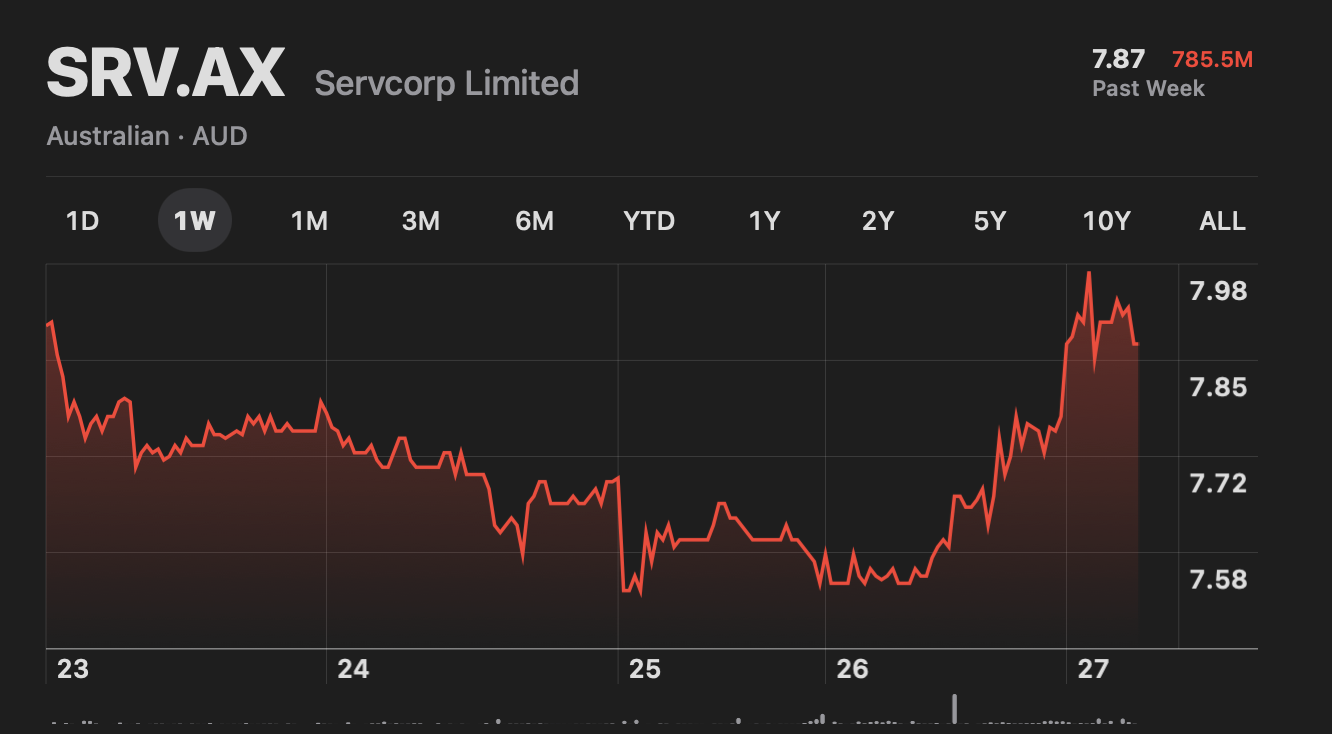
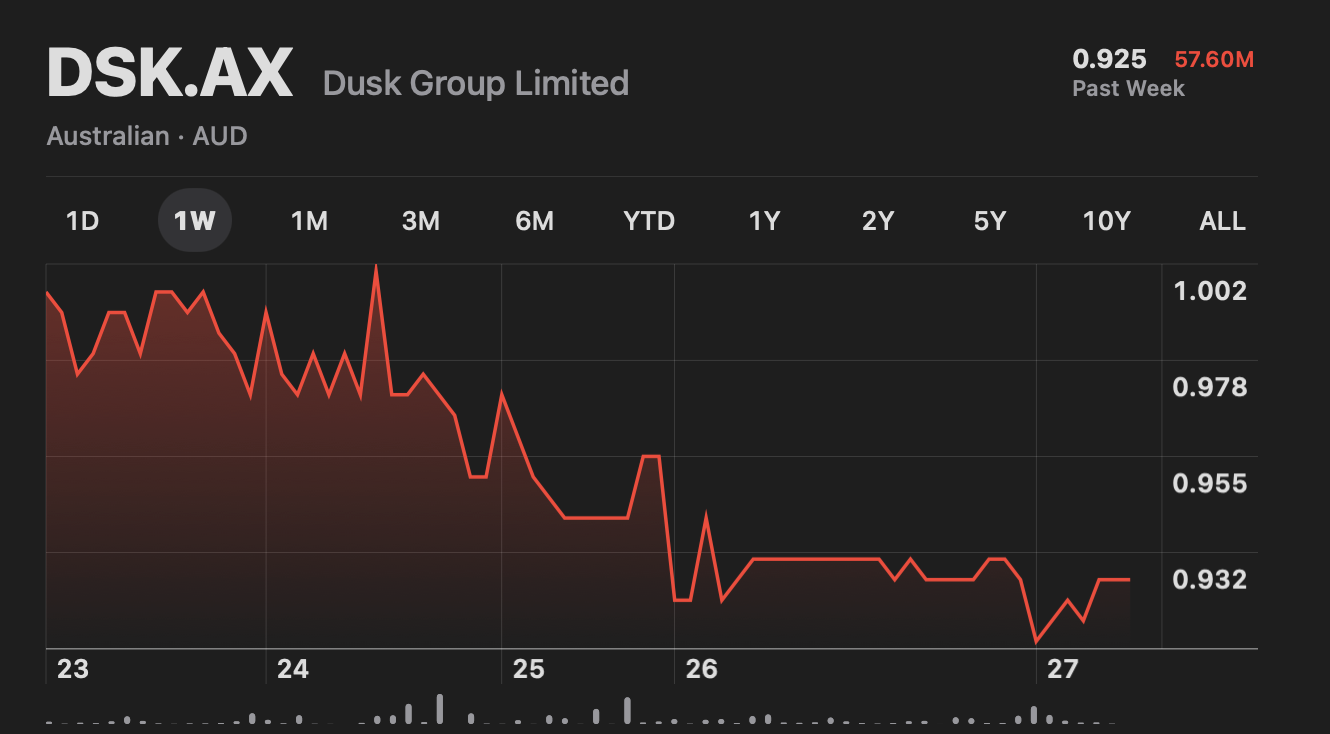
Congratulations to the geniuses who picked SRV. It …. barely moved, but was still the winner! Sometimes in life, you can win just by standing still and letting the world fall down around you.
Let’s see who can pick the winner this week between…
Click the image and take your chances!
May the Munger be with you.
NOTE: Apologies to our American audience. I promise to come up with an American poll for you soon.
QAV MYTH KILLERS
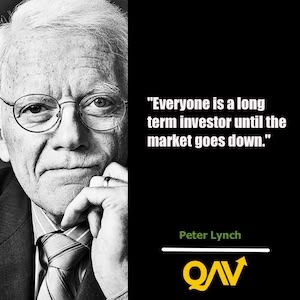
Peter Lynch Was Wrong — Don’t Invest In What You Know
I love Peter Lynch.
There. I said it. And I say it without embarrassment, even though I’m about to spend the next few hundred words picking apart one of his most famous pieces of advice.
Lynch is one of the greatest investors who ever lived. Full stop. His thirteen-year run managing the Magellan Fund at Fidelity — turning $18 million into $14 billion and averaging a 29% annual return — is the kind of number that makes you question whether the laws of physics apply to him. He was also that rare thing: a fund manager who could actually explain what he was doing in plain English.
The quotes alone are worth the price of admission.
“The person who turns over the most rocks wins the game.”
“If you spend more than 13 minutes analyzing economic and market forecasts, you’ve wasted 10 minutes.”
“Go for a business that any idiot can run – because sooner or later, any idiot probably is going to be running it.”
And, on a personal note, this one has defined my life since I left Microsoft and started the world’s first podcast network twenty years ago:
“Find something you enjoy doing and give it everything you’ve got, and the money will take care of itself.”
One Up On Wall Street and Beating the Street are absolute classics. I have enormous respect for the man.
But not every bon mot of wisdom can be taken as good investing advice without a little context and perspective.
Take his famous line: invest in what you know.
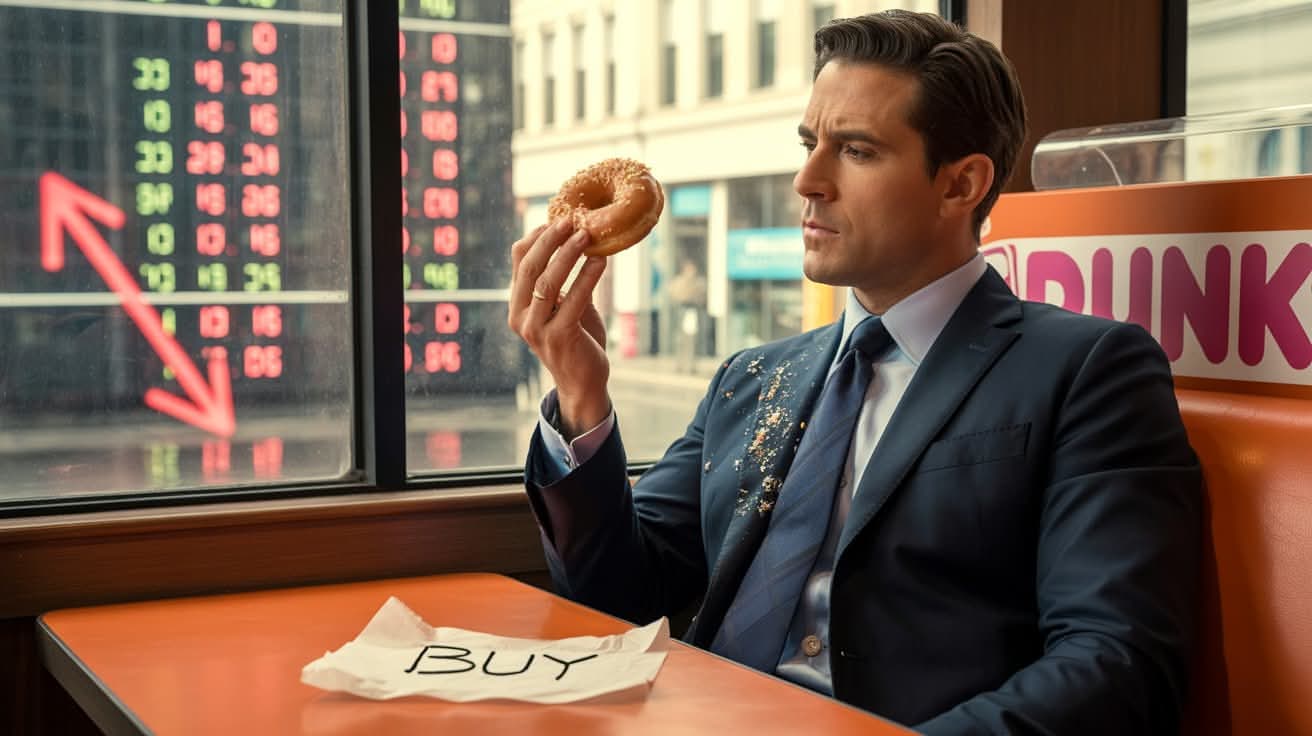
What People Think He Meant
I have heard this translated, more times than I can count, as: “I like Apple products, I understand Apple products, therefore I should invest in Apple.”
Or: “I shop at Costco every week, I know how good the hot dogs are, time to buy some stock.”
It’s a seductive idea. You feel like an insider. You have information. You eat the Dunkin’ Donuts, therefore you understand the business. Buy.
The problem is that this is almost exactly backwards.
What He Actually Meant
Here’s the thing — Lynch himself anticipated this misreading and corrected it, right there in One Up On Wall Street. This is the passage most people skip:
“However a stock has come to your attention, whether via the office, the shopping mall, something you ate, something you bought, or something you heard from your broker, your mother-in-law, or even from Ivan Boesky’s parole officer, the discovery is not a buy signal. Just because Dunkin’ Donuts is always crowded or Reynolds Metals has more aluminum orders than it can handle doesn’t mean you ought to own the stock. Not yet. What you’ve got so far is simply a lead to a story that has to be developed. In fact, you ought to treat the initial information as if it were an anonymous and intriguing tip, mysteriously shoved into your mailbox.”
In other words: familiarity is a starting point, not a conclusion. A lead, not a thesis.
When Lynch talks about “knowing” something, he means the kind of deep, structural insight you have because you work in an industry. Not “I eat at McDonald’s” but “I’m a supply chain manager in the fast food sector and I can see things that outsiders can’t.” Not insider trading secrets — just the mechanics of an industry, understood from the inside.
And even then, he’s clear: do your research. Knowing the industry is just the first shovel in the ground.
“Investing without research is like playing stud poker and never looking at the cards.”
Fair enough, Peter. We agree on that.
Here’s Where QAV Goes Further
But here’s where I’d gently part ways with Lynch, even on his corrected version.
Because I don’t know a lot about any company or sector. I can talk until the cows come home — and often do — about why Julius Caesar crossed the Rubicon, why Fidel Castro overthrew the Batista regime, or why Leonardo da Vinci was obsessed with the tongues of woodpeckers. But none of that helps my investing.
I have no special insight into almond farming. I couldn’t tell you the first thing about what makes one commercial office rental company better than another. I have never once in my life thought deeply about the logistics of industrial scaffolding.
And yet — some of the best performing stocks in our portfolio have come from exactly those kinds of businesses.
Tony has taught me that the research that matters isn’t about the business. It’s about the numbers. It’s about listening to what the financial statements are telling you.
Is the company making money? Is management eating their own cooking — do they own a meaningful stake? Is revenue growing consistently? What does the balance sheet look like? Is it financially stable?
Before I buy a stock, I’ll take a quick look at who the company is and what they do — mostly just to make sure they’re not in the middle of a merger, selling off a limb, or about to be delisted. That’s about the extent of it. I don’t need to understand their products. I don’t need to have used their services. I don’t need a personal connection to the business at all.
I just need to know that it represents a fair combination of quality and value.

Knowing Why You Own It
Lynch had one more line that I actually think is the best thing he ever said about this:
“Know what you own, and know why you own it.”
I love this. And I believe it completely.
Here’s the thing though — even though I might not know much about what a company does, I always know exactly why I own it. It passed the checklist. The numbers stack up. Quality is there, value is there, management is aligned. That’s why I own it.
That’s all the “knowing” I need.
Lynch was right that familiarity can open a door. But in QAV, we’ve realised that the door was never locked in the first place. Any company’s financials are publicly available. The information isn’t hidden. You don’t need industry expertise to read a balance sheet.
You just need to know what you’re looking for.
STOCK ANALYSIS OF THE WEEK
We are still in “Reporting Season” in Australia, but I’ve found a few things to buy this week and you can see my Light posts here.
I also added something to the U.S. Light portfolio this week. U.S. Light and Club members can read it here.
On the full Australian podcast this week, Tony did a deep dive on Challenger (CGF). See the podcast link down below if you want to listen to his analysis.
BUY LIST
Each week, we produce a buy list based on our value investing system that we share with our QAV Club members. The intended primary purpose of this buy list is for club members to use as a reference for comparing their own buy list. In theory, all of our buy lists should look pretty similar each week.
I did publish a buy list for Australia this week and Club members can find it here.
Below is a link to the US list for this week (available to our U.S. Club members):
QAV American Value Investing Buy List 2026-02-22
PORTFOLIOS
We compare our performance to what we think is the most relevant benchmark (SPDR 200 in Australia, S&P500 in the USA), but if you’re new to investing, these comparisons might not mean much. Instead, you can compare our performance to the top-performing Super Funds in Australia and see why an amateur active investor (who has a system to follow) can out-perform most of the “professionals”.
AUSTRALIAN
QAV DUMMY
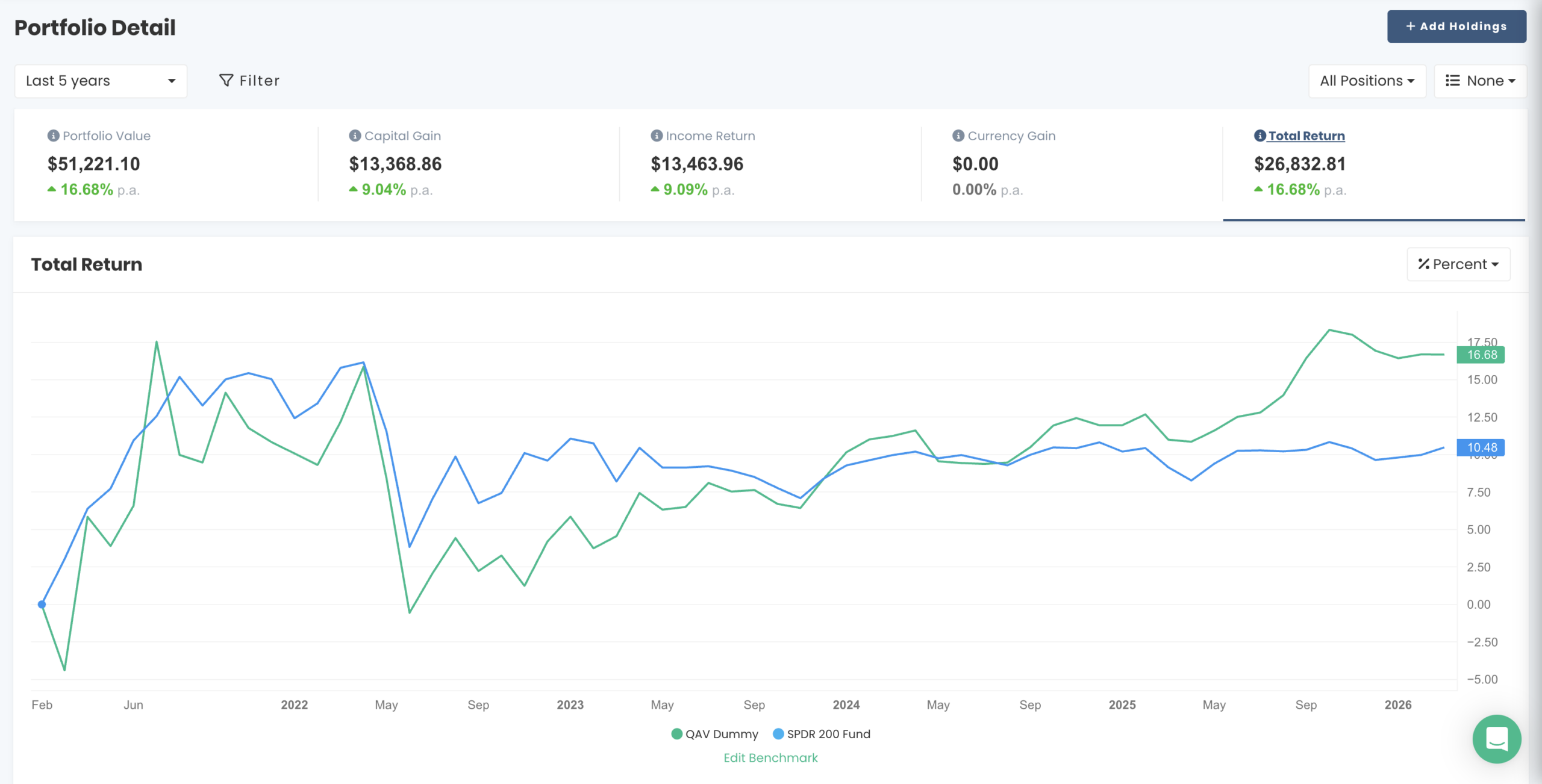
Five Year Report: Over the last five years, our portfolio is +16.6% p.a. vs the benchmark +10.4% p.a.
Monthly Report: The AU Dummy Portfolio was -0.4% p.a. for the last 30 days vs the benchmark +3% p.a.
I added a parcel of CGF to our portfolio this week.
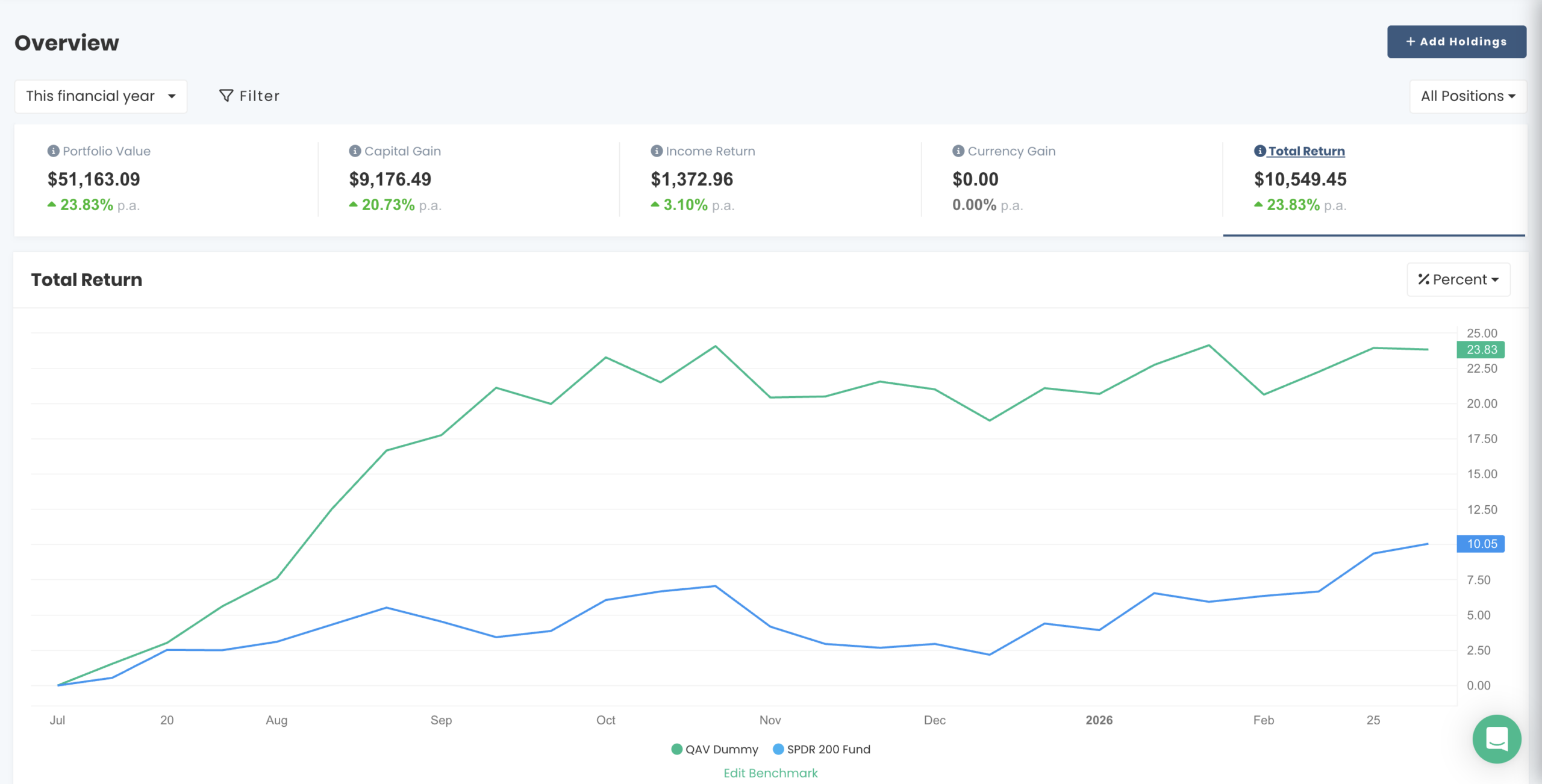
For FY26, our portfolio is +23.8% vs +10% for the index.
QAV LIGHT
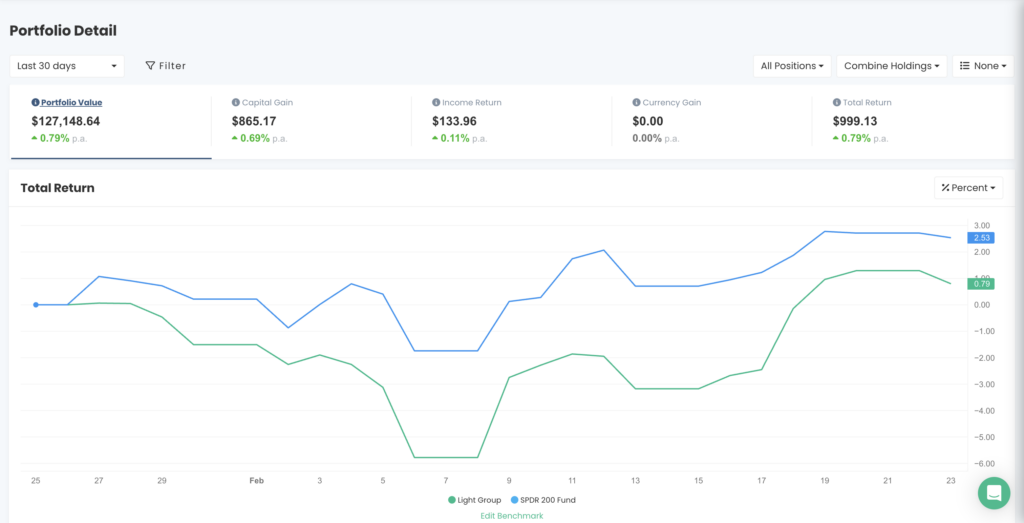
As of Monday this week (the last time I did a report), in the last 30 days, the Light portfolio was +0.79% vs the index which was +2.5%.
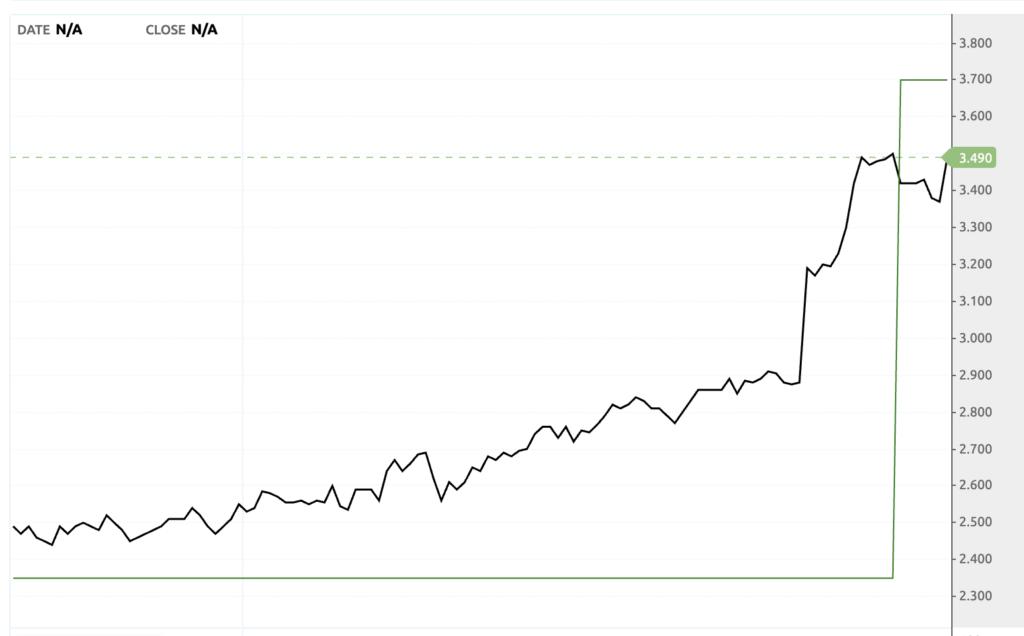
Our best return for the last 30 days is still SXE (Southern Cross Electrical Engineering) but guess what?
Last week I said it was our best stock for the month and it was +13%. Well this week it’s +42%! FOR THE MONTH! The market REALLY liked their H1 FY26 Results that came out last week.
That means our two holdings of it are up 318% and 340%. Huzzah!
SXE CHART FOR THE LAST MONTH:
A QUADRUPLE MARKET YEAR
For the last 12 months, the Light portfolio is +40% vs the index +13%.
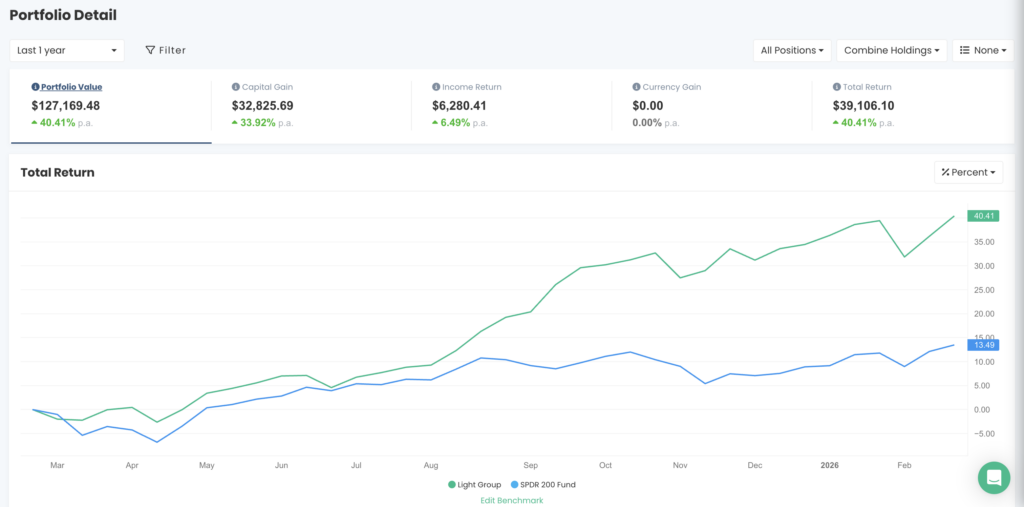
Since inception (Feb 2022), the Light portfolio is +22% vs the index +11%, double market, right on target.
Become a QAV Light Member today and start your investing on the right track
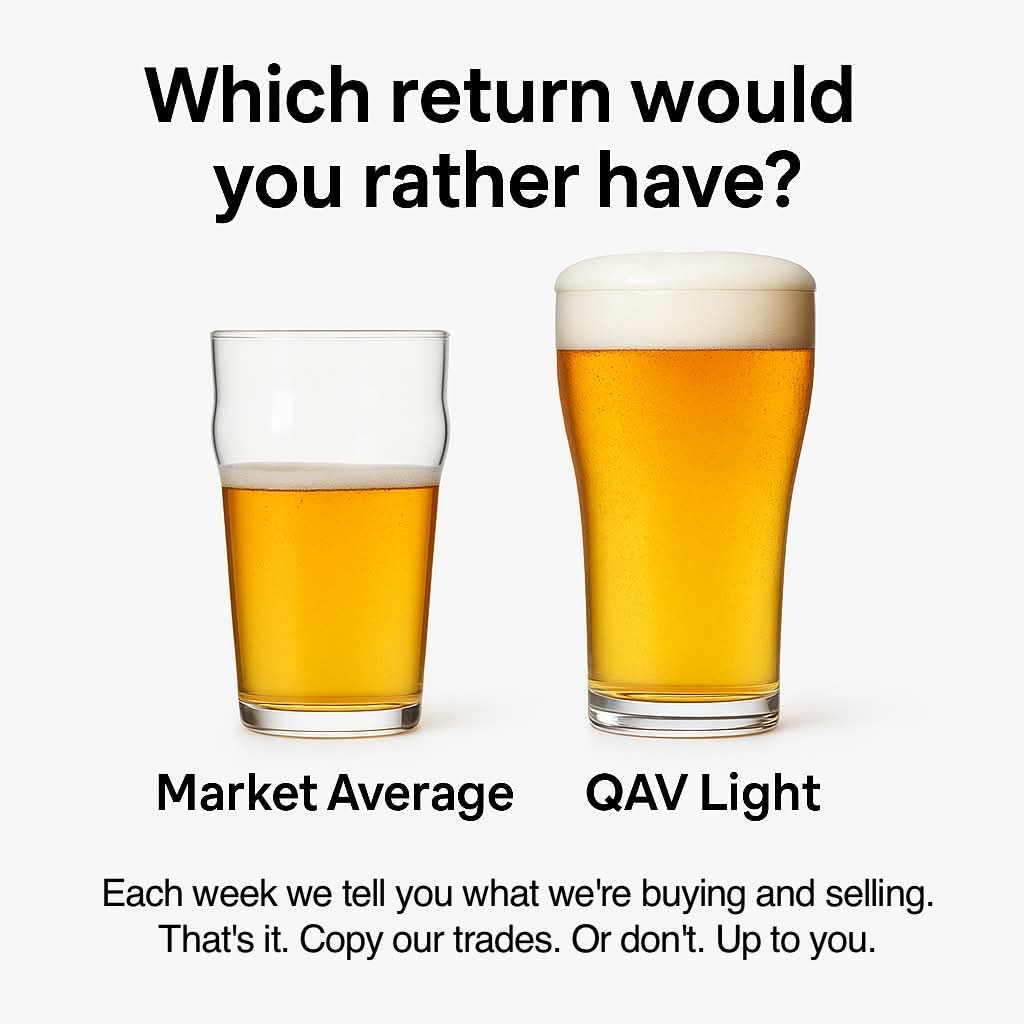
If you want to find out what we’re trading in QAV Light each week, sign up to become a member. You’ll get an email from me every Monday letting you know what we’re buying and selling in that portfolio. You can choose to copy our trades or not. It’s the easiest way to start your rules-based investing career… and you don’t even need to know the rules. I’ll follow the rules for you. It’s a good first step to eventually becoming a QAV Club member and learning how to run the system by yourself.
AMERICAN
QAV DUMMY
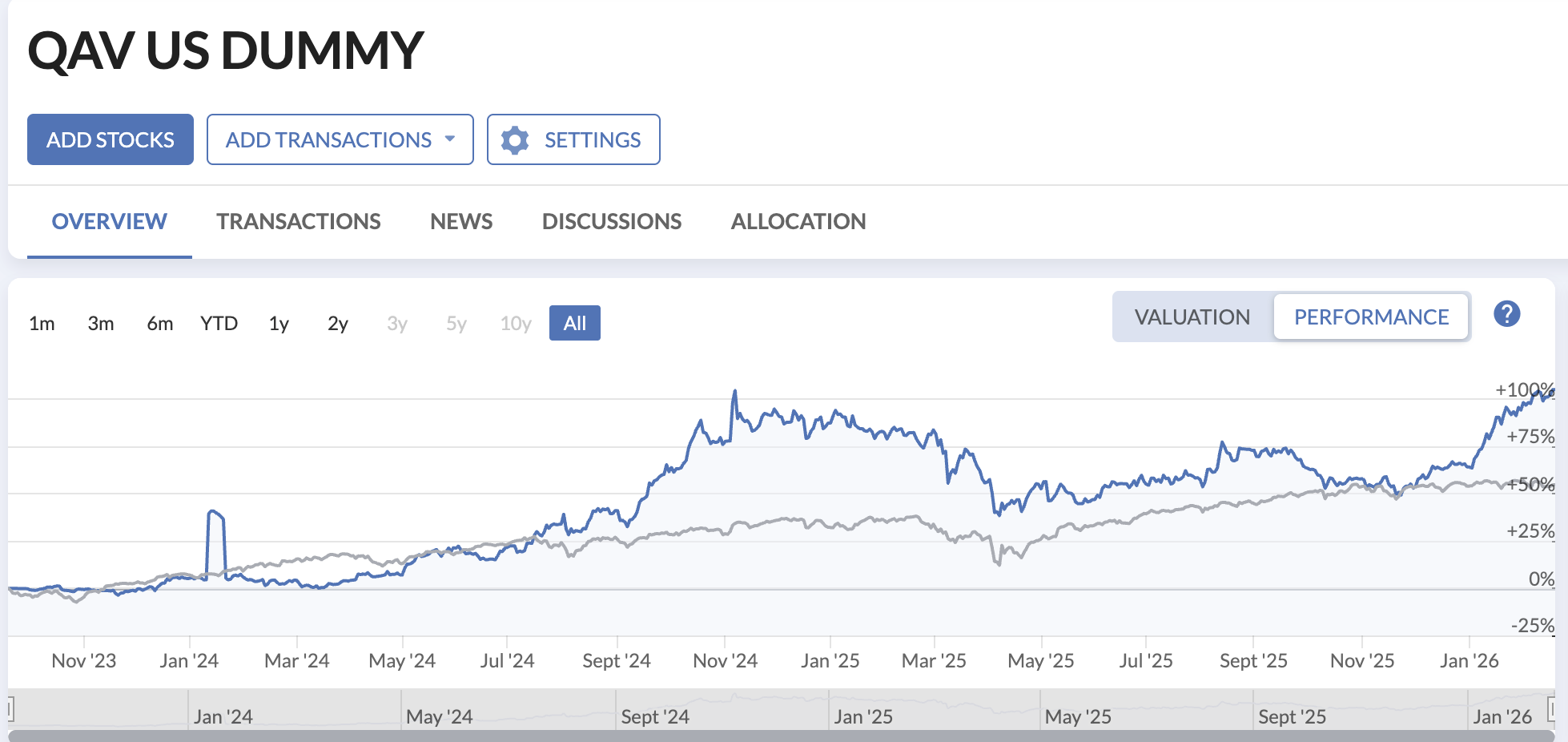
Since inception (Sep 2023), our portfolio is +105% vs the S&P 500 +55%. Not quite double market but getting very close.
Our U.S. portfolio for the last 30 days was +7.6% vs -0.8% for the S&P 500.
No trades this week.
QAV LIGHT
I recently started our U.S. Light portfolio, and it’s had a slow start, and is currently -2% vs the S&P 500 +0.4%.
THIS WEEK’S EPISODES
QAV AU 908 — Blowing the Doors Off
SHG – The Seoul of Value: QAV AMERICA 40
STOCK NEWS AND UPDATES
COMMODITIES
This week all of the commodities were either in a Sell or a Josephine state with the exception of Gold, Coal (thermal) and Crude Oil which remained Buys.
DISCLOSURE
Please review our trading and disclosure policy.
That’s it for the week!
QAV A GOOD SHAREMARKET!
Got a question? info@qavamerica.com